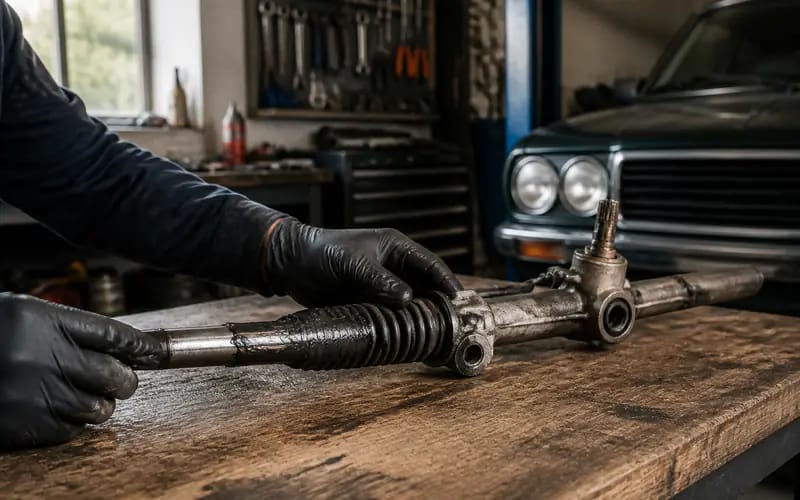
The manual steering rack, used in many older cars, is a simple design that is tough enough to last for years and even decades, but eventually it will need to be reconditioned and returned to service. If it were to fail without any prior warning, it could cause a serious accident, and replacing it with new units can be very expensive. However, if it can be reconditioned before it fails, it can save a lot of money and allow an older car to be kept on the road safely.
When Everything Else Checks Out
The ideal situation for reconditioning a manual steering rack is where the mountings are solid, the track rod ends have no play and the steering column is tight but the steering rack feels loose or is very heavy. In this situation a specialist can strip down the rack and replace the worn parts within the rack to recondition it. Mixing new rack components with worn mountings and worn track rod ends will mean that all the new work will be pulled apart by the old faults in the surrounding parts.
When Grease Is Escaping From a Gaiter
The rack is lubricated by grease and the largest amount of wear is to the gear teeth and the associated bushes. Grease leaking from a split or perished gaiter can provide a path for grit and water to enter the rack and cause rapid wear. Grease can appear on the inside of a wheel or on the track rod as a ‘smear’. This type of wear can develop very quickly and must be identified and reconditioned as soon as possible to prevent further damage.
When an MOT Tester Flags an Advisory
Gaiter damage and steering play are two faults that will be noted by an MOT tester and recorded as advisory items. These are not failures that would cause a car to fail an MOT but they are faults with a deadline and should be addressed before the car’s next test. It is sensible to treat these as any other advisory and look to address the fault before it deteriorates further.
When You’re About to Fit New Suspension Parts
If new suspension parts, such as new tyres, track rod ends or suspension bushes, are to be fitted to your car then it is highly recommended that you have the steering rack reconditioned first. Should a poorly maintained rack be allowed to be used with new parts then it would no doubt wear the new track rod ends unevenly, and also wear the new tyres unevenly causing them to scrub against each other. This could cause excessive wear very quickly.
When the Car Is a Classic or Rare Import
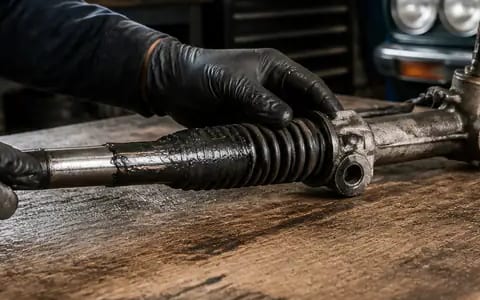
Manual Steering Racks for older or low-volume models were often discontinued decades ago and today a new rack is not available from the manufacturer. This leaves the option of having the original rack reconditioned. A steering specialist will strip down the rack, machine or replace worn components as required and rebuild the rack with new components inside the original housing.
When High Mileage Suggests Planning Ahead
Re-lubricating a worn manual steering rack before it fails could save a costly repair bill. All manual steering racks run on grease in a track, sealed within a rubber gaiter, and over time this grease dries out. A neglected steering rack left in a garage for several years can develop wear before being used again, and this can all happen before it’s been used hard. So it’s a good idea to plan its reconditioning in good time.
When Originality Matters More Than Cost
Reconditioning the car’s original steering rack components is critical on any classic car restoration project. Using a reproduction part might get you out of a bind in the short term but it will in all likelihood not have the correct casting marks, part numbers or manufacturing details on the item. This could affect the value and overall authenticity of your classic car, which reconditioning the original parts avoids.
As with any wear, it’s usually best to catch it before it can spread to other components (such as the car’s mounting points, the car’s tires, and so on).