What is the Difference between Men And Women Bike: Find Out Now!

Men’s bikes typically have a horizontal top tube, while women’s bikes have a sloping top tube. When choosing a bike, it’s essential to understand the key differences between men’s and women’s bikes.

While the fundamental purpose of biking remains the same for both genders, there are specific design features that differentiate men’s and women’s bikes. Understanding these distinctions can help you choose the right bike for your needs and ensure a comfortable and efficient riding experience.

Is a Mountain Bike More Comfortable?

When it comes to choosing a bike, comfort is an important factor to consider. After all, you’re going to be spending a lot of time on it, so you want to make sure it’s something you can enjoy riding.

So, are mountain bikes more comfortable than other types of bikes? The answer is: it depends. This content is presented by Outdoorxsports.com.

What Makes a Mountain Bike Comfortable?

There are a few key factors that contribute to the comfort of a mountain bike. These include:

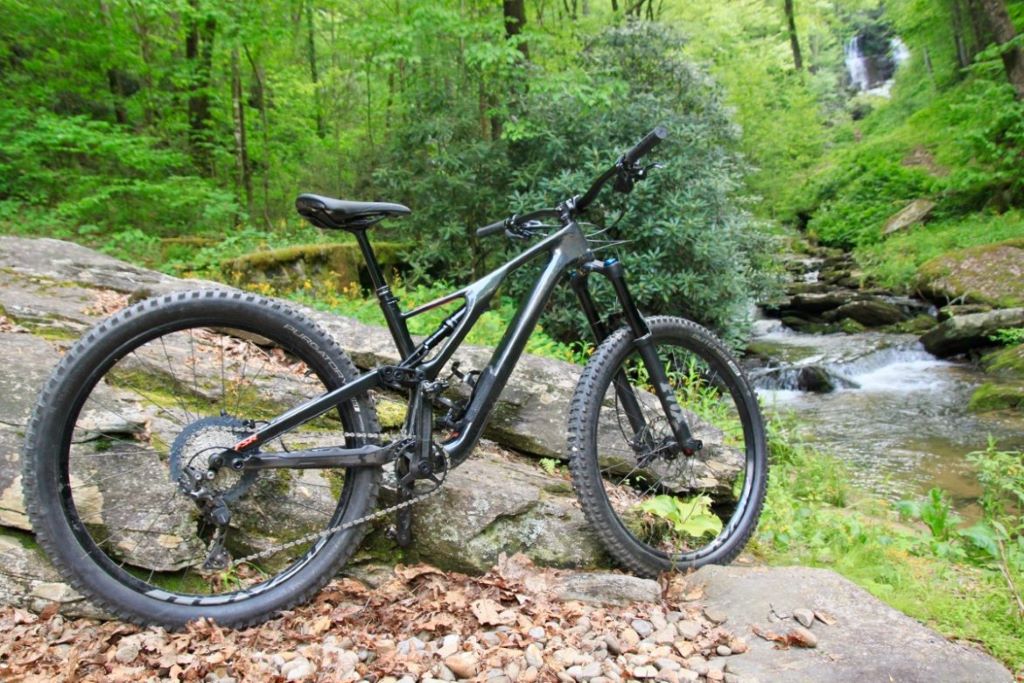
  • Suspension: Mountain bikes typically have suspension forks and rear shocks, which help to absorb bumps and vibrations from the road. This can make a big difference in comfort, especially on rough terrain.
  • Wide tires: Mountain bike tires are wider than road bike tires, which helps to provide a more comfortable ride. The wider tires also provide more traction, which is important for riding on loose surfaces like gravel or sand.
  • Upright riding position: Mountain bikes have a more upright riding position than road bikes. This is more comfortable for many people, especially those with back problems.
  • Ergonomics: The handlebars, saddle, and pedals of a mountain bike should be adjusted to fit the rider’s individual needs. This will help to maximize comfort. Check out the best mountain bike under 500.

What Makes a Mountain Bike Comfortable?

Are Mountain Bikes Always More Comfortable?

Not necessarily. There are some situations where a road bike may be more comfortable than a mountain bike. For example, if you’re riding on smooth pavement for long distances, a road bike will be faster and more efficient. This can make it more comfortable, especially if you’re not used to riding a mountain bike.

Ultimately, the best way to decide if a mountain bike is right for you is to try one out. Go to a bike shop and take a few different models for a test ride. See how they feel on different types of terrain and decide which one is the most comfortable for you. One notable advantage of tubeless mountain bike tires is their ability to offer enhanced traction and control, particularly on challenging off-road trails.

Other Factors to Consider

In addition to comfort, there are a few other factors to consider when choosing a mountain bike. These include:

  • The type of riding you’ll be doing: If you’re only going to be riding on smooth trails, you don’t need a full-suspension mountain bike. A hardtail mountain bike will be more than enough. However, if you’re planning on riding on rough terrain, a full-suspension mountain bike is a better option.
  • Your budget: Mountain bikes can range in price from a few hundred dollars to several thousand dollars. It’s important to set a budget before you start shopping so that you don’t overspend.
  • Your skill level: If you’re a beginner, you may want to start with a less expensive mountain bike. This will allow you to learn the ropes without having to worry about damaging an expensive bike.

Conclusion

Mountain bikes can be a great option for people who are looking for a comfortable and versatile bike. However, it’s important to consider your individual needs and budget before making a decision. If you’re not sure what type of mountain bike is right for you, it’s always a good idea to talk to a bike shop employee.

FAQs

  1. What is the difference between a hardtail mountain bike and a full-suspension mountain bike?

A hardtail mountain bike has a single suspension fork, while a full-suspension mountain bike has suspension forks and rear shocks. This makes full-suspension mountain bikes more comfortable on rough terrain, but they are also heavier and more expensive.

  1. What is the best type of mountain bike for beginners?

A good option for beginners is a hardtail mountain bike with 29-inch wheels. This type of bike is stable and easy to ride, and the larger wheels roll over obstacles more easily.

  1. How much should I spend on a mountain bike?

The price of a mountain bike can range from a few hundred dollars to several thousand dollars. It’s important to set a budget before you start shopping so that you don’t overspend.

  1. What are some of the best mountain bike brands?

Some of the best mountain bike brands include Trek, Specialized, Giant, and Cannondale. These brands offer a variety of mountain bikes to fit different needs and budgets.

  1. Where can I buy a mountain bike?

You can buy a mountain bike at most bike shops. You can also buy them online from retailers like REI, Amazon, and Backcountry.com.

Upgrade Your Ride: The Latest Innovations in Lightweight BMX Bikes

Are you ready to take your BMX riding experience to the next level? If you’re a thrill-seeker and passionate about BMX, you know that the right bike can make all the difference. In this article, we’ll explore the exciting world of outdoor extreme sports and the latest innovations that have taken the industry by storm. From materials to design, we’ll delve into the details of what makes these bikes stand out. So, gear up, because we’re about to embark on a journey to upgrade your ride!

What are fat bike tires for?

Fat bike tires are for your fat bike. You won’t find them on road bikes, mountain bikes, or even on BMX bikes. Fat bike tires are designed specifically for a fat bike and optimized for speed, traction, and control on the fat bike. In this article, we take a look at the different types of fat bike tires available today.

What are fat bike tires?

They are a way to improve your biking experience by increasing traction, comfort, and style. But it’s not as simple as just slapping some tires on the frame of your bike. Fat tire technology requires knowledge and preparation to make sure you get the best results possible.

There are four basic tire shapes that commonly produce the most traction and comfort with the least pressure: There is no set right or wrong fat bike wheel type. Everyone’s body, riding style, and habit vary enough to need different types of tires for their brand new Fat Bike. You can go through the best bmx bikes for beginners

Why You Should Buy A Fat Tire Bike

How does a fat bike differ from other bikes? One major difference is the amount of friction generated between tires and the ground surface. Another is due to the unique construction attributes discussed below:

Friction

Fatty tire, road tires have higher (higher rolling resistance) than Mtb, touring or city/trail free ride by design. Road wheels are built for speed rather than comfort, so all their compounds strive to even out traction in use which results in less rolling resistance.

Adhesives

Fat bike tubes require special adhesives that aren’t available for rims, road wheels, and mountain/touring bikes – (we don’t fully understand why). Reactive chemistry is the only means to get this glue-like consistency, but it takes at least a day or two in contact time before true adherence enhancements are realized. Hardening times increase with use, so you will definitely notice your performance improve with regular use.

Construction

Tubes are strong but have to unevenly flex in all directions due to their “cross-section” or shape. Fat tires need stiffer sidewalls and crowns implemented as you would extrude your bicycle material structure engineering tolerances allow for complete flexibility since no forming is required.

Increase comfort

With less contact between threads and ground, no lateral torques are created, which means you have greater control over each pedal stroke. This lessens fatigue and your feet will stay in contact with the pedals for longer periods of time.

Higher speeds

Greater rolling resistance means reduced spacing between drive train elements like gears, chainsets etc which results in greater efficiency to reach higher sustained (endurance) max speeds than other bikes are capable of reaching (less energy wasted as heat on frame/rims).

Increased Weight Limits

Riders who sit closer to the pegs experience a higher inertial load across their hips, pelvis, and knees than those further away from their center of gravity, but this is due to “posterior loading” usually only occurring when supported by your lower back area or third leg…not on a bike!

Better balance

If you are drawn to weight-carrying sports like mountaineering, rock climbing, or jumping acrobatics, then this may be your only game in town. Longer torsional rigidity means less flex at coupling points which will increase the amount of your body’s total mass you can lift for a period without failure!

Better handling

A bike that moves my body better / by moving myself and not other elements alongside me will be inherently more controllable (without pedaling) throughout a given gesture even when making fast lateral motions, as well as being much smoother in transition from one motion to another such as starting/stopping on stairs while trying to park.

Little maintenance

All maintenance should be done at home, with the exception that some can benefit from having a local bike mechanic perform them (dive bars, suspension tuning). There is no need to learn any new skills. Really, you will have probably learned all of this stuff while growing up on a standard hard-tail bike.

Things to consider while choosing a fat bike tire

Tire width: Wider (2.1″) tires will inherently provide plusher cushioning than narrower (1.8″) tires and offer a more comfortable ride, especially on rougher terrain or off-road in snow/ice.

Tire pressure: It is generally recommended to run your tire at about 35 PSI for optimal grip/braking performance, but this varies depending on the type of riding you do…for general use in all sorts of weather, I recommend running your tire at about 30 PSI.

Tire tread: As with helmet sizing, different brands work best in certain applications because they have a particular “chunkiness” to them ( ETC / YIKES )…some will give you more knobby traction while others are. Smoother and less noisy on the trail! Variety is also good expressly if you’re having trouble deciding which brand/version of said bike tire is best, especially if you are still new to the sport and trying different tires to get a feel for personal preference.

Tire Compound: Most brands will have very similar compounds, so there isn’t much point in looking into this, but I would just say it’s a generally good idea when thinking of buying your first fat bike tire because they generally come ready with casing (core) hardness which may differ from one brand/version of same tires to another – this may be obvious to some and not for all but this is a common element when specifying the tire based off of you bike setup.

Tire Width: With wide tires, your corners will tend to feel sketchy on rocks or steep terrain until you get used to the bike. That being said, I would consider it a bonus if sometimes felt as though you rode better over rough trails because there are more pounds per square inch.

Conclusion

Fat bike tires are not that different from regular road bike tires. In fact, they are essentially the same. However, fat bike tires do have a few notable differences that make them better suited for off-road riding. These include their larger contact patch and greater flexibility in turns. The wider contact patch is particularly useful on the trail as it helps disperse energy more effectively over a larger area of the tire, which is especially important when cornering or negotiating obstacles.

Keep Reading: What is the advantage of tubeless mountain bike tires?

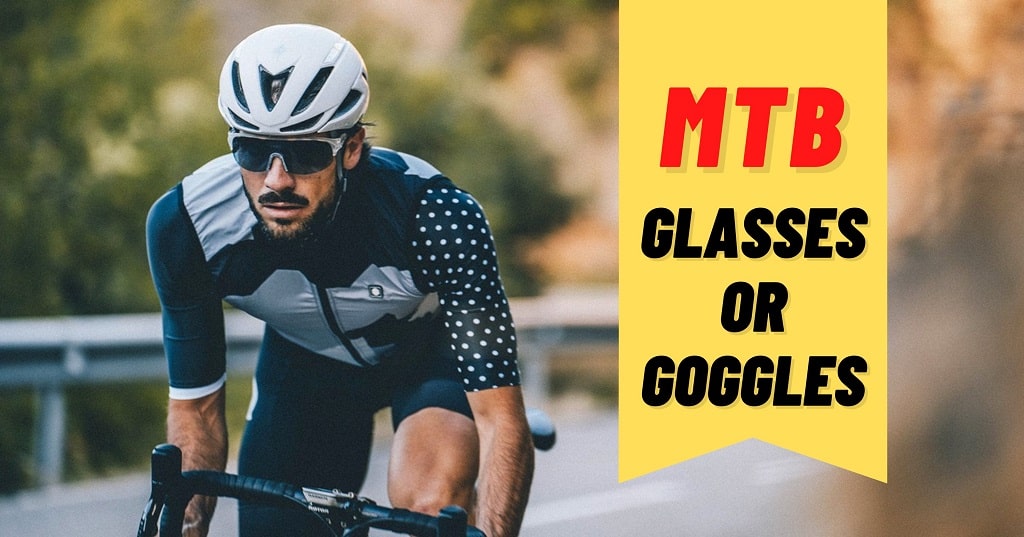
MTB glasses or goggles? Find out which is the best alternative for you

A basic element in a cycling ride, whatever the modality or discipline you practice, is the protection of your eyes. As we get into mountain biking with big wheel mongoose bike or others, the question begins to arise as to what is best for us: if glasses or goggles.

In this article, you will find the advantages and disadvantages of both so that in the end, you choose the alternative that best suits your needs and thus protect your eyes while practicing MTB.

Importance of protecting our eyes in cycling

In any shoot you participate in, you will be asked to wear glasses to protect your eyes. In addition to the impact of ultraviolet rays, it is important to protect yourself from the air and from possible garbage or insects that may fall into your eyes. As you develop more speed in cycling, these particles are more likely to hit your face, get into your eyes, and cause an accident by momentarily blocking your vision.

It is important to emphasize that not all glasses are an option for cycling in general. For example, metal frames or frames are a danger to our physical integrity, as they can break and injure our face, even our eyes since metal is exposed and is a sharp material. For this reason, in most events, competitions, etc., they recommend wearing plastic frames. Keep reading best sunglasses for cycling.

MTB glasses or goggles

Find out which is the best alternative for you. A lot of people use either, but when it comes to performance and protection, there’s a definite winner. Goggles offer a number of advantages that glasses do not: they block more dirt and debris from getting into your eyes; they seal out the wind, and they’re better in foul weather. That said, goggles can fog up both in dry and wet conditions.

Goggles:

Why do you need goggles for mountain biking? They protect your eyes when you are riding, they keep the bugs out of your eyes, they keep the sweat off your face and goggles react better in bright light. For all these reasons, goggles are an essential part of mountain biking gear.

MTB glasses:

Choosing the perfect pair of MTB glasses can be a daunting task. For some, goggles are just too inconvenient to wear on the go. Others might not want to deal with the hassle of cleaning their glasses after long rides. Fortunately, there are great options for both of these dilemmas.

MTB glasses features

MTB glasses specifically have greater benefits than any other normal frame/frame to protect you from the sun.

They have a suitable design for good ventilation so that the glass mica does not mist.

The frame is made of flexible plastic. In case you have an accident where your face is involved, the plastic does not break into two pieces but is designed to come off in parts (a leg, the glass, the frame, etc.)

The special glasses for cycling tend to be very light, you can wear them for hours and you will not even feel them on.

These glasses have rubber on the frame and on the legs. These will help them not to slip out of place.

In addition, most cycling glasses have a more panoramic vision achieving a vision range of 180º.

There are a variety of types and dyes of micas. From there, the intensity of color depends on where you frequently roll. The important thing is to achieve the most naturally possible colors. Or also appease those colors that disturb our vision, such as the reflection that is made on the asphalt.

One of the disadvantages of MTB glasses is when you descend faster and there are vibrations in between, they can come out of place and even jump with the vibrations, making handling very uncomfortable.

In addition, another disadvantage is against the dust banks. MTB glasses protect your eyes, but they do not isolate them, so if you enter a dust bank, be sure that your eyes are going to be covered with dust even if you bring the glasses.

Goggles for MTB

MTB goggles are designed to protect your eyes from dust, dirt, mud, and other foreign particles, even at high speeds.

Goggles are ideal for blocking the entry of dust into your eyes since they have a sponge that is placed between your face and the frame, thus achieving total isolation. This sponge also serves to prevent the entry of mud and sweat.

The goggles protect you in the event of a fall by not having any impact close to the eyes. Its large frame is made of flexible plastic and does not break on impact.

The goggles have a spring that is placed around your head or your helmet. It is very useful to be able to cross terrain at high speed or jump without them moving out of place.

When it comes to lightness, goggles don’t win prizes, but they aren’t that heavy. There are even sizes for children and adults in order to achieve a better fit depending on the width of the face.

Like MTB glasses, goggles have adequate ventilation and an anti-fog (anti-fog) system. You can bring them all the way down and they won’t fog you up.

Most of the goggles have a support that allows using a system to be able to see in case of rain; They are strips of a biodegradable celluloid material that are placed on the goggle’s mica either by plastic pins that carry the mica or, a more elaborate roll system. The rider can gradually remove the strips once they are covered with mud or water and, in this way, always have the mica “clean.”

Like cycling glasses, goggles have different shades of glasses, depending on the terrain, weather, etc. You can find transparent, black, green, blue glasses and even some with a yellow hue.

An advantage of the goggles is that their glass is resistant and withstands normal scratches and bumps. However, when applying speed and encountering flying stones, they suffer slight scratches, but they do not compromise vision.

All goggles offer a 180 ° panoramic view.

A disadvantage of goggles is that they even have an anti-fogging system in the case of flat routes. They fog up because they contain heat.

Type of glasses depending on the MTB modality

As you can see, the use of goggles or glasses depends a lot on the modality that is practiced.

The glasses work best for recreational MTB cycling, Cross Country, Trail, and even, in some cases, All-mountain / enduro.

On the other hand, goggles work better if you plan to go down with more speed and there is more risk involved. For this reason, in Freeride, BMX, Downhill, All-mountain, and Enduro competitions, goggles are preferred.

In addition, you can also use either of the two for simple pleasure. We have seen enduro competitors with MTB glasses and cycling enthusiasts who prefer goggles. The purpose is to protect our vision and either one fulfills it. You just have to take into account the advantages and disadvantages of them.

Conclusion

The debate between MTB glasses vs. goggles is an ever-present, never-ending dilemma for any mountain biker. The goggles are stronger than they used to be. They come with glasses that can be replaced individually and the frame has a rubber band to tighten it around your head so it won’t fall off. They also have vents that help with airflow so you don’t get sweaty and foggy. The MTB glasses are lighter and more comfortable. They don’t have a chin strap and they come with a small glass that can be replaced individually.

Tips: How To Plan a Bike Trip In 2021

How To Plan a Bike Trip In 2021

2020 felt like the year that would never end. Is there a better way to bid it adieu than with a bike trip? Whether you want to spend three months biking across Europe or are considering a long biking weekend in New England, planning is key to a successful trip.

Choose Your Experience

There are countless bike adventures. Which one would you like to have? Your decision may partly depend upon the type of bike you plan on riding. If your ride of choice is a step through single speed bike, you shouldn’t plan a trip through the red rock country of Utah. However, if you have a sturdy mountain bike that flies over rugged ascents, Moab is an excellent choice.

Types of bike trips include:

Self-supported trips: These are sometimes called “bikepacking.” You carry all your gear on your bike, including a tent and sleeping bag. Occasional stops for food or supplies can be planned.

Vehicle-supported trips: For this trip, you get a friend who loads your gear into their car and they travel with you. You can ride lighter and farther with this option.

Hotel trips, or “credit card touring”: You carry on your bike only what you need for the day. Each night you stop at a hotel or motel for food and sleep.

Organized trips: These are run by commercial outfitters. They take care of all the details for you.

Choose Your Location

You can literally bike just about anywhere in the world.  Interested in bike trips California? No problem. Want to bike across Ireland? You can do that. It’s crucial that you consider the weather. If your vacation time is in January, that’s not a good month to bike through the Adirondacks. Bike Florida instead and wait until a better time to head to the mountains.

If you want to bike in any foreign country, go online and learn about the necessary documents to travel there. In addition to a passport, you may need a Visa. Depending upon the country, there can be very long waits for these. Start planning any foreign bike trips a year in advance, minimum.

And last but not least, since it is 2021, you must know the pandemic protocols of any location you wish to visit. Learn if there are any quarantines or other health regulations in place. Be prepared with any PPE or documentation they want you to have.

Choose Your Gear

Bikes can only hold so much. Pack wisely. Talk to other bikers who have made similar trips and ask what they could have left home and what they wish they had brought. Evaluate your bike. Do you need an upgrade for this trip? Ebikes for women make any trip a little easier and smoother.

  • A basic packing list should include:
  • A couple of changes of clothing
  • Bicycle repair kit
  • Extra tubes
  • Helmet
  • Water bottle
  • Sunscreen and bug repellent

Flesh this list out with other items depending upon the trip you choose. Planning a bike trip is fun. Go online and look at your options today.

11 naked motorcycles will arrive in 2020

The fashion of naked motorcycles continues to gain public and manufacturers know this, so each time they come up with new proposals or, at least, they adapt those with the latest in engines or technology.

The imminent arrival of Euro5 emissions regulations has partly motivated the revision of some of these models with half-naked bodies, but there are also major releases. For those who want to change frames, start in the wonderful world of two wheels or know what is about to come in the nude industry of the motorcycle industry, here are the 11 best naked motorcycles we will see in 2020 …

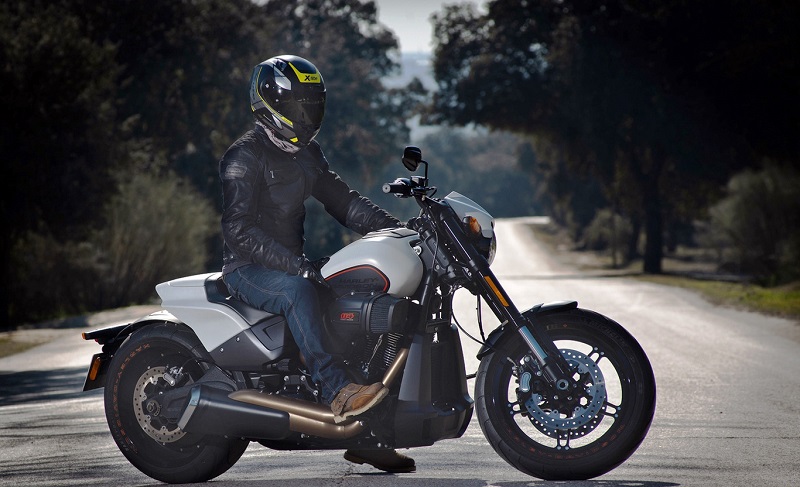
Harley-Davidson FXDR 114: A huge motorcycle with soul dragster and thirst for looks

Something is changing in Harley-Davidson! The Milwaukee firm founded in 1903 is struggling to make its way between fierce competition to carve out a new, renewed and future-proofing public.

Among the many and surprising plans of the American firm is the Harley-Davidson FXDR 114, which is presented without any shame as the Harley-Davidson sportiest in the range, drinking the waters of the philosophy of racing acceleration quarter mile.

What a win! These are the 13 most anticipated new bikes of 2019

2019 promises! Many new bikes will arrive and some of them look especially interesting. We are going to offer you a selection with the 13 most anticipated bikes of 2019 and, in the end, we offer you the opportunity to give us your opinion with a vote that we will publish later and that will help us to know which bikes of 2019 we have to try during the next months.

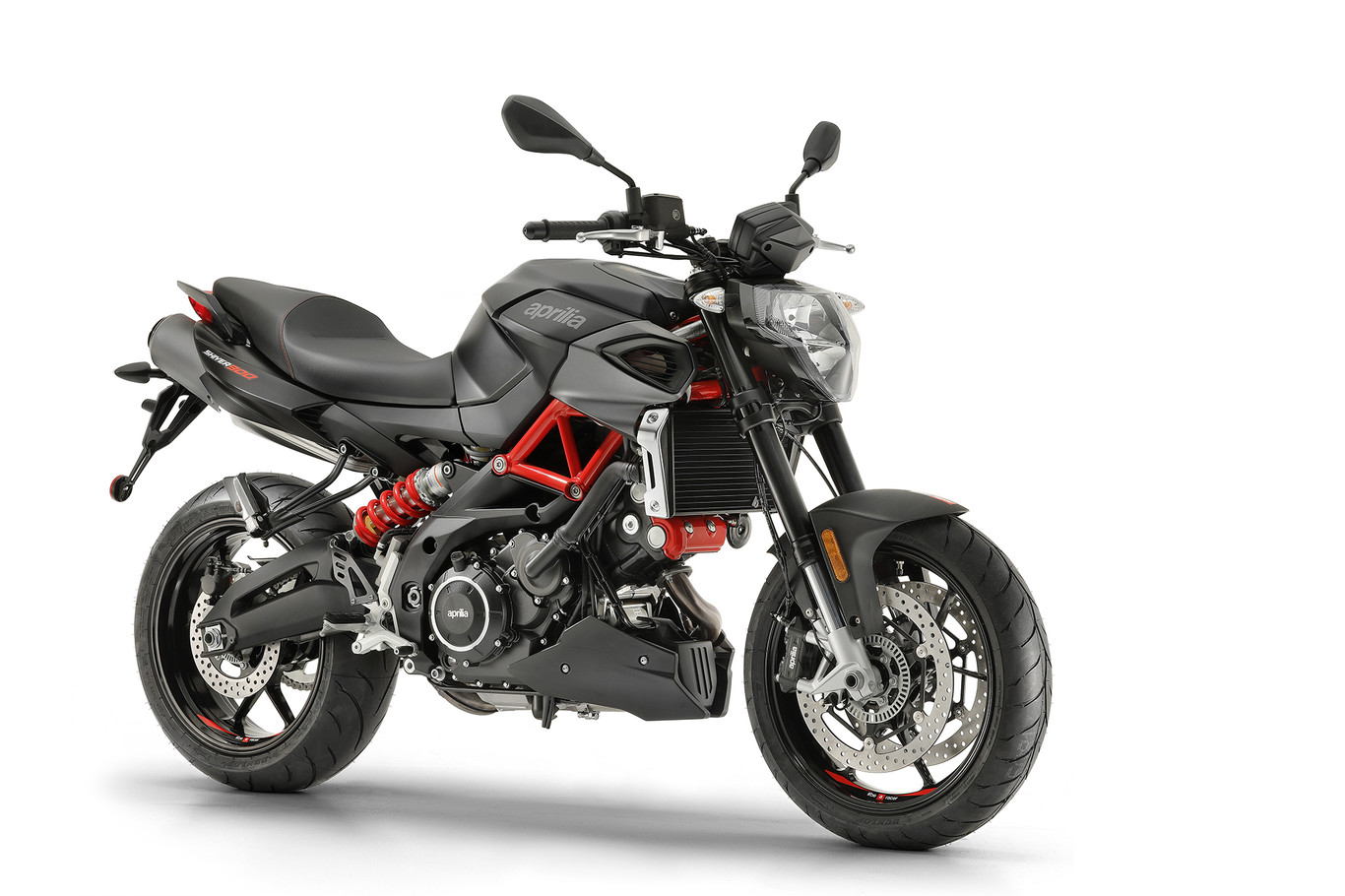
Aprilia Shiver 900: 95 HP and 90 Nm of torque, now better connected

Almost 2 years ago there was the renewal of the Aprilia Shiver 900 at the 2017 Milan Motor Show. It was an intense update with numerous changes, all for the better, but still with room for improvement in the whole.

In the Piaggio Group they know this and that is why at INTERMOT 2018 they have presented another evolution of the model. On the outside the changes are subtle but inside the Shiver 900 has been updated to be more up to date than ever and also connected, as the fashions rule.