What a CCTV Drain Survey Checks in Wolverhampton Flats

As the waste from each flat flows down through the shared vertical Soil Stack, grease, soap and limescale can build up on the inside surfaces of the pipes over time. In some cases the build up can reduce the diameter of the pipes to such an extent that a high pressure jet clean may be required to clear the blockage. In other cases the pipes may need to be renovated using drain lining.

Grease and Scale in the Shared Soil Stack

Although often not a problem that occurs immediately, the vertical soil stacks of shared buildings are subject to the same forms of blockage as horizontal drains, with the passage of time layers of grease, soapy residue and limescale building up on the inner surfaces of pipes. A CCTV survey can measure any reduction in the cross section of a stack and advise whether a jetting cleanse would be sufficient to clear a blockage or whether the drain would be better repaired by means of relining.

Tracing Which Flat Connects Where

Where older blocks of flats have been built, the connections between individual properties’ waste pipes and the main vertical stack may not have been accurately mapped.

Joint Displacement in Long Horizontal Runs

Waste pipes from upper floor flats run horizontally for long distances under suspended floors. Over time these pipes can sag slightly creating dips in the pipe where debris can collect. A CCTV survey will highlight any displacement or settlement of a pipe and show exactly where any damage is. For more on this, take a look at wilkinson-env.co.uk/drainage-services-cctv-surveys-midlands/cctv-drain-surveys/wolverhampton.

Root Ingress at Ground-Level Exit Points

For properties that have a shared garden with trees and shrubs roots can occasionally enter the drain through joints in ground level exit points. CCTV Drain Surveying can identify root mass before it causes a blockage. CCTV Drain Survey Wolverhampton is worth getting right.

Establishing Responsibility at the Boundary

uk/what-we-do/cctv-drain-surveys/){rel=”nofollow”} a shared drain lies when it joins a shared or public sewer.

uk/drainage-services-cctv-surveys-midlands/cctv-drain-surveys/wolverhampton/).

It helps avoid a lot of argument at a later date.

Chrome Plating Surface Preparation Before Application

Initial surface preparation is a critical stage in the overall process to ensure that the chrome deposit will bond correctly to the base material and last for a long period of time. Failure at this initial stage will result in subsequent processes failing to deliver as required.

Degrease and Clean the Part First

Remove oils, cutting fluids, etc. from the part prior to coating. These can be removed using a soak cleaner (e.g. alkaline-based) and then ultrasonically cleaned and possibly subjected to an electrolytic degrease prior to coating.

Correct the Geometry by Grinding or Polishing

A chrome plated surface reproduces the peaks and troughs of the surface it is plating, so the surface must first be ground or polished to correct any geometry errors, such as pitting or high spots, and to produce a surface finish of around Ra 0.4 to 0.8 microns for hydraulic and bearing type components.

Strip Oxide Layers with Acid Activation

The steel surface will quickly form a passive oxide layer. Chrome will not adhere to steel in its oxide state. Short etch with hydrochloric or sulphuric acid immediately prior to plating is required to remove the oxide and produce a surface that is chemically active and ready for coating. For more on this, take a look at https://www.poeton.co.uk/advanced-treatments/apticote-100-hard-chrome.

Mask Threads, Bores, and Precision Faces

Plug, cap or lacquer mask off areas such as precision faces, threads, bores, etc. that are required to be chrome-free. Thread forms and tapped holes are prime examples of areas where unwanted plating can cause major problems with subsequent assembly.

Check Base Metal Condition and Hardness

Typically a minimum hardness of 58 HRC is required for chrome plating of this nature.

Rack the Part for Even Current Distribution

The points of contact need to be placed in such a way that there are no unacceptable witness marks. The part must also be positioned within the tank to ensure that all recesses and edges receive the necessary current. If a part is racked poorly then the thickness of the chrome will vary across its surface with edges being particularly thick and recesses being thin. This is why surface preparation is so important and why chrome plating is subject to strict control as outlined in the chrome plating guidance under UK REACH.

Each stage of preparation relies on the previous stages to be completed to an acceptable quality; if one stage is allowed to deteriorate then the whole process can be adversely affected.

What Is the Best Cordless Car Vacuum?

Few things are more frustrating than trying to clean your car’s interior with a bulky upright vacuum, a long extension cord, and a hose that refuses to reach the back seat. You end up wrestling with the cord, fighting static cling, and still missing the crumbs wedged between the seats. A cordless car vacuum solves this problem by giving you the freedom to move around the vehicle without hunting for an outlet. But with so many models on the market, how do you know which one is actually worth your money? This article breaks down the key features that matter, compares different use cases, and helps you choose the right tool based on how you actually clean your car.

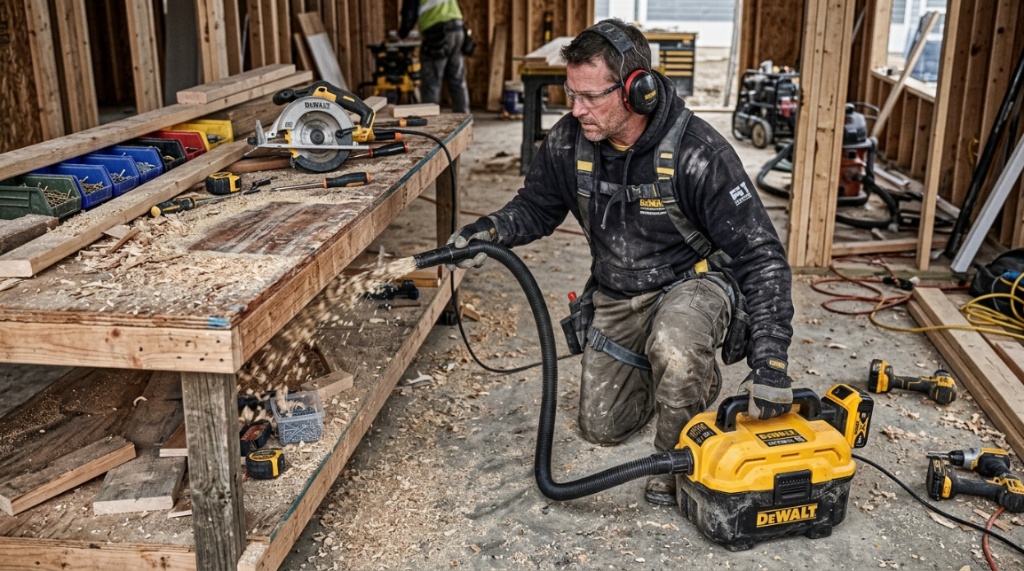
How Did We Find the DEWALT DCV581H When Tested on Job Sites?

There’s a particular frustration that comes with lugging a bulky wet/dry vacuum up a ladder, only to realize the cord doesn’t reach the nearest outlet. That’s often the moment a contractor starts wondering if a cordless model can actually keep up with the daily grind. We wanted to know if the DEWALT DCV581H could replace that reliable corded unit without sacrificing performance, so we tested the DEWALT DCV581H on job sites to see how it handles real-world conditions. This article breaks down our findings on suction, battery life, durability, and whether this tool is a smart investment for your trade.

How to Pick a Garden Weeding Knife for CA Soil

You’ve stared at the cracks in your California soil, watching stubborn dandelions and oxalis reclaim your flower beds. The problem isn’t your willpower—it’s your tool. Standard trowels and flimsy hoes bounce off sun-baked clay or sink uselessly into sandy loam. You need a tool engineered for the Golden State’s unique ground. The solution is a garden weeding knife california gardeners swear by, but picking the right one requires understanding soil physics, blade geometry, and handle ergonomics. Let’s cut through the noise and find the exact knife that will make weeding feel less like a chore and more like a victory.

How to Sleep Cool on a Budget in Washington

Washington’s unique climate—from humid summers in Western Washington to dry, intense heat east of the Cascades—makes sleeping cool a real struggle. Many residents assume that staying cool at night requires a $2,000 air conditioning unit or expensive high-tech bedding. That assumption is wrong. You can achieve a comfortable, cool sleep environment without breaking the bank.

Why the Tray Your Product Cooks in Affects the Product More Than Most Manufacturers Realise

Food manufacturers often work without realising they are operating a hierarchy of attention. The components they focus on – such as a recipe’s balance of seasoning or a sauce’s formulation – tend to be those that are not affected by the choice of tray to cook the final product in. The food technologist who develops the ready meal is likely to focus on the choice of protein, formulation of the sauce and balance of seasoning, then packaging, by which time the product is defined.

Tray size and shape tend to be among the last decisions in a development process.

This sequencing has consequences for the finished product, whether or not they were planned. For Ovenable Trays, visit //www.southerncrosspackaging.com/ovenable-trays

Tray size and shape can be an active participant in the cooking process. How the tray participates in the cooking process can influence the distribution of heat within the product, how moisture is managed during cooking, the likelihood of browning and the final texture of the finished product. Tray size and shape can influence the cooking process by influencing the materials and configurations used for the trays, such as the gauge of CPET trays, the difference between aluminium trays with different gauges, the choice of base vs top trays and the difference in depth. These variations can influence how heat is distributed, how moisture is retained within the cooking chamber, how steam circulates and how the tray interacts with the recipe.

The product might be tested and perform well in one tray specification, then transferred and start performing differently in another due to cost, availability or even just due to a change in supplier. The oven performance will differ, even though the recipe remains the same. Sauces might thicken too much or not enough. Some components might cook too quickly or too slowly.

How to Remove Deep Carpet Debris in Portland, OR Homes

Carpets in Portland homes collect more than visible dust. They trap soil, pollen, pet hair, and tiny outdoor particles daily. According to indoor air quality studies, carpets can hold several times their weight in debris. Additionally, high foot traffic pushes dirt deep into carpet fibers. That is why homeowners often struggle with hidden contamination. Many residents use a lightweight vacuum for carpet cleaning to handle surface debris. However, deep carpet buildup requires a more complete cleaning strategy.

Why Solar Panels Are The Most Patient Investment Most Homeowners Ever Make

A lot of products are measured on a time scale of months. For instance, the cost of a renovation of your house needs to be recouped before the next property appraisal, otherwise the investment in that renovation is worthless. Savings accounts and bank products are also measured on a time scale of months, because people need to be convinced that keeping money with the bank is a good idea within a short period of time.

Even when it comes to investments, most products are measured on a time scale of years, rather than decades. The modern investment culture has a very short attention span. The products that can survive this culture are the ones that can deliver results within a period that a human being can comfortably hold in their head.

Solar panels, on the other hand, work on a completely different time scale. The payback period for a solar panel system is the time scale at which the energy savings have recouped the costs of the installation. This payback period is somewhere between 7 and 12 years, depending on the size of the solar panel system, the energy consumption of the household, the orientation of the solar panels, and what happens to the electricity prices in the meantime. For Dorset Solar Panels, visit https://solarpanelsdorset.co.uk/solar-panels

This is a very long period of time to wait for an investment to break even. It is longer than most people keep a car, it is longer than most people keep a mortgage fixed, and it is longer than most people are willing to hold on to an investment for. And yet, most solar panel systems come with a twenty-five-year performance warranty, which is the confidence of the manufacturer that the solar panel system will still be generating useful amounts of electricity twenty-five years after the installation.

The Paper Filter That Keeps a Whole System Honest

Pull a 3-month old air filter out of its slot. It will look something like this: Grey, black or even matted up like a small felt wall. This is not just a piece of paper folding, it’s keeping a log of the air going through it.

Modern filtration media are based on decades old technology. In the 1950s and 60s there was a huge amount of industrial research into engine technology. A large amount of this research has been incorporated into the design of air filtration media. In fact some of the earliest pleated filter fibres were laid in a pattern similar to the layers found in a gas-mask canister from World War 2. As central heating became the norm in American and British suburban homes, the cardboard framed, pleated filtration media were mass produced and became the standard for heating and cooling systems.

A few years into the pleated filter phenomenon, engineers found that their creations could be as bad as a clogged filter. A filter that was too fine for the particular HVAC system it was used in could also cause great problems. The blower could become so restricted that it would run hot and, in the end, wear out prematurely. MERV (Minimum Efficiency Reporting Value) was devised to indicate how well a filter captured small particles. High numbers, like MERV 13, are better for air quality than low numbers, like MERV 8. But, a MERV 13 can be very bad for a residential blower that was designed to use a MERV 8 filter. That’s why the filter exists in the first place—to protect the expensive parts of the system from dirt and dust.

The filter exists to protect the HVAC equipment and, incidentally, the air that you breathe while it’s doing that. All of the major components of HVAC systems, including the blower motor, the air coil, and the heat exchanger, can become clogged, corroded, or otherwise damaged by fine particles that have passed through the filter unimpeded. High quality air in your home is a byproduct of proper filtration for your HVAC system, and protecting your major HVAC components is the filter’s primary function. There is a useful background explanation of what a MERV rating actually measures.

For those looking into HVAC in Williamsport, PA, it is crucial to remember that the filter is there to protect the system. As mentioned above, a climate with extremely humid summer and very cold winter months can put a lot of strain on a HVAC system. That strain can be further exacerbated by a filter that is not the correct MERV rating for the blower that it is being used in. For HVAC Williamsport PA, visit https://qualityairmechanical.com/hvac.

Change your filter on time. When you pull a used filter out of its slot, take a good look at it. It has been keeping a log of all the work that your HVAC system has been doing while it was in place.