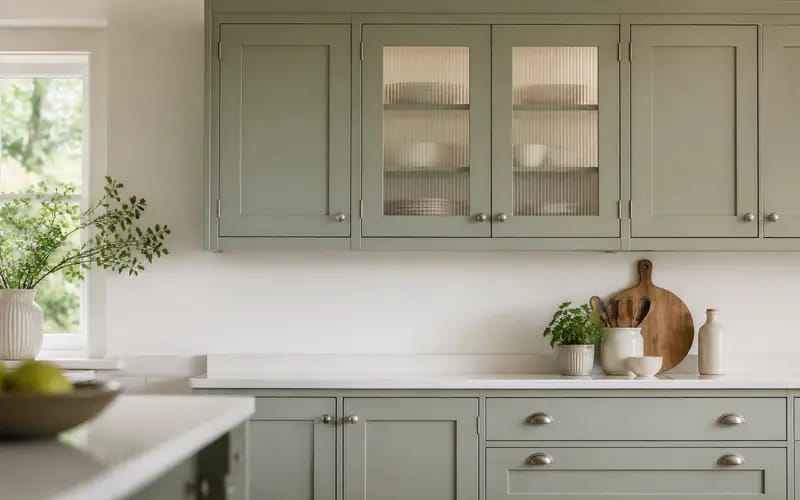
There’s more to kitchen doors than a solid pane of glass. Glass-fronted doors can be used to break up a run of matching cabinets and display dishes and other household items. They can also provide additional light to a room, which is especially important for very closed-plan kitchens or those with very few windows.
Why Choose Glass Fronts
Solid doors are unable to perform some of the functions of glass-fronted doors. For example, they are unable to reflect light around a room which could otherwise feel ‘shut in’. In a long galley kitchen or a kitchen with few windows, glass-fronted doors are particularly useful to reflect light around the room. They also provide an opportunity to display items of interest in your kitchen, such as glass, ceramics, cook books and more. Even one or two glass-fronted doors in a run of identical solid fronted kitchen doors will break up the solid colour of the doors and prevent your kitchen from looking like a solid block of furniture.
Types Of Glass Available
Most glass-fronted cabinet doors will have used Clear glass as this is the most obvious way to show off the items stored within. However, Clear glass shows up every mark and smear and also reveals just how messy the contents of the cabinet really are. The use of Frosted or Sandblasted glass provides light and softness to the cabinet and can make the cabinet look tidy without too much effort. Bevelled glass has an angled edge which can make the glass look more attractive by reflecting the light. Reeded or Fluted glass has vertical ribs which run up the glass, this type of glass is very fashionable at the moment and adds a softer more textures look to the cabinet. Tinted or Bronze glass is ideal for darker kitchens as it will hide the items stored within the cabinet and also allow some light to enter the room.
Frame Styles To Consider
When choosing glass-fronted kitchen doors the way the glass sits in the door frame is as important as the glass itself. A full-pane door is the most obvious choice to maximise light and visibility with just a slim frame around the edge of the glass. A shaker-style door with a glass centre panel is another option and is particularly suitable where the rest of the kitchen doors are of the shaker style. A multi-pane door features thin strips of glass divided by thin astragal bars to create a traditional ‘cottage’ style. The style of these doors will depend largely on the style of the remaining doors in your kitchen.
Getting The Safety Glass Right
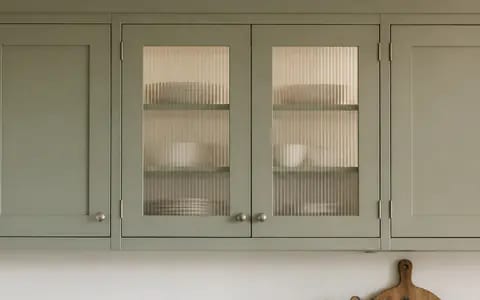
Just as a picture frame or a window is not made from the same sort of glass as used in furniture, so the glass used in the doors of your kitchen cabinets must be toughened. It doesn’t matter how cleverly the glass is cut into the door, if it breaks it must break into very small, blunt pieces. This is the sort of glass you should look for from a reputable supplier, and they should be able to confirm that the furniture you are ordering is made with glass that meets the appropriate safety glazing standards. A good supplier will also refer to toughened glass in their specification for the glass-fronted doors you have ordered. A useful reference for Replacement Kitchen Doors is Happy Doors.
Keeping Them Looking Good
Solid doors are often smudged by fingerprints but glass-fronted doors show up even more marks, especially near the handles and on lower cabinets that children can easily access. Keep glass-fronted doors clean with a microfibre cloth and glass cleaner and use on a regular basis, preferably weekly. Some types of glass such as frosted or reeded glass are better at hiding marks and are therefore ideal for families with busy households. However, you need to remember that you are displaying all of the items that you store behind the clear glass panels, so these types of cabinets are best used to display items that already look good on the shelves.
Adding Lighting Inside
LED lighting inside the cabinet can also provide a very pretty display. Low voltage battery operated or mains wired LED strip lights can be placed around the top and back of the shelves and switched on and off at will, often via a separate switch to the main kitchen lighting. The light will show up particularly well in cabinets with frosted or reeded glass, as it will diffuse and not produce harsh glare within the cabinet.
Where They Work Best
Most people would look to include glass fronted kitchen cabinets in a few of the kitchen units, typically a dresser, a display unit and possibly a few of the wall mounted kitchen cabinets above the work surface.
Mixing Glass With Solid Doors
It’s best to use the glass fronts as accents, and therefore to use them on the odd unit rather than on all of your cabinets. Typically the best cabinets to use are those which are at eye level, i.e. on walls as opposed to under counters, and which are in locations where people normally look. In this way the unusual cabinet(s) are seen to be of significance and the majority of solid fronted cabinets can continue to hide all of the storage that the kitchen contains.
There are many different kitchens where a glass fronted door would not be suitable for all of the cabinets but can add a lovely feature to a kitchen.