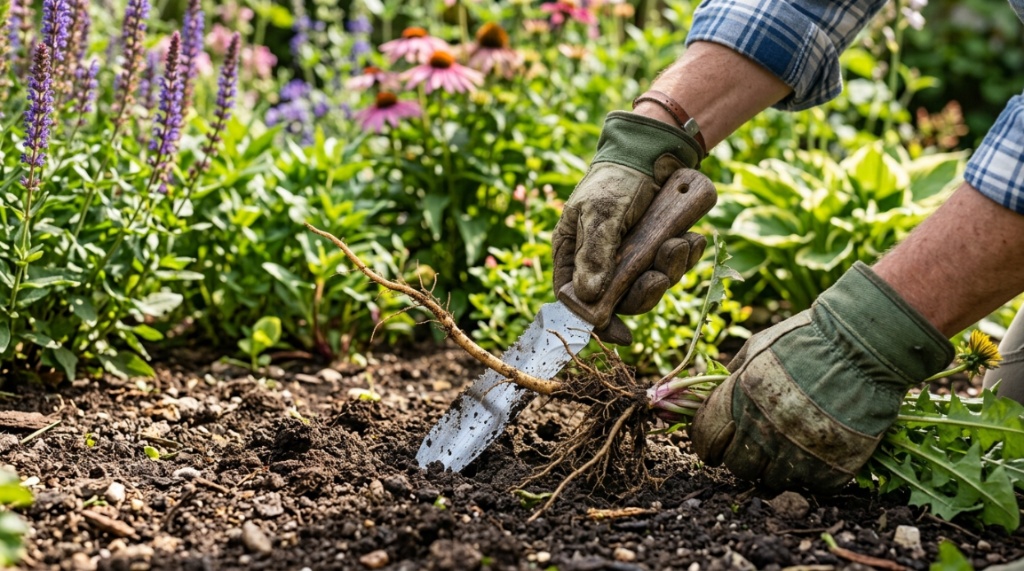
You’ve stared at the cracks in your California soil, watching stubborn dandelions and oxalis reclaim your flower beds. The problem isn’t your willpower—it’s your tool. Standard trowels and flimsy hoes bounce off sun-baked clay or sink uselessly into sandy loam. You need a tool engineered for the Golden State’s unique ground. The solution is a garden weeding knife california gardeners swear by, but picking the right one requires understanding soil physics, blade geometry, and handle ergonomics. Let’s cut through the noise and find the exact knife that will make weeding feel less like a chore and more like a victory.
What Makes California Soil So Demanding on Weeding Knives?
California isn’t one soil type—it’s a patchwork of extremes. From the adobe clay of the Central Valley to the decomposed granite of the Sierra foothills and the sandy coastal dunes, your weeding knife must be a chameleon. The wrong blade will snap, bend, or simply fail to penetrate, leaving roots intact. You need a tool that respects this diversity.
The Clay Conundrum: Why Sharpness Trumps Leverage
Clay soil, especially when dry, has the consistency of ceramic. A dull knife is useless here. You need a blade with a razor-thin profile that can slice into cracks and shear through the soil matrix. Look for high-carbon steel that holds an edge, not stainless steel that dulls quickly. A pointed tip is non-negotiable for initial penetration.
Sandy and Loamy Regions: The Need for Width
In coastal sands, a skinny knife just sinks without leverage. You need a wider blade, like a dandelion digger with flared shoulders, to pop out the entire root system in one motion. The knife must act like a lever, prying the plant free from loose soil without crumbling apart.
Decomposed Granite and Rocky Terrain
This is the enemy of thin blades. Rocks will chip and dull your edge instantly. You need a thicker, sturdier blade—almost like a small pry bar—that can withstand impact. A full-tang construction is critical here to prevent handle breakage on impact,Maintaining a pristine landscape takes more than just getting rid of unwanted plants; keeping your gear in top shape is equally important. For more seasonal maintenance advice, check out our guide on How to Sharpen Garden Shears to keep all your cutting tools ready for action.
Which Blade Material is Best for CA Ground?
**Carbon steel is the winner for California, but with a catch.** It sharpens easily and holds an edge far better than stainless, but it rusts. For our damp coastal fogs, that’s a problem. You need a coated carbon steel blade or a high-carbon stainless alloy that balances edge retention with corrosion resistance.
High-Carbon Steel: Superior Cutting, Needs Care
- Pros: Holds a razor edge longer, easier to sharpen to a fine point.
- Cons: Rusts quickly without regular oiling, can stain soil.
- Best for: Dry inland areas like Sacramento or the IE.
Stainless Steel: Low Maintenance, Softer Edge
- Pros: Rust-resistant, ideal for coastal fog zones.
- Cons: Dulls faster, harder to sharpen in the field.
- Best for: San Francisco, Santa Cruz, or anywhere near the ocean.
Coated Blades: The Practical Compromise
Look for powder-coated or ceramic-coated carbon steel. This gives you the sharpness of carbon with a rust-resistant layer. It’s the best of both worlds for the mixed climates of Southern California. Key takeaway: Avoid cheap stamped steel; it will bend on the first rock.
How Long Should the Blade Be for Optimal Leverage?
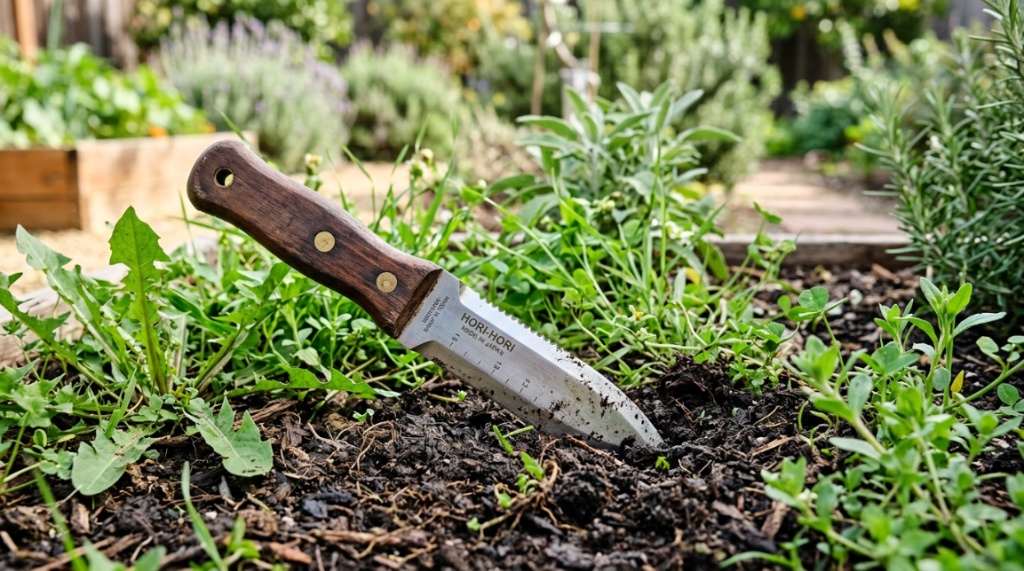
**A blade length of 2.5 to 3.5 inches is the sweet spot.** Anything shorter lacks the reach to go deep for taproots. Anything longer becomes unwieldy in tight spaces or potted plants. The length should match the depth of typical weeds in your area.
Short Blades (Under 3 Inches): Precision Work
Ideal for raised beds and containers where you’re working close to desirable plants. They offer better control and less risk of slicing a prized perennial. Use them for young weeds with shallow roots,Maintaining a pristine landscape takes more than just getting rid of unwanted plants; keeping your gear in top shape is equally important. For more seasonal maintenance advice, check out our guide on How to Sharpen Garden Shears to keep all your cutting tools ready for action.
Long Blades (Over 3.5 Inches): Deep Taproots
Necessary for weeds like yellow starthistle or dock that plunge deep into the subsoil. The extra length lets you follow the root down without tearing it. However, longer blades require more careful wrist angle management to avoid breakage.
Blade Width: The Forgotten Factor
| Soil Type | Ideal Blade Width | Why |
|---|---|---|
| Clay | Narrow (less than 1 inch) | Reduces friction, penetrates cracks easily. |
| Sand | Wide (1.5+ inches) | Acts as a scoop, lifts large root balls. |
| Rocky | Medium (1 inch) | Balances strength with maneuverability. |
Why is the Handle Design Critical for CA Gardeners?
**The handle determines whether your wrist survives the weeding season.** California gardens often have hard, compacted soil that requires a twisting motion to loosen weeds. A slippery, ergonomically mismatched handle will cause blisters and repetitive strain injuries. Your grip must be secure and comfortable for extended sessions.
Wooden Handles: Traditional Feel, Vibration Dampening
Hardwood like ash or hickory absorbs shock from rocky soil, reducing impact on your palm. They provide a warm, secure grip even when your hands are sweaty. However, they require treatment with linseed oil to prevent cracking in our dry summer heat.
Rubberized / TPR Handles: Maximum Grip
These are non-slip, even when wet from dew or irrigation. They are excellent for coastal areas with morning fog. Look for a handle with a flared butt or finger grooves to prevent the tool from slipping during a forceful pull.
Ergonomic Angles: Reducing Wrist Strain
Some knives feature a slight bend (like a hori-hori) that puts your wrist in a neutral position. This allows you to push down with your body weight, not just arm strength. For clay soil, this angle is a game-changer. Critical: Test the grip in your hand; if it makes your wrist twist awkwardly, move on.
What is a Hori-Hori and Should You Use One?
**A hori-hori is a Japanese soil knife that is arguably the best all-around garden weeding knife california residents can own.** It features a concave blade with a sharp edge on one side and a serrated edge on the other. It’s a multi-tool that replaces a trowel, knife, and weeder. For California’s varied conditions, it is exceptionally versatile.
The Concave Blade Advantage
The dip in the blade allows you to scoop out soil or bulbs with ease. It creates a lifting action that natural works in sandy soil and provides a channel for dirt to escape when cutting through clay. You can also use it to transplant seedlings.
Serrated Edge: Cutting Through Roots and Sod
When you meet a thick, fibrous root or tough Bermuda grass runner, the serrated edge acts like a mini saw. This is critical for California lawns where grasses intermingle. Pulling the serrated side against the root cuts it cleanly without tearing the crown.
Marking Measurements on the Blade
Many hori-horis have depth measurements engraved on the blade. This is surprisingly useful for planting bulbs at consistent depths (3 inches, 5 inches, etc.) or for checking soil moisture levels. It adds overlooked functionality.
When Should You Use a Leverage Bar Style Knife Instead?
**If you primarily fight weeds in hardpan clay during the summer, a dedicated leverage bar knife is superior.** This tool has a thick, heavy blade that acts almost like a pry bar. You insert it vertically next to the weed, then press the handle downward to pop the root up from below. It relies on physics, not arm strength.
Identifying the Right Momentum
This style is heavier, usually weighing over a pound. The weight is an asset—it helps drive the blade into hard ground. Look for a knife with a sharpened side edge for slicing, but a blunt spine for stepping on with your boot to drive it down.
When NOT to Use It
Skip this style if you have sandy soil. The wide, thick blade will just push sand around and be exhausting to pull out. It’s also overkill for small weeds in vegetable beds where you need finesse.
Handle Length: Long vs. Short
Short-handled leverage knives (5-6 inches) offer maximum control for close-up work. Long-handled ones (12 inches) provide more leverage but sacrifice precision. For most CA home gardens, the short version is more practical.
Can You Sharpen a Garden Weeding Knife to Handle CA Weeds?
**Yes, and you absolutely must.** A sharp knife is safer and more effective. In dry California summers, weeds get woody and tough. A dull blade will crush the stem, not cut it, leaving ragged tissue that often regrows. Regular sharpening is not optional.
Choosing the Right Sharpening Method
A diamond file or a whetstone is best. Carbide sharpeners are too aggressive for thin blades. Step-by-step: 1) Hold the file at a 15-degree angle. 2) Push it away from your body along the edge 5-10 times. 3) Turn the knife over and lightly remove the burr with one or two passes. 4) Wipe the blade clean.
Maintaining the Edge After Rocky Encounters
If you hit a rock, check the edge immediately. You may have a rolled or chipped edge. A quick touch-up with the file repairs most minor damage. Keep a small sharpening stone in your garden tool bucket for on-the-spot fixes.
The Sign You Need to Sharpen
If you have to press harder than usual or the knife skips across the soil surface instead of slicing in, stop and sharpen. Working with a dull knife forces you to use jerky motions that can cause the blade to slip and cut your fingers.
How to Test a Weeding Knife Before Buying in a CA Store
**Simulate your local soil conditions before you pay.** Many big-box stores have gravel or wood chips outside, but you need to feel the knife in actual dirt. If you can, bring a small container of your garden soil to the store. If not, check the blade’s flexibility and your grip.
The Grip and Weight Balance Test
Hold the knife as you would during work. Does the weight feel distributed toward the blade or the handle? Ideally, it should feel balanced. Does the handle have a secure, non-slip texture? If it twists in your hand, it will cause blisters.
The Thumb Pressure Test
Press your thumb on the spine of the blade. Does it flex? A good knife should have very little lateral give. If it bends easily, it will snap under pressure in hard, dry clay. Look for a blade thickness of at least 1/8 inch for heavy-duty use.
The “Whack” Test on Concrete
Gently tap the tip of the blade on the ground or a hard counter. Listen for a solid “ting.” A hollow or dull sound suggests poor heat treatment. A high-quality, through-hardened steel will make a clear, ringing sound. This test is a quick way to assess material quality.
Maintenance Tips to Extend the Life of Your Knife
**California’s climate—sun, fog, and dry heat—cycles moisture and oxygen that will destroy an unprotected blade.** Proper maintenance is a five-minute task that saves you from buying a new knife every year. It’s imperative to develop a routine.
Cleaning the Blade Properly
Never leave soil on the blade. The enzymes and salts in CA soil are corrosive. Rinse with water and dry immediately with a rag. For sticky clay, use a wire brush or putty knife to remove residue, then wipe dry.
Oiling for Rust Prevention
After drying, apply a thin coat of oil to the blade. Use boiled linseed oil for wooden handles and mineral oil or camellia oil for the metal. Avoid vegetable oil, which will turn sticky and rancid.
Seasonal Storage Solutions
During the rainy season (Nov–March), store your knife indoors in a dry space. Hang it up or keep it in a bucket of sand mixed with a little motor oil. This inert environment prevents rust and keeps the edge clean. Do not leave it outside overnight.
Frequently Asked Questions
Is a serrated edge necessary for weeding in California?
Not always, but it is highly recommended for cutting through thick, fibrous roots like Bermuda grass or bindweed. A serrated edge acts like a saw and prevents the root from tearing, which reduces regrowth. For purely sandy soils, a smooth edge is sufficient.
Can I use a kitchen knife as a weeding knife?
No. Kitchen knives are too flexible and have thin, fragile tips that will snap in hard soil. They also lack the sturdy handle design needed for a secure grip while using downward force. Invest in a proper gardening tool built for the job.
What is the best technique for using a weeding knife in dry clay?
Use a rocking motion. Push the blade vertically into a crack, then rock it back and forth to loosen the soil before prying. This reduces stress on the blade and your wrist. Water the area lightly 30 minutes prior to weeding to soften the soil without making it muddy.
How often should I replace my garden weeding knife?
A high-quality knife can last 5 years or more with proper maintenance. Replace it when the blade thins drastically from repeated sharpening, the handle cracks, or the steel snaps. If you notice bent tips, it’s time to upgrade to a thicker blade.
Do I need a full-tang knife for heavy California soil?
Yes. Full-tang construction means the metal extends through the entire handle. This ensures the blade won’t detach from the handle when you pull hard on a stubborn root or hit a rock. It distributes force evenly, preventing fatigue points.
Can a weeding knife be used for planting bulbs?
Absolutely. A hori-hori kind of knife with a concave blade is perfect for planting bulbs. Use the tip to loosen the soil, then scoop out the dirt with the concave side to create a hole at the proper depth. It doubles as a trowel.
Conclusion
Picking the right garden weeding knife for California soil isn’t about brand names—it’s about matching the blade to your specific microclimate and ground type. Clay demands sharp, narrow, durable steel; sand prefers wider scoops; rocky regions need thick, shock-absorbent designs. Remember to prioritize a comfortable, secure handle and designate time for regular sharpening and oiling. Start by assessing your soil’s texture with a simple squeeze test. Then, choose a blade that can handle that texture. A quality knife will turn a dreaded gardening chore into a satisfying hour of connecting with your land, removing weeds cleanly at the root and saving you hours of future labor. Don’t settle for the cheap plastic handle—invest in a tool that’s as tough as the California earth itself.