A leather briefcase that sits untouched for months is often the one that fails first. Cracking rarely comes from daily use — it comes from dry air, heat, sunlight, and the wrong container. If you own a durable genuine leather briefcase guide type of bag, or any full-grain attaché, the storage habits below will decide whether it stays supple for a decade or turns brittle in two seasons. Here is exactly how to store it, what to avoid, and how to tell the difference between surface dryness and permanent damage.
Quick Answer
Empty the briefcase, clean it, and condition the leather lightly. Stuff it to hold its shape, place it in a breathable cotton dust bag, and store it upright on a shelf in a cool, dark, dry room — ideally 60–70°F with 40–50% relative humidity. Never store leather in plastic, in a hot attic, in direct sunlight, or hanging by its handle for long periods. Check and re-condition every three to six months.
Key Takeaways
- Leather cracks because it loses its natural oils, not because it is old — heat, dryness, and UV light accelerate that loss faster than normal use does.
- Breathable cotton or flannel is the correct storage material; plastic, vinyl, and sealed bins trap moisture and can cause mold or sticky surface breakdown.
- Stuffing the bag prevents creases from setting into folds, which are the first places leather splits.
- Conditioning before storage matters more than conditioning after, because dry leather absorbs less oil once it has hardened.
- Humidity is the most overlooked factor: too dry causes cracking, too damp causes mildew, and both can happen in the same home depending on the season.
Why Leather Cracks in Storage
Leather is skin. It holds a percentage of natural oils and moisture that keep the fibers flexible. When those oils migrate out or evaporate, the collagen fibers stiffen and lose the ability to bend without tearing. The crack you eventually see is the end of a process that started months earlier.
Three conditions drive that process faster than anything else:
- Low humidity. Central heating, air conditioning, and winter air pull moisture out of leather. Anything below roughly 40% relative humidity starts to work against the material.
- Heat. Warm air holds more moisture, so it draws oils out of the leather more aggressively. A closed car, an attic, or a spot above a radiator is genuinely damaging.
- UV light. Sunlight fades dye and dries the surface. It is one of the few forms of damage that is completely irreversible.
There is also a mechanical cause: folds. A briefcase stored flat with the handle crushed under it, or hung by one strap for years, develops a permanent crease. Leather that has dried slightly will crack along that crease line rather than flexing.
Step-by-Step: The Correct Storage Routine
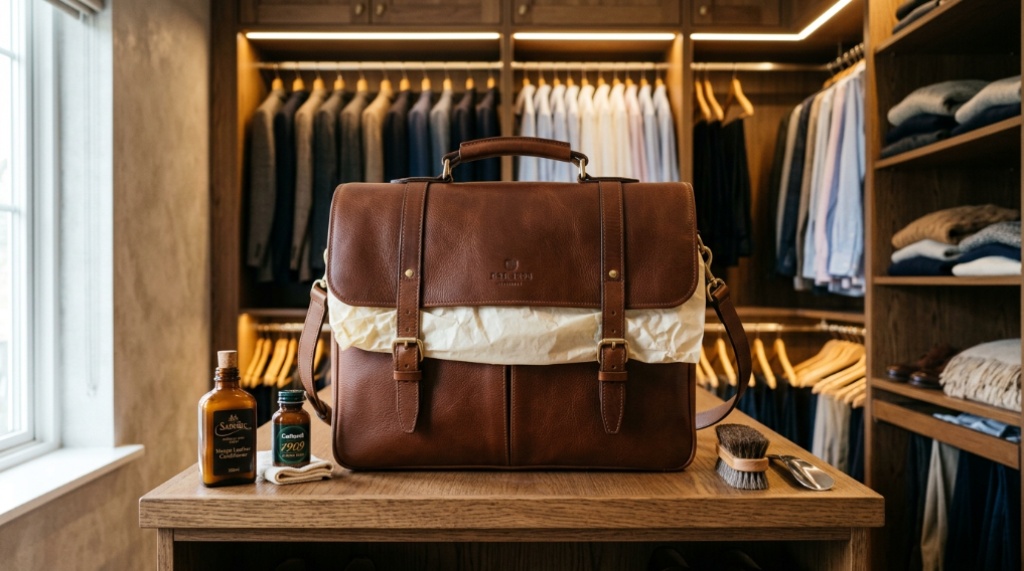
Follow these steps in order. Skipping the cleaning step is the most common mistake, because dirt and body oils left on the surface can harden and stain during long storage.
- Empty everything. Check every pocket, including the pen loops and the hidden file sleeve. A forgotten pen can leak, and a forgotten receipt can attract insects.
- Clean the surface. Wipe with a soft, slightly damp cloth. For deeper grime, use a leather-safe cleaner and follow the product’s instructions. Let it dry naturally — never with a hairdryer or heater.
- Condition sparingly. Apply a small amount of quality leather conditioner with a soft cloth, working in thin layers. Buff off any excess. Over-conditioning leaves a sticky residue that attracts dust and can darken the leather unevenly.
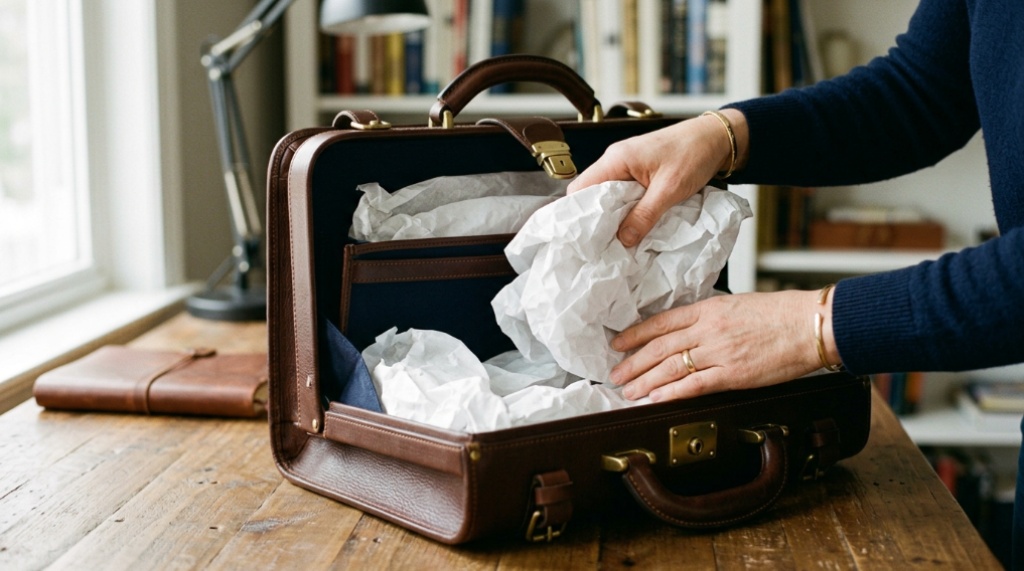
- Stuff the bag. Use acid-free tissue paper, clean cotton cloths, or a shaped pillow. Fill the main compartment and the front pockets so the bag holds its intended silhouette. Avoid newspaper, since the ink can transfer.
- Close and fasten. Buckle straps loosely or leave them on the middle hole so the leather is not under tension. Zip all zippers to keep their shape.
- Place in a breathable dust bag. Cotton or flannel only. If the bag came with a branded dust bag, use it.
- Store upright on a shelf. Lying flat is acceptable if the bag is well stuffed, but upright storage keeps the base from flattening and the handles from bending.
- Set a reminder. Inspect and re-condition every three to six months.
Choosing the Right Storage Environment
The room matters as much as the routine. A cool, dark, dry closet on an interior wall is close to ideal. The following table shows how common storage locations compare.
| Location | Main Risk | Verdict |
|---|---|---|
| Interior closet shelf | Minimal — stable temperature and low light | Best option |
| Basement or garage | High humidity, mold, temperature swings | Avoid |
| Attic | Extreme heat, very low humidity | Avoid |
| Near a window | UV fading and heat | Avoid |
| Sealed plastic bin | Trapped moisture, mildew, sticky finish | Avoid |
| Cardboard box | Better than plastic, but can absorb and hold dampness | Acceptable short-term |
If your only closet is a humid one, add a small silica gel packet inside the dust bag — but replace it regularly, because saturated silica stops working and can eventually release moisture back into the air.
Dust Bag vs. Box vs. Hanging: What Actually Works
A breathable dust bag is the default choice for most people. It keeps dust off, allows air circulation, and costs almost nothing. A structured box works well for very long storage of a stiff, formal attaché, provided the box is acid-free and not airtight. Hanging is the weakest option: the weight of the bag pulls on the handle attachment points and can stretch or distort the leather over time.
If you must hang a bag, use a wide, padded hanger through the handle rather than a thin wire hook, and only for short periods. For anything longer than a few weeks, shelf storage is safer, If you are also in the market for high-end accessories, be sure to check out our oklahoma city guide to luxury designer bag shopping for the best local boutiques.
Common Storage Mistakes That Cause Cracking
- Storing in plastic bags. Plastic traps humidity and prevents the leather from breathing. It is one of the fastest routes to mold and surface breakdown.
- Skipping conditioner before storage. Dry leather going into a dry environment has no buffer.
- Over-stuffing. A bag packed too tightly stretches seams and distorts the shape permanently.
- Storing in a hot car or trunk. Heat is more damaging than most people assume, and it acts quickly.
- Ignoring the bag for a year or more. Even well-stored leather benefits from periodic inspection.
- Using the wrong product. Saddle soap, alcohol-based cleaners, and household detergents strip oils rather than replace them.
What to Do If the Leather Is Already Dry or Cracked
Surface dryness — leather that feels stiff and looks slightly dull but has no visible splits — usually responds well to cleaning and several thin conditioning sessions spaced a day or two apart. Give the leather time to absorb between applications.
Actual cracks are different. Once the surface layer has split, it cannot be fully restored at home. Deep conditioning can slow further cracking and improve appearance, but the split itself remains. For a valuable bag, a professional leather repair specialist can sometimes fill and refinish cracked areas. For minor scuffing and edge wear, a matching leather cream or edge dressing is usually enough.
Be realistic about the trade-off: aggressive repair attempts with heat, dyes, or household products often make the damage worse and can reduce what a professional is able to do later.
Frequently Asked Questions
Can I store a leather briefcase in a plastic bin if I add silica packets?
It is not recommended. Plastic blocks airflow entirely, and silica only manages a limited amount of moisture. A breathable cotton dust bag on a shelf is safer and simpler.
How often should I condition a stored leather briefcase?
Every three to six months is a reasonable baseline in most climates. In very dry or heated environments, check more often. If the leather already feels supple and looks slightly satin rather than dry, you can wait longer.
Is it better to store a briefcase flat or standing up?
Standing upright is generally better because it prevents the base from flattening and keeps the handles from bending. Either way, the bag must be stuffed to hold its shape.
Does storing leather in a cold room damage it?
Cool is fine; cold and damp is not. The problem is humidity and temperature swings, not low temperature itself. Consistent conditions matter more than a specific number.
Can I use a vacuum-sealed bag for long-term storage?
No. Vacuum sealing compresses the leather, crushes the structure, and removes the air circulation the material needs. It can cause permanent creasing and deformation.
What is the ideal humidity for storing leather?
Roughly 40–50% relative humidity is a practical target. Below that, leather dries out; well above it, mold becomes a real risk.
Conclusion
Storing a leather briefcase well comes down to four things: keep it clean, keep it conditioned, keep it breathing, and keep it away from heat and light. A breathable dust bag, light stuffing, and a cool dark shelf will prevent the vast majority of cracking. Set a reminder to inspect it every few months, and deal with dryness early — before it becomes a split. That small habit is what separates a briefcase that lasts a decade from one that does not.