Key Takeaways
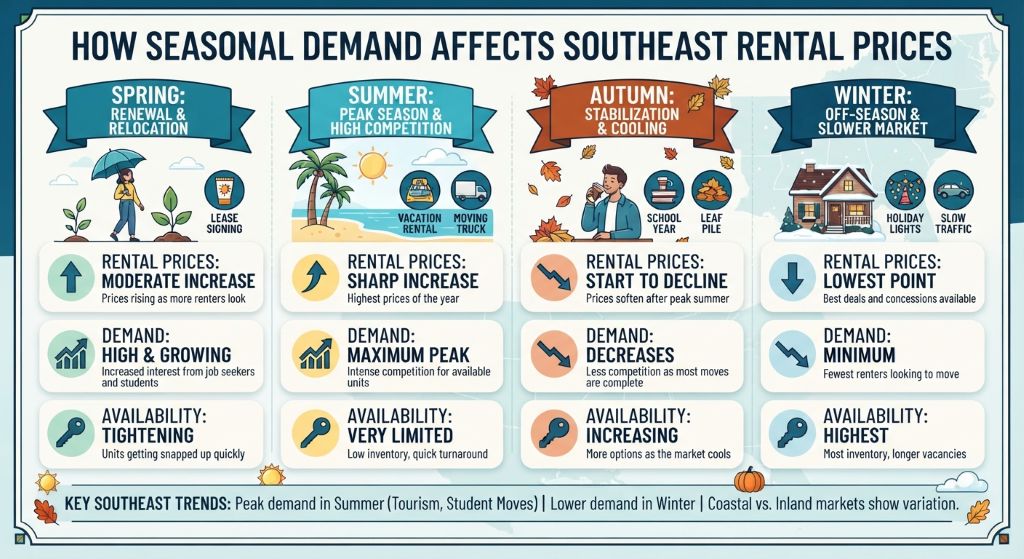
- Winter snowbirds push up coastal Florida rents by 20 to 50 percent.
- Summer heat and hurricane season often bring discounts and free rent.
- College towns see price spikes in late summer.
- Job-driven cities like Miami and Orlando have steadier prices.
- Booking early and staying flexible can save hundreds of dollars.
Rent does not stay still across the year. In the Southeast, weather, tourism, and school calendars all move prices. A beach condo in January can cost far more than the same condo in June. However, seasonal swings differ by city and rental type. Therefore, timing your search can save real money. This guide explains how seasonal demand affects Southeast rental prices. It also shows how renters and owners can plan around these cycles. Use it to choose the right month for your next lease.
Snowbirds and Winter Price Spikes
Winter is the busiest season along the Southeast coast, especially in Florida. Retirees and remote workers from colder states arrive to escape the snow. As a result, demand jumps and prices follow.
The Florida Realtors association reports that when snowbirds return between November and April, beach rental prices rise 20 to 50 percent. One rental guide narrows the peak further. It says January through March can cost 40 to 60 percent more than shoulder seasons. Therefore, timing matters a great deal.
Location changes the size of the spike. One 2026 snowbird guide lists peak monthly rates of $3,500 to $7,000 for a one-bedroom in Southwest Florida cities such as Naples and Fort Myers. In contrast, it lists $1,200 to $2,500 in the Nature Coast area. Panhandle towns also offer lower off-season rates. Consequently, budget-focused renters can save by choosing different areas.
Additionally, Gulf Coast rentals often cost less than Atlantic Coast ones. One guide says the difference averages about 15 to 20 percent for similar homes.
The shoulder months offer good value. According to the same guide, December and April bring 15 to 25 percent discounts. November and May often bring the deepest discounts, sometimes 30 to 40 percent below peak rates. The weather stays pleasant in those months.
Use these tips to beat winter prices:
- Book early: Reserving six to twelve months ahead is standard for seasonal stays.
- Stay longer: Owners often give 15 to 20 percent off for multi-month commitments.
- Shift your dates: Arrive in December or leave in April to lower your rate.
- Ask about utilities: Electricity can add $150 to $300 monthly if not included.
Note that these figures come mainly from vacation and seasonal rental sources. Standard year-long leases usually change less.
Summer Slowdowns and Hurricane Season
Summer works differently. Heat, humidity, and storm risk reduce demand in many Southeast markets. As a result, landlords compete harder for tenants.
Florida Realtors says summer heat and hurricane chances lower demand. Landlords then cut prices and offer free rent or other incentives. Another guide suggests summer is the best time for long-term renters to find a deal. The reason is simple. Fewer people search for homes, and landlords want to fill vacancies.
Hurricane season runs from June through November. It peaks from August through October. Therefore, some owners see fewer inquiries during those months. Renters can use this slowdown to negotiate lower rent or waived fees.
However, not every city follows the same pattern. Jacksonville shows a different cycle. A local property manager reports that its rental market heats up from March through August. Military moves, school calendars, and beach season drive that demand. Median rents there slid from about $1,975 in summer to about $1,850 in winter during the 2024 season. So Jacksonville renters may find better prices in fall and winter.
Job-driven cities behave differently again. Florida Realtors notes that Miami and Orlando have steady year-round demand because of local jobs. Consequently, rents there move less between seasons. Spring and fall serve as transition periods.
Renters can use these patterns:
- Search in summer for coastal long-term leases.
- Ask for concessions, such as one free month or a lower deposit.
- Compare several listings, since off-season landlords negotiate more.
- Check the lease end date, because it affects your next renewal.
Additionally, prepare for storms. Confirm insurance coverage and ask about the landlord’s hurricane plan before you sign.
College Towns, Military Moves, and School Calendars
Seasonal demand is not only about weather. School and job calendars shape prices too. The Southeast has many college towns and military communities, so these cycles matter.
College towns show clear patterns. Florida Realtors says university towns see price increases in late summer when students return. Demand dips slightly during winter break. Therefore, students and staff should search early and sign before August.
The same pattern applies across the region. Auburn, Athens, Clemson, and Gainesville all fill quickly before fall term. Landlords know this and raise prices when supply is short. Additionally, lease start dates often cluster in August. Renters who start earlier or later may find better deals.
Military relocations create similar waves. Jacksonville’s property managers note that military moves and school calendars influence its peak from spring through summer. Families with children often move between June and August. As a result, competition rises for family-sized homes.
Other groups add pressure. Travel nurses and contract workers arrive on schedules tied to hospital needs. Additionally, corporate relocations often cluster in spring and summer.
Consider these strategies in high-demand seasons:
- Start early: Begin your search two to three months before your move.
- Widen your area: Look a few miles from campus or base for lower rent.
- Be flexible: A move-in date in July or September may cost less than August.
- Ask about lease length: A 10-month lease may not save money, so compare totals.
Finally, remember that landlords adjust for renewal timing too. A lease that ends in a peak month lets landlords re-rent fast. If your lease ends in winter, you may face weaker demand and better terms.
How to Plan Around Seasonal Pricing
Now you understand the cycles. Next, use them to your advantage. Renters and owners can both plan smartly.
For renters, timing is the biggest lever. If you can choose, sign a long-term lease in summer or early fall. Landlords often accept lower rent then. Additionally, avoid signing a lease that expires during a peak month. You would face a tight market at renewal time.
Negotiation helps as well. Ask for a discount for a longer lease. Ask for a free month or reduced deposit. Similarly, use competing listings as proof of fair pricing. Landlords prefer a good tenant over a vacant unit.
For snowbirds and short-term guests, planning is key. Book early and consider shoulder months. Additionally, compare inland and coastal options. Many guests find the same sunshine at lower prices a few miles from the beach.
Owners should also plan. Offer seasonal pricing or short winter leases if your area draws snowbirds. Offer incentives in slow months instead of cutting base rent. Additionally, align lease ends with strong demand months to fill units quickly. This approach protects income all year.
Follow this simple plan:
- Identify your city’s peak and slow months.
- Set your move window around the slow months.
- Compare at least five listings before you decide.
- Negotiate lease length, deposit, and fees.
- Set a reminder to review prices before renewal.
Finally, watch local news and market reports. New apartment supply, job announcements, and storm damage can shift seasonal patterns in any given year.
Conclusion
Seasonal demand shapes Southeast rents in clear ways. Winter snowbirds raise coastal prices, while summer heat and storms often bring discounts. College towns spike in late summer, and cities like Jacksonville have their own cycles. Even seasonal travel trends, such as when is the best time to go surfing in South Carolina, can influence demand in coastal areas. Job-driven metros such as Miami and Orlando stay steadier. Therefore, know your market before you act. Additionally, book early, stay flexible, and negotiate.
Take action today. Write your ideal move month, and compare prices for two different seasons in your target city. Then contact landlords about incentives. Share your best timing tip in the comments, and subscribe to our newsletter for more practical rental advice.
Frequently Asked Questions
When is the cheapest time to rent in the Southeast?
Summer and early fall are often cheapest for coastal long-term leases. Demand falls, so landlords offer discounts and incentives.
How much do snowbirds raise rents in Florida?
Florida Realtors reports increases of 20 to 50 percent along beaches from November to April. Peak months can run higher.
Do all Southeast cities follow the same seasonal pattern?
No. Coastal Florida peaks in winter, while Jacksonville peaks in spring and summer. College towns peak in late summer.
Does hurricane season affect rent prices?
Yes. Storm risk can lower demand and lead to discounts. Always check insurance and your landlord’s storm plan.
How early should I book a winter rental in Florida?
Six to twelve months ahead is common. Early booking often brings better rates and more choices.