Key Takeaways
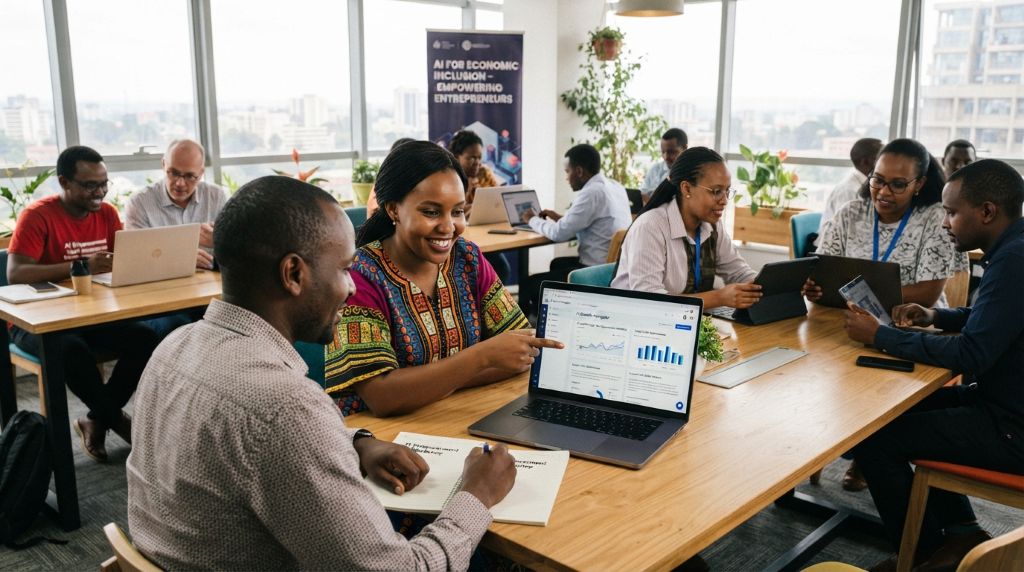
- Artificial intelligence now helps small business owners compete with large companies at a fraction of the cost.
- Nearly 4 in 10 professionals worldwide say AI made them more likely to start a business.
- Federal Reserve data shows AI adoption among U.S. firms reached 18 percent by late 2025, with faster growth ahead.
- AI-driven credit tools let unbanked entrepreneurs access loans using phone data instead of paperwork.
- Bias, weak internet access, and low digital skills still block full inclusion for many communities.
- Smart, human-centered AI design can close economic gaps instead of widening them.
Artificial intelligence used to feel like a tool for big corporations only. That has changed fast. Today, a home baker in Lagos and a graphic designer in Ohio can use the same AI tools. This shift matters because it opens doors that were closed before. Small business owners no longer need large teams or deep pockets to compete. They need a laptop, an internet connection, and the willingness to learn. This article looks at how AI supports entrepreneurs and communities that markets often overlook, and where the risks still lie.
How AI Levels the Playing Field for New Entrepreneurs
Starting a business used to require capital most people simply did not have. You needed a website developer, an accountant, and a marketing team. AI has replaced many of those costs with subscription tools anyone can afford. A solo founder can now build a website, write ad copy, and analyze sales data without hiring anyone.
This shift shows up clearly in the numbers. Nearly 4 in 10 professionals globally report that AI made them more likely to start a business, and the number of people adding the founder title to their profiles has grown sharply since 2022. That is not a small trend. It signals a real change in who feels ready to launch a company.
Adoption is also spreading faster among small firms than many expected. Federal Reserve research found that roughly 18 percent of U.S. firms had adopted AI by the end of 2025, with growth accelerating heading into 2026. Smaller companies are catching up quickly because modern AI tools run on cheap monthly plans instead of expensive infrastructure.
I have watched this play out with a friend who runs a small clothing brand from her apartment. She uses AI to draft product descriptions, schedule social posts, and forecast which sizes will sell out first. Two years ago, she would have paid a marketing agency for that work. Today, she does it herself before her morning coffee gets cold.
Closing the Financial Gap for Underserved Communities
Access to capital remains the biggest barrier for entrepreneurs in low-income areas. Traditional banks rely on credit history and paperwork that many people simply do not have. This locks out millions of capable business owners before they even start.
AI changes this equation by using alternative data instead of formal credit scores. AI systems can evaluate creditworthiness using alternative data sources, which lets people with limited credit history access financial services for the first time. Phone usage patterns, mobile payment history, and even utility bill payments can now replace a traditional credit file.
The scale of this problem is enormous. Roughly 1.7 billion adults worldwide still lack a bank account, which blocks them from building credit, receiving funds, or protecting themselves from financial shocks. Closing that gap connects directly to broader development goals, since financial access touches health, education, and long-term stability.
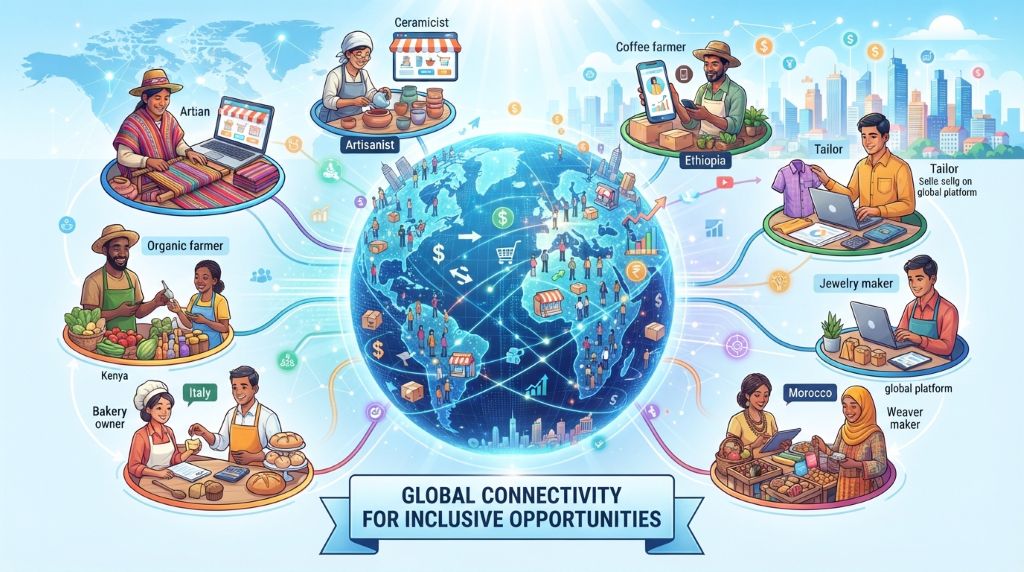
Microlending platforms already put this into practice. They analyze smartphone data to approve small loans within minutes instead of weeks. A vendor in Nairobi can now get working capital without a bank visit or a credit officer’s approval. This does not solve every problem. However, it removes a barrier that kept entire communities outside the formal economy for decades.
A Personal Look at Real-World Impact
A few years ago, I helped a relative set up an online shop selling handmade goods. She had no marketing background and no budget for ads. We used a simple AI writing tool to draft her product listings and an AI-powered pricing tool to check competitor rates. Within three months, her monthly orders tripled.
What struck me most was not the sales growth. It was her confidence. She stopped feeling like technology was something other people used. She started treating it like a coworker who never sleeps. That shift in mindset matters as much as the revenue numbers. Economic inclusion is not only about access to tools. It is about people believing those tools are actually for them.
This pattern repeats across many small businesses today. Owners who once avoided technology now rely on it daily for scheduling, customer service, and basic accounting. The barrier to entry keeps dropping, and that trend benefits people who were shut out of earlier tech waves.
The Risks Nobody Should Ignore
AI does not automatically create fairness. Left unchecked, it can repeat and even worsen existing inequality. Algorithms trained on biased data can deny loans to qualified applicants based on flawed patterns. This risk is real and well documented across financial services.
Internet access remains another major obstacle. Rural areas and low-income neighborhoods often have slower connections or none at all. Without reliable internet, even the best AI tool becomes useless. Digital literacy gaps compound this problem further, since many people never received basic training on how these tools work.
Gender gaps also persist in surprising ways. Women in lower-income countries are less likely to own smartphones or use mobile internet regularly. This reduces the data trail that AI credit systems rely on, which can unintentionally exclude them from new lending options. Fixing this requires deliberate design choices, not just better algorithms. Companies building these tools need diverse data sets and regular bias testing. Otherwise, the same communities AI promises to help may end up excluded again, just through a new mechanism.
Building a Fairer Path Forward
Real inclusion requires intention, not luck. Governments, nonprofits, and private companies each play a role in making AI tools accessible and fair. A few practical steps stand out:
- Expand affordable broadband access in rural and low-income areas.
- Fund digital literacy programs alongside AI rollout, not after it.
- Require bias audits for AI systems used in lending decisions.
- Partner with local community organizations to build trust in new tools.
- Offer AI tools in multiple languages to reach non-English speakers.
These steps are not complicated, but they require sustained investment. Additionally, transparency matters. People deserve to know how an AI system makes a lending decision that affects their livelihood. Without that trust, adoption stalls even when the technology works well.
The good news is that momentum is already building. More governments now treat digital access as basic infrastructure, similar to roads or electricity. That framing helps push funding toward the communities that need it most.
Final Thoughts
AI will not fix every economic gap on its own. However, it offers entrepreneurs and communities tools that simply did not exist a decade ago. A vendor without a bank account can now get a microloan. A first-time founder can now launch a business without a large team. These changes are real, measurable, and still growing. For entrepreneurs building an online presence, understanding the three key features of a website that works for your business can also help turn these new opportunities into practical growth.
The responsibility now falls on developers, policymakers, and business leaders to build these tools with fairness in mind from day one. Progress depends on that choice.
What has your experience been with AI and small business growth? Share your thoughts in the comments below, and pass this article along to anyone building something new.
Does AI actually help small businesses make more money?
Yes. Businesses using AI tools commonly report strong returns, often several times their initial investment, mainly through saved time and better marketing targeting.
Can AI really help people without bank accounts get loans?
Yes. AI lending platforms analyze phone and payment data instead of traditional credit scores, which lets unbanked users qualify for small loans quickly.
Is AI biased against low-income communities?
It can be, if trained on incomplete data. Regular bias testing and diverse data sets reduce this risk significantly.
Do I need technical skills to use AI for my business?
No. Most modern AI tools use simple chat interfaces or point-and-click dashboards designed for non-technical users.
What is the biggest barrier to AI-driven economic inclusion?
Limited internet access remains the largest obstacle, followed closely by low digital literacy in underserved regions.