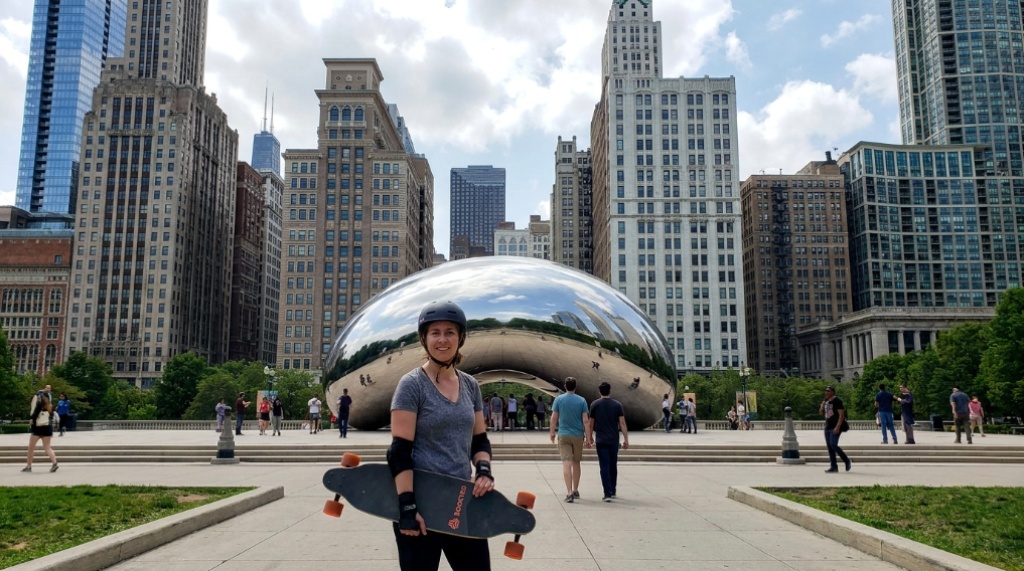
Starting skateboarding as an adult in Illinois comes with a specific set of challenges: rough Midwest pavement, short riding seasons, and the need for a board that feels stable right away. You do not need a pro-level setup or a teenager’s trick board. You need a complete, well-built skateboard that matches your size, your goals, and the surfaces you will actually ride.
This guide breaks down seven solid options for beginners, plus the local factors that matter most in Illinois and the common mistakes that make adult beginners give up too soon.
Key Takeaways
- Complete skateboards between 7.75 and 8.25 inches wide suit most adult beginners; wider decks feel more stable under adult weight.
- Soft or hybrid wheels (78A–90A) roll far better on Illinois asphalt and cracked sidewalk than hard 99A–101A trick wheels.
- Brand-name completes from Powell Peralta, Santa Cruz, Landyachtz, Globe, or Element generally outperform generic Amazon boards in trucks, bearings, and durability.
- Your weight matters more than your height when choosing deck stiffness and bushing hardness.
- Expect to spend roughly $80–$200 for a beginner setup that will actually last a season or more.
- Safety gear matters more for adults than teenagers because recovery from falls takes longer.
How to Choose an Adult Beginner Skateboard
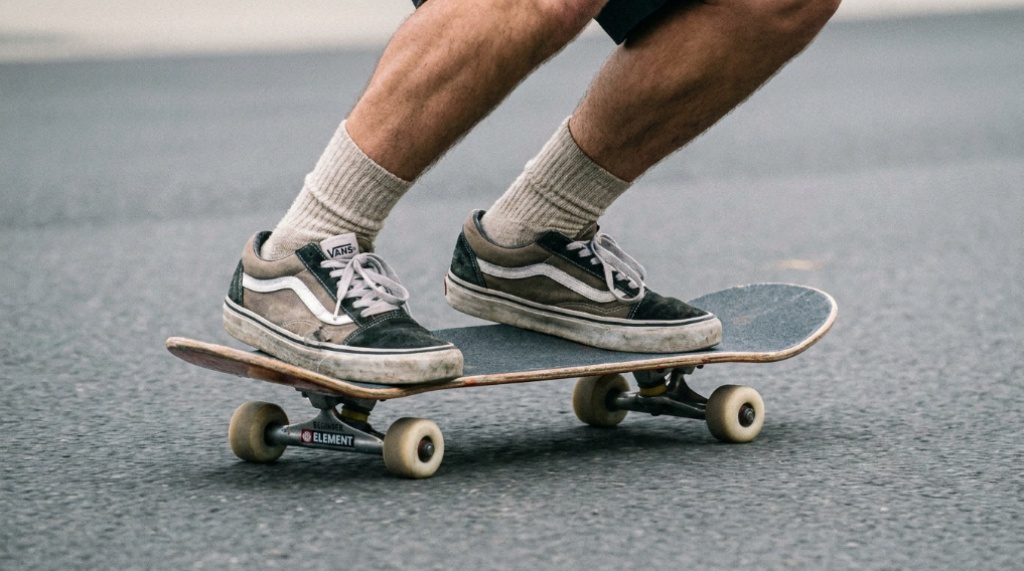
The single most common mistake adults make is buying a cheap department-store board. Those boards typically have plastic trucks, poor bearings, and no grip, which makes learning harder and more dangerous. A quality complete skateboard solves this because the deck, trucks, wheels, and bearings are already matched by the manufacturer.
Three specs drive most of your decision: deck width, wheel hardness, and truck quality. Deck width determines stability. Wheel hardness determines how the board handles rough pavement. Truck quality determines whether the board turns predictably or fights you. If you want a deeper look at complete setups sized for adults, this breakdown of the best adult skateboard 2026 covers the key models in more detail.
Deck Width by Rider Size
A 7.75-inch deck suits adults with smaller feet (men’s size 8 or under, women’s size 9 or under) who want to learn tricks. An 8.0-inch deck is the most versatile all-around size. An 8.25-inch deck or wider works best for riders over roughly 180 pounds, anyone with larger feet, or anyone who mainly wants to cruise rather than ollie.
Wheel Hardness and Illinois Pavement
Illinois roads and sidewalks are not smooth. Winter freeze-thaw cycles crack concrete, and many suburban streets have coarse asphalt. Hard 99A–101A wheels, standard on trick-focused completes, transmit every bump straight into your feet and stop abruptly on pebbles. Softer 78A–87A cruiser wheels absorb that vibration and roll over debris. A middle-ground 90A–95A wheel splits the difference if you want to learn basic tricks but still commute.
Truck and Bushing Considerations
Standard trucks (around 129–149mm depending on deck width) from brands like Independent, Thunder, or Tensor turn smoothly and hold up under adult weight. Bushings are the rubber cushions inside the truck; heavier riders often need harder bushings (94A–96A) to avoid wheel bite and sloppy turning. Many completes ship with medium bushings that work fine up to about 170 pounds.
The 7 Best Beginner Picks for Adults in Illinois
These picks cover different body types, budgets, and riding styles. All are widely available through skate shops and major online retailers.
| Board | Deck Width | Wheels | Best For |
|---|---|---|---|
| Powell Peralta Flight Complete | 8.0″ | 53mm, 99A–101A | Durable all-around; adults learning tricks |
| Santa Cruz Classic Dot Complete | 7.75″–8.25″ | 53mm, 99A | Lightweight riders wanting a proven trick setup |
| Landyachtz Dinghy | 8.0″ | 63mm, 78A | Cruising Chicago streets and lakefront paths |
| Globe G2 Complete | 8.0″ | 53mm, 99A | Budget-friendly entry with decent components |
| Element Section Complete | 7.75″–8.25″ | 52mm, 99A | Park skating and transition basics |
| Landyachtz Tugboat | 8.6″ | 60mm, 78A | Heavier riders and long-distance cruising |
| Powell Peralta Ripper Complete | 8.0″ | 54mm, 99A | Riders who want a classic shape and solid trucks |
If you weigh over 200 pounds, lean toward the wider Landyachtz Tugboat or an 8.25-inch trick deck rather than a 7.75-inch board. Narrow decks flex more under heavy riders and feel twitchy at speed.
Why Illinois Riding Conditions Change Your Board Choice
Illinois is not Southern California. The riding surface, weather, and season length all push beginners toward slightly softer wheels and more forgiving setups than a typical skate shop in a warm climate would recommend.
Chicago’s lakefront trail and suburb sidewalks are often concrete with expansion joints every few feet. That constant bumping is punishing on hard wheels, especially for a rider still developing balance. Suburban and rural roads are often chip-seal asphalt, which is even rougher. A cruiser-style setup with 78A wheels turns a miserable first month into a manageable one.
Winter also matters. From roughly November through March, outdoor skating in most of Illinois is limited by snow, ice, and salt residue that corrodes bearings. Many beginners use indoor parking garages, covered walkways, or a local indoor park during those months. This makes bearing quality more important: cheap steel bearings rust quickly when exposed to road salt, To learn how to clean and restore your board after heavy use, check out our guide on how to revive a grungy skateboard ultimate cleaning guide.
Mistakes Adult Beginners Make
Adults learning to skate tend to progress differently than kids. They analyze more, fall harder, and often quit after one bad session. Avoiding a few predictable errors keeps you riding.
- Buying a $40 board to “try it out.” Cheap completes have plastic or low-grade parts that make balancing harder, not easier. You will not get an accurate sense of whether you enjoy skating.
- Starting on cracked, sloped, or busy pavement. A smooth, flat, empty parking lot or tennis court is the right first location.
- Skipping pads and a helmet. Adults take longer to heal. A wrist guard and helmet are the two most valuable pieces for a beginner.
- Standing with feet parallel. Your feet should point roughly sideways on the board, with your front foot near the front truck bolts.
- Pushing with your front foot. Most people push with their back foot; determine your stance (regular or goofy) before you commit.
How Much Should You Spend?
A quality beginner complete typically costs somewhere between $80 and $150. That range gets you a real wood deck, metal trucks, ABEC-rated bearings, and urethane wheels. Stepping up to around $200 usually gets you a lighter deck (like Powell’s Flight construction), better bearings, or a larger cruiser setup.
You will also need a helmet ($30–$60), wrist guards ($20–$30), and ideally knee and elbow pads ($30–$50 combined). Budget roughly $150–$250 total for your first season if you buy a decent board and basic protection.
Frequently Asked Questions
What size skateboard should an adult beginner buy?
Most adults do best on an 8.0-inch deck. Choose 7.75 inches if you have smaller feet and want to learn flip tricks, or 8.25 inches and up if you weigh more than about 180 pounds or plan to cruise rather than do tricks.
Are cruiser boards good for learning tricks?
Cruisers with soft wheels and wider decks are excellent for balance, pushing, and commuting, but they are heavier and harder to ollie. If tricks are your goal, start with a standard 8.0-inch trick deck and swap in slightly softer wheels for Illinois pavement.
Do I need special wheels for Chicago streets?
Yes, it helps significantly. Wheels in the 78A–87A range roll over asphalt cracks and pebbles that stop hard 99A wheels. If you ride both the lakefront trail and a skate park, 90A–95A wheels are a reasonable compromise.
Is it realistic to start skateboarding in my 30s or 40s?
Yes. Adults can learn to push, carve, roll, and even do basic tricks, though progress is usually slower than for kids and falls carry more risk. The keys are a stable board, protective gear, and gradual progression rather than trying to keep up with teenagers.
How long does a beginner skateboard last?
A well-made complete from a known brand typically lasts several years with occasional part replacement. Wheels wear flat, bearings rust, and bushings crack over time, but decks and trucks generally hold up well if you keep the board dry.
Should I buy online or from a local Illinois skate shop?
Local shops let you stand on the board and get advice from staff who know the local terrain. Online often has better prices and more selection. Many beginners do both: test in person, then buy the specific model online.
Conclusion
Pick a complete skateboard between 7.75 and 8.25 inches wide from a brand that uses real wood and metal trucks. Match your wheel hardness to the rough Illinois pavement, and do not overspend on your first setup but do not underspend either. Any of the seven boards above will get you rolling safely. Pair your board with a helmet and wrist guards, find a smooth flat surface, and practice pushing and turning before you attempt tricks.