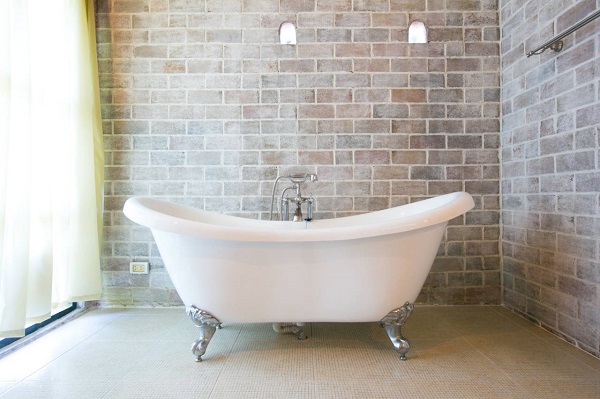
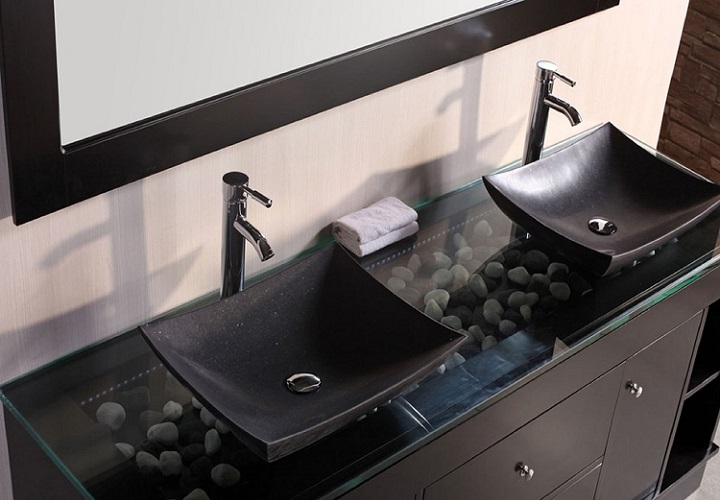
Transitional style blends traditional elegance with modern simplicity. This design approach creates bathrooms that feel timeless yet fresh. Many homeowners choose this style because it offers the best of both worlds. Additionally, transitional bathrooms adapt easily to changing trends without requiring complete renovations.
Creating a transitional bathroom involves balancing classic elements with contemporary features. The result is a space that feels sophisticated and comfortable. Therefore, understanding the core principles of this style helps you make informed design choices.
Understanding Transitional Bathroom Design
Transitional design occupies the middle ground between traditional and contemporary styles. It borrows ornate details from classic design while embracing the clean lines of modern aesthetics. However, the key lies in achieving balance rather than simply mixing opposing elements.
This style typically features neutral color palettes with occasional bold accents. Materials range from natural stone to sleek metals. Furthermore, transitional bathrooms prioritize functionality without sacrificing visual appeal. The overall atmosphere should feel welcoming and refined.
Choosing the Right Color Palette
Neutral tones form the foundation of transitional bathroom design. Soft whites, warm grays, and beige create a calming backdrop. These colors allow other design elements to shine. Moreover, neutral palettes make spaces feel larger and more open.
Adding depth through layered neutrals prevents the space from feeling flat. Consider using different shades of the same color family. For instance, pair light gray walls with darker gray tiles. Subsequently, introduce warmth through wood tones or brass fixtures.
Accent colors should be used sparingly but strategically. Navy blue, deep green, or charcoal can add sophistication. These darker tones work well in towels, artwork, or small decorative pieces. Nevertheless, maintaining restraint ensures the space remains cohesive.
Selecting Fixtures and Hardware
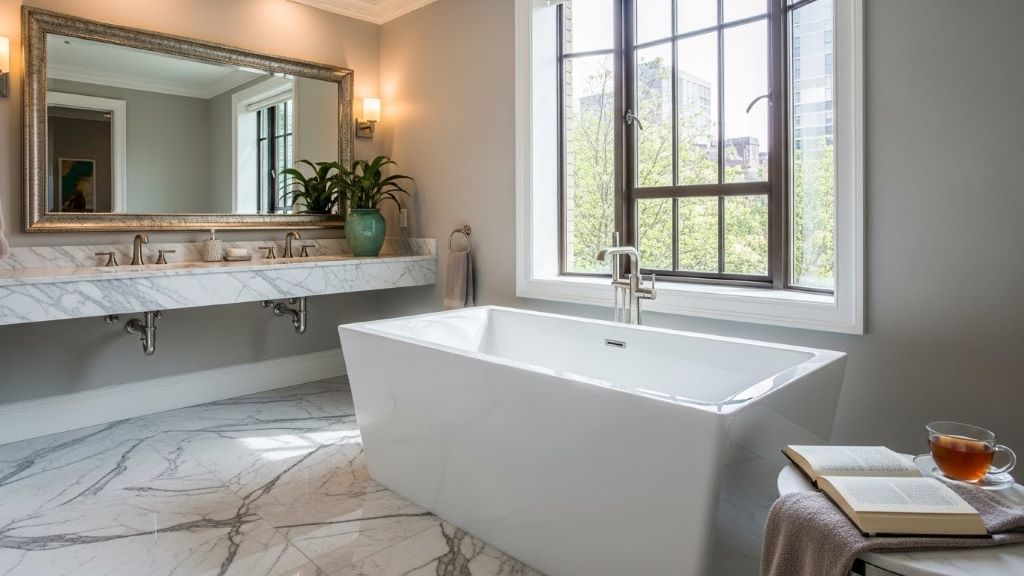
Fixtures play a crucial role in defining transitional style. Choose pieces that combine classic shapes with modern finishes. For example, a pedestal sink with clean lines offers traditional charm without excessive ornamentation. Similarly, freestanding tubs provide elegance while maintaining simplicity.
Hardware finishes should complement rather than compete. Brushed nickel, aged brass, and matte black are popular choices. These finishes bridge the gap between shiny chrome and oil-rubbed bronze. Additionally, mixing metals can add visual interest when done thoughtfully.
Faucets and showerheads deserve special attention. Look for designs with simple geometric shapes and quality construction. Functionality matters as much as appearance. Therefore, choose fixtures that offer both style and reliable performance.
Incorporating Lighting Solutions
Lighting transforms bathroom ambiance and functionality. Transitional bathrooms benefit from layered lighting approaches. Combine ambient, task, and accent lighting for optimal results. This strategy ensures adequate illumination while creating visual interest.
Vanity lighting requires careful consideration. Sconces flanking mirrors provide flattering light for grooming tasks. Choose fixtures with classic silhouettes but streamlined details. Meanwhile, recessed ceiling lights offer general illumination without cluttering the visual space.
Statement lighting fixtures can serve as focal points. A small chandelier or pendant light adds elegance without overwhelming the room. However, ensure the fixture’s scale matches your bathroom size. Natural light should also be maximized through window treatments that offer privacy while allowing sunshine in.
Selecting Countertops and Surfaces
Countertop materials significantly impact the transitional aesthetic. Marble and quartz offer timeless appeal with practical benefits. These materials provide durability while maintaining sophisticated appearance. Furthermore, their neutral tones complement various color schemes.
Consider edge profiles that balance simplicity and detail. A subtle beveled edge or eased edge works well in transitional spaces. Overly ornate edges can skew too traditional. Conversely, completely sharp edges may feel too modern.
Backsplashes offer opportunities for texture and pattern. Subway tiles remain a popular choice for transitional bathrooms. Their classic shape works with contemporary layouts. Additionally, larger format tiles can create a more modern feel while maintaining timelessness. According to Architectural Digest, mixing tile sizes and textures adds depth without overwhelming the space.
Flooring Options for Transitional Bathrooms
Flooring establishes the foundation of your bathroom design. Natural stone tiles offer durability and classic beauty. Marble, travertine, and slate provide texture and visual interest. These materials age gracefully and suit transitional aesthetics perfectly.
Large format tiles create a contemporary feel while maintaining elegance. They also reduce grout lines for easier maintenance. However, smaller mosaic tiles work well as accent features or in shower floors. The contrast between tile sizes adds dimension.
Wood-look porcelain tiles offer warmth without moisture concerns. These tiles combine the appearance of hardwood with ceramic durability. Therefore, they provide an excellent compromise between aesthetics and practicality. Their varied tones and textures enhance the transitional style.
Storage Solutions with Style
Storage should be both functional and attractive in transitional bathrooms. Built-in cabinetry with clean lines and simple hardware works beautifully. Choose cabinets in neutral colors or natural wood finishes. Shaker-style doors offer traditional inspiration with modern simplicity.
Open shelving provides display opportunities and easy access. Floating shelves in wood or metal add contemporary flair. Use them to showcase rolled towels, plants, or decorative objects. Nevertheless, maintain organization to prevent visual clutter.
Furniture pieces can enhance transitional bathrooms effectively. A vintage-inspired stool or small bench adds character. Woven baskets offer texture while concealing toiletries. These elements soften the space and provide practical storage solutions.
Incorporating Texture and Textiles
Texture prevents transitional bathrooms from feeling sterile. Mix smooth and rough surfaces for visual interest. Polished countertops contrast beautifully with matte tiles. Similarly, soft textiles balance hard surfaces throughout the space.
Towels and bath mats offer easy opportunities for texture. Choose high-quality cotton or linen in coordinating neutrals. White towels maintain a crisp, spa-like atmosphere. Meanwhile, textured weaves add subtle pattern without busy designs.
Window treatments should balance privacy and style. Simple roman shades or classic shutters work well. Natural materials like linen or bamboo enhance the transitional aesthetic. Additionally, these options filter light beautifully while maintaining clean lines.
Adding Decorative Elements
Artwork and accessories complete the transitional bathroom. Choose pieces that reflect personal style while maintaining cohesion. Black and white photography suits this aesthetic particularly well. Abstract art in neutral tones also works effectively.
Mirrors serve both functional and decorative purposes. Frame styles should balance ornate and simple. A mirror with subtle detailing adds elegance without excessive decoration. Furthermore, proper mirror placement enhances light and spatial perception.
Plants bring life and freshness to bathroom spaces. Choose varieties that thrive in humid environments. Ferns, pothos, and snake plants work well. Their organic shapes soften architectural lines and improve air quality.
Maintenance and Longevity
Transitional design emphasizes quality over trends. Invest in durable materials that age gracefully. This approach saves money long-term and reduces environmental impact. Moreover, timeless designs remain appealing for years.
Regular maintenance preserves your bathroom’s beauty. Clean natural stone properly to prevent damage. Seal grout lines to resist moisture and staining. Additionally, address plumbing issues promptly to avoid costly repairs.
Consider future flexibility when making design choices. Neutral foundations allow for easy updates through accessories. Changing towels, artwork, or hardware refreshes the space affordably. Therefore, your bathroom evolves with your tastes without requiring major renovations. According to HGTV, this adaptability makes transitional design particularly appealing for homeowners seeking long-term value.
Conclusion
Transitional bathroom design offers enduring appeal through balanced aesthetics. This style combines traditional elegance with modern functionality effectively. By focusing on neutral palettes, quality materials, and timeless fixtures, you create spaces that remain beautiful for years. Additionally, the flexibility of transitional design allows for easy updates and personalization. Whether renovating completely or refreshing gradually, these principles guide successful bathroom styling. The result is a sophisticated sanctuary that serves your needs while reflecting your personal style.
Frequently Asked Questions
What is the difference between transitional and contemporary bathroom design?
Transitional design blends traditional and modern elements equally, while contemporary design focuses primarily on current trends and minimalism. Transitional bathrooms include classic details like framed mirrors or detailed fixtures alongside clean lines. Contemporary spaces emphasize stark simplicity and cutting-edge features.
What colors work best in transitional bathrooms?
Neutral colors form the foundation of transitional bathrooms. Soft whites, warm grays, beiges, and taupes work exceptionally well. These can be accented with deeper tones like navy, charcoal, or forest green. The key is maintaining a cohesive, calming palette that feels neither too traditional nor too modern.
Can I mix metal finishes in a transitional bathroom?
Yes, mixing metal finishes adds depth and interest to transitional bathrooms. Combine two or three finishes such as brushed nickel, aged brass, and matte black. However, maintain consistency within fixture types. For example, all cabinet hardware should match while lighting fixtures use a complementary finish.
How do I prevent a transitional bathroom from looking boring?
Incorporate texture through varied materials like natural stone, wood accents, and woven textiles. Add visual interest with patterned tiles in subtle designs. Include statement pieces like an elegant light fixture or unique mirror. Layering these elements prevents monotony while maintaining the style’s balanced aesthetic.
What type of vanity works best for transitional bathrooms?
Furniture-style vanities with simple, clean lines work perfectly. Choose pieces with minimal ornamentation but quality construction. Shaker-style cabinets in neutral colors or natural wood finishes offer ideal transitional appeal. The vanity should feel substantial without being overly ornate or starkly modern.
Related Topics: