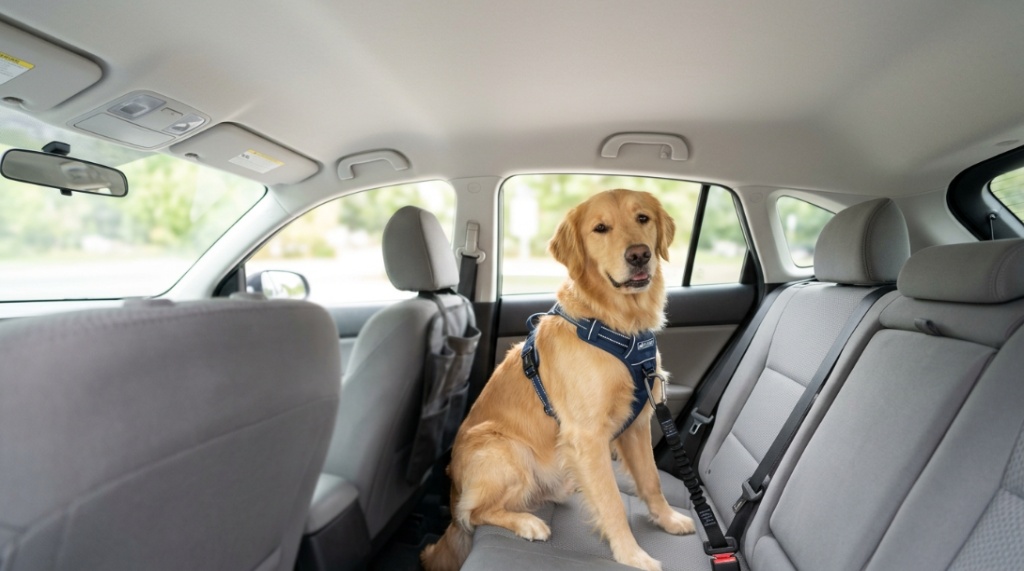
Most drivers would never skip their own seat belt yet over 84% of pet owners admit they let their dog ride completely unrestrained, according to a AAA survey on distracted driving. The best dog seat belt is a crash-tested, vehicle-compatible restraint system that keeps your dog safely secured to a car’s seat belt anchor or LATCH point, preventing ejection during sudden stops or accidents. An unrestrained 60-pound dog becomes a 2,700-pound projectile at 30 mph — that’s not a scare tactic, it’s physics. And it doesn’t just threaten your dog. It threatens every human in the vehicle. Whether you have a 5-pound Chihuahua or a 100-pound Labrador, choosing the right crash-tested dog vehicle restraint is one of the most important decisions you’ll make as a pet owner who drives. This guide breaks down the top options by dog size, explains how safety ratings work, and gives you an honest comparison so you can pick the right fit the first time.
What Is a Dog Seat Belt and How Does It Actually Work?
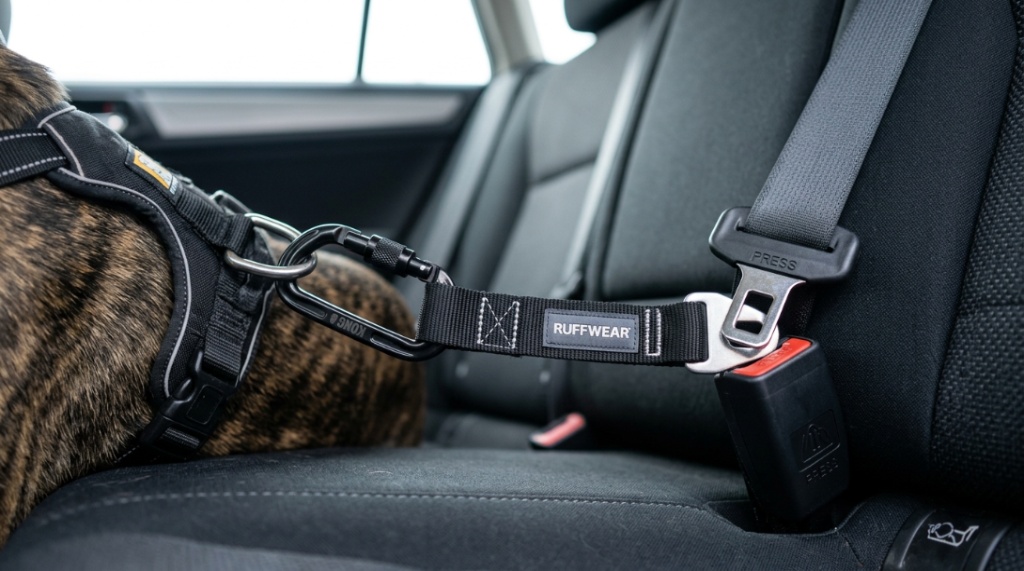
A dog seat belt is a tether or harness-based restraint that connects your dog to your vehicle’s existing seat belt buckle or LATCH anchor system, preventing them from moving freely inside the cabin during a crash or hard stop.
Unlike a basic leash clipped to a collar, a proper dog seat belt system has two components working together: a crash-tested harness that distributes force across the dog’s chest and torso, and a rigid or semi-rigid tether that attaches to the vehicle. Collar-only attachments are dangerous — the collar concentrates all crash force on the neck, which can cause fatal injuries even at low speeds.
The Center for Pet Safety (CPS) is the primary organization that conducts standardized crash testing for pet restraints. Very few products on the market actually pass their tests. That’s worth knowing before you buy based on price or packaging alone.
Is a dog seat belt the same as a dog car harness?
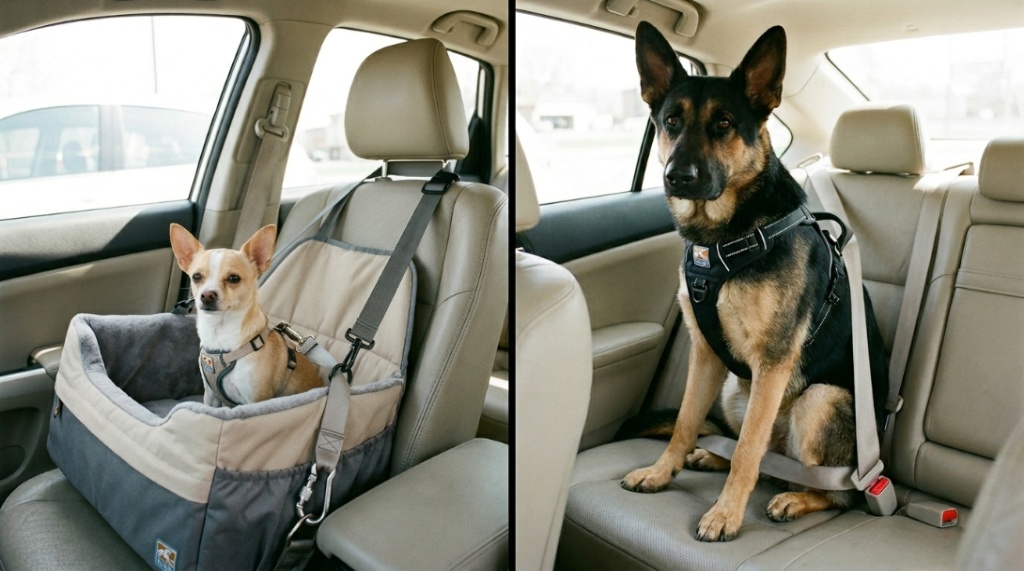
Not exactly. A dog car harness is the vest or jacket component that fits around your dog. The seat belt is the tether that connects that harness to the vehicle. Most restraint systems sold today include both, but some harnesses are sold separately and require a compatible tether purchased independently.
What Are the Best Dog Seat Belts for Small Dogs (Under 20 lbs)?
For small dogs, the best options combine a snug-fitting harness with a short tether that limits movement without restricting comfort — overly long tethers allow enough travel distance to cause serious injury even in a minor collision.
Small dogs are particularly vulnerable because their lightweight bodies give them less resistance to crash forces. A harness that fits properly should have chest straps that sit behind the front legs, not across the throat.
Top picks for small dogs:
- Sleepypod Clickit Sport (XS/S) — One of the only small dog harnesses to receive a passing grade from the Center for Pet Safety. Works as both a car restraint and a walking harness.
- Ruffwear Load Up Harness (XXS/XS) — Crash-tested, uses a steel reinforced connection point, and has a padded V-ring to reduce neck strain.
- Kurgo Tru-Fit Smart Harness — Budget-friendly, widely available, and passes basic restraint standards for dogs 5–25 lbs. Not CPS-certified but a solid entry-level option.
Avoid any harness labeled “comfort” or “no-pull” for car use — those are walking harnesses, not crash-rated restraints.
Can a small dog ride in a car without a seat belt?
Legally, it depends on your state. New Jersey, for example, has animal cruelty statutes that can apply to unrestrained pets in vehicles. Beyond the law, an unrestrained small dog in a crash is extremely unlikely to survive — and can become a serious hazard to the driver. Restraint is the responsible choice regardless of local laws.
What Are the Best Dog Seat Belts for Medium Dogs (20–60 lbs)?
Medium dogs have the widest range of good restraint options. This size range is where crash testing matters most, because the force involved in a 30-mph stop with a 40-pound dog is significant — enough to seriously injure both the dog and front-seat passengers if the animal travels forward.
Top picks for medium dogs:
- Sleepypod Clickit Terrain (M/L) — The gold standard for medium dogs. CPS-certified, connects directly to the seat belt buckle, and has a padded harness built for extended wear.
- Ruffwear Load Up Harness (S/M) — Excellent for active dogs and outdoor lifestyles. The reinforced aluminum V-ring holds up to repeated use without weakening.
- EzyDog Drive Harness — Popular in the 25–55 lb range. Foam-padded chest plate, connects to the seat belt receiver, and has a reputation for durability.
- PetSafe Happy Ride Harness — Widely available at major pet retailers, reasonably priced, and appropriate for everyday commuting use in medium dogs.
What Are the Best Dog Seat Belts for Large Dogs (60+ lbs)?
Large dog restraints need to handle significantly more crash force. A 90-pound dog hitting a seat back at highway speed is equivalent to a heavyweight-class collision — standard tethers and harnesses simply aren’t built for it without proper engineering.
For large breeds — German Shepherds, Golden Retrievers, Labrador Retrievers, Rottweilers, Great Danes — fit is critical. An undersized harness won’t distribute force correctly across the chest, and an oversized one won’t prevent the dog from slipping through during an impact.
Top picks for large dogs:
- Sleepypod Clickit Sport (L/XL) — Again, the CPS testing makes this the most defensible choice. Works for dogs up to 110 lbs with the right configuration.
- Ruffwear Load Up Harness (L/XL) — Steel-reinforced, with an extended V-ring for dogs with deep chests (Great Danes, Mastiffs, Boxers).
- Gunner Kennel G1 + Seat Belt Tether — For large dogs, a crash-tested travel crate like the Gunner G1 is often the safest option. It scores 5-star ratings in independent testing and fits in SUV cargo areas with a tether to the vehicle’s anchor points.
- Kurgo Tru-Fit Smart Harness (XL) — A cost-effective option for budget-conscious owners of large dogs, though not CPS-certified.
Should large dogs ride in a crate instead of a harness?
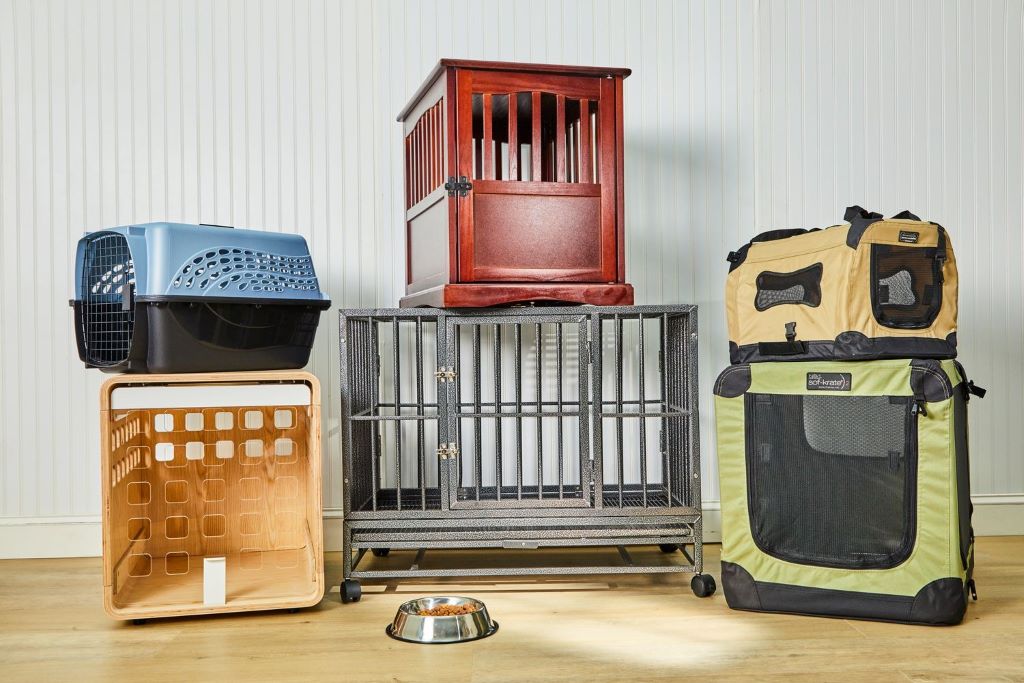
For dogs over 80 pounds, a crash-tested travel crate anchored to the vehicle often provides better protection than a harness alone. Crates distribute impact force across a rigid structure rather than relying entirely on the dog’s body and harness connections. The Gunner Kennel G1 and Ruff Land Kennel are the two most rigorously tested options in this category.
How Do Dog Seat Belt Safety Ratings Actually Work?
The Center for Pet Safety uses a standardized crash test protocol at 30 mph with a 55-degree deceleration angle — similar to a frontal offset crash test used for cars. Most products fail. In their most comprehensive study, only 5 out of 11 harnesses tested received passing scores, and none were 100% injury-free.
Key things the ratings measure:
- Harness integrity — Does the harness stay intact through the crash sequence?
- Tether integrity — Does the connection to the vehicle hold without breaking or detaching?
- Dummy displacement — How far does the simulated dog travel forward during impact? Less is better.
- Force distribution — Is crash energy absorbed across the chest, or concentrated on the neck and spine?
Products marketed as “safety certified” without CPS testing are self-certified by the manufacturer, which carries significantly less credibility.
Preparing your pup for a road trip goes beyond just vehicle safety. While finding the best dog seat belt options ensures they stay secure during sudden stops, you also need to protect them from outdoor pests at your destination. If you are traveling to heavy wooded areas or campgrounds, pairing their safety harness with Vet Recommended Flea Collars for Small Dogs keeps your smaller companions safe from ticks and fleas throughout the entire journey.
Dog Seat Belt Comparison: Top Products by Size and Safety Rating
| Product | Best For | Weight Range | CPS Tested | Approx. Price | Connection Type |
|---|---|---|---|---|---|
| Sleepypod Clickit Sport | Small, Medium, Large | 7–110 lbs | Yes (Passed) | $75–$100 | Seat belt buckle |
| Ruffwear Load Up Harness | Small, Medium, Large | 13–110 lbs | Yes (Passed) | $89–$109 | Seat belt loop/tether |
| EzyDog Drive Harness | Medium | 25–75 lbs | No | $35–$55 | Seat belt receiver |
| Kurgo Tru-Fit Smart | Small, Medium | 5–75 lbs | No | $30–$55 | Seat belt receiver |
| Gunner Kennel G1 + Tether | Large, XL | Up to 100+ lbs | Yes (Passed) | $299–$595 | Cargo anchor/LATCH |
| PetSafe Happy Ride | Small, Medium | 5–60 lbs | No | $20–$35 | Seat belt receiver |
What Should You Look for When Buying a Dog Seat Belt?
The most important factors are crash-test certification, proper fit for your dog’s weight and chest size, and compatibility with your vehicle’s restraint system.
Here’s what to check before purchasing:
- Crash testing — Look for CPS certification or independent third-party testing, not just manufacturer claims.
- Attachment point — Does it connect to the seat belt buckle, LATCH anchor, or cargo hook? Each offers different security levels. LATCH and cargo anchors are generally more secure for large dogs.
- Harness fit — Chest straps should sit behind the front legs. You should be able to fit two fingers under any strap. Too loose and the dog slips through; too tight and it restricts breathing.
- Tether length — Shorter is safer. A 12–18 inch tether limits travel distance during impact. Longer tethers give dogs more freedom but increase injury risk in a crash.
- Material quality — Look for steel hardware at connection points, not plastic clips. Webbing should be nylon or polyester rated for load-bearing use.
- Ease of use — If the restraint takes five minutes to put on, you’ll skip it. Choose one that attaches in under 30 seconds.
Do dog seat belts work in all vehicles?
Most dog seat belts are designed to work with standard vehicle seat belt receivers or LATCH anchors, which are present in all cars sold in the US after 2002. However, some harnesses connect via a loop that threads through the seat belt strap rather than clicking into the receiver — these generally work universally but provide less rigidity. Always check your vehicle’s manual for cargo anchor locations if using a crate or large-dog restraint.
Where Should Your Dog Sit in the Car?
The safest position for a restrained dog is the back seat, center position. The front seat exposes dogs to airbag deployment, which is designed for human body weight and can seriously injure or kill small and medium dogs.
If your dog must ride in the cargo area of an SUV or hatchback, use a crash-tested travel crate anchored to the cargo tie-down hooks. Unrestrained cargo-area dogs are entirely unprotected in a rear-end collision.
Final Thoughts: The Right Dog Seat Belt Could Save Your Pet’s Life
Choosing the best dog seat belt isn’t about spending the most money — it’s about buying something that’s been tested to do the job it claims to do. The Sleepypod Clickit Sport and Ruffwear Load Up Harness are the most consistently validated options across size ranges. For large dogs and SUV owners, a Gunner Kennel G1 crate with cargo anchors is worth the investment. For budget-conscious owners of smaller dogs, the Kurgo Tru-Fit is a solid everyday option with a real chest harness design.
Whatever you choose, make sure the harness fits your dog correctly today — not based on where they might grow or what size “seems about right.” A poorly fitted restraint provides false security. A properly fitted, crash-tested system gives your dog a real chance of surviving what none of us plans for.
If you’re in New Jersey and want regionally relevant guidance on the best dog seat belt laws, options, and where to buy, check out this resource on the best dog seat belt options for New Jersey drivers. And if this guide helped you, share it with another dog owner who’s still letting their pup ride unrestrained — it might be the most important thing you share this year.
Frequently Asked Questions About Dog Seat Belts
Are dog seat belts legally required?
It depends on the state. New Jersey, Hawaii, and some other states have laws that can result in fines for transporting animals in ways that endanger them, including unrestrained pets in vehicles. Even where no specific seat belt law exists for pets, animal cruelty statutes may apply. Regardless of law, restraining your dog is a matter of safety — for the dog, for passengers, and for other drivers on the road.
What is the safest type of dog car restraint?
The safest dog car restraint is a crash-tested harness that connects to the vehicle’s seat belt buckle or LATCH system, combined with a short tether. For dogs over 80 pounds, a crash-tested rigid travel crate (such as the Gunner Kennel G1) anchored to cargo tie-down points is often safer than a harness system alone.
Can I use a regular dog harness as a car safety harness?
No. Regular walking or no-pull harnesses are not designed to withstand crash forces and will fail in a collision. Always use a harness that is specifically rated or tested for vehicle use. The key difference is how the harness distributes force across the dog’s body — crash harnesses use reinforced webbing and connection points that walking harnesses lack.
How do I know if a dog seat belt fits correctly?
The harness should sit snugly but not tightly — you should be able to slide two fingers under any strap. The chest piece should rest behind the front legs, not across the throat or shoulders. When connected to the tether, the dog should be able to sit, lie down, and turn their head, but not stand or jump forward more than a few inches. Re-check fit every few months as your dog’s weight fluctuates.
What’s the difference between a dog seat belt and a dog car seat?
A dog car seat is a padded booster-style seat that props the dog up for visibility and comfort, usually designed for small dogs under 20 pounds. A dog seat belt is a restraint system connecting the dog to the vehicle. Most dog car seats include a short tether that clips to the dog’s harness — but the seat itself is not a crash-rated structure. For true crash protection, a CPS-tested harness and tether setup is more reliable than a booster seat alone.
How long can a dog ride in a car with a seat belt?
There’s no fixed time limit, but dogs should get a break every 2–3 hours during long trips — both for bathroom needs and to prevent muscle stiffness from being in a fixed position. Always ensure the car is adequately ventilated, and never leave a restrained dog alone in a parked vehicle in warm weather. A proper harness should not cause discomfort during extended wear if it fits correctly.
Are cheap dog seat belts worth buying?
A low-cost tether that clips to a collar is not a meaningful safety device — it will cause neck injury or detach in a crash. Budget options like the Kurgo Tru-Fit ($30–$55) offer a real chest harness and are worth considering for everyday use, even without full CPS certification. The key is that the product must be a true chest harness, not a collar clip or decorative strap. Spending $30 on a proper budget harness is far better than spending nothing, or spending $10 on something that provides zero crash protection.