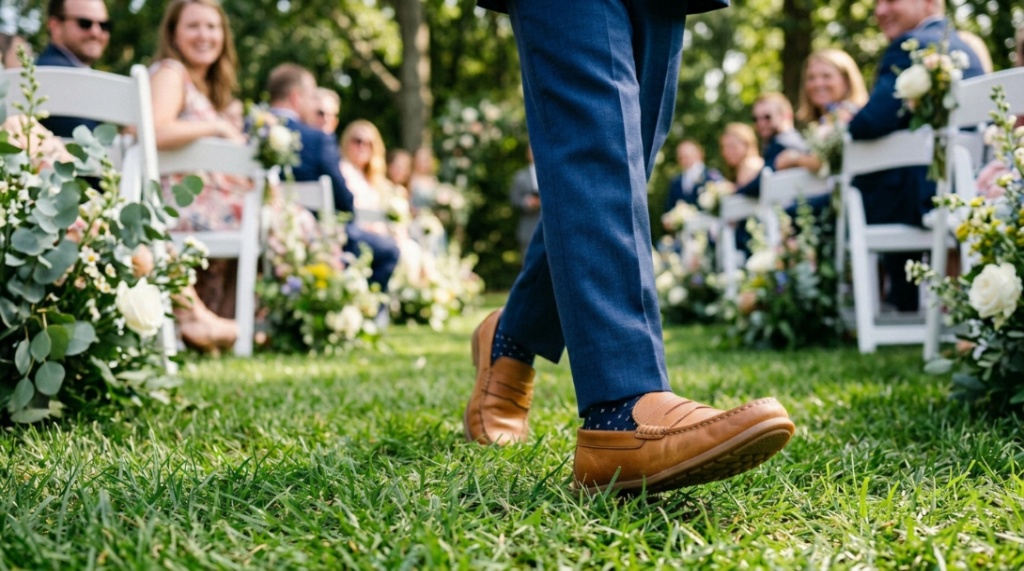
Parents face the same frustrating trade-off every wedding season: formal shoes that look appropriate but torture small feet, or comfortable shoes that look out of place in ceremony photos. Kids wedding shoes boys actually want to wear don’t have to sacrifice either side of that equation — but finding them requires looking past the dress shoe aisle’s default offerings. The real problem isn’t that comfortable kids wedding shoes don’t exist. It’s that most retailers market adult dress shoe designs scaled to children’s sizes without adapting the construction for how children actually move, stand, and wear shoes for hours at events.
Kids wedding shoes boys need combine formal aesthetics suitable for wedding ceremonies and photography with child-specific comfort engineering: flexible soles that bend with growing feet, cushioned insoles that absorb impact from running and jumping, lightweight materials under 200g per shoe, and secure fit systems that stay fastened without constant adult intervention.
This guide focuses exclusively on finding comfortable kids wedding shoes that still look polished — because a boy who’s comfortable is a boy who cooperates for photos, walks the aisle confidently, and actually enjoys the celebration rather than counting minutes until he can take his shoes off.
Why Do Most Boys Dress Shoes Fail on Comfort?
Most boys dress shoes fail because they’re manufactured as miniaturized adult shoes — rigid leather soles, zero arch support, hard heel counters, and non-flexible construction that ignores how children’s feet function differently from adult feet during development.
Specific comfort failures in typical boys dress shoes:
- Rigid soles: Adult dress shoes have stiff soles for formal posture. Children need flex points at the ball of the foot — their gait requires more sole bend than adults during each step.
- No cushioning: Many formal shoes place a thin leather insole over hard material. Children’s feet lack the fat pad development that protects adult feet from hard surfaces.
- Heavy construction: Shoes over 250g per pair cause noticeable leg fatigue in children within 1–2 hours — they simply don’t have the muscle development to compensate.
- Hard heel counters: Stiff back sections designed for heel structure rub against children’s softer Achilles area, creating blisters faster than in adult feet.
- Narrow toe boxes: Children’s toes splay wider proportionally than adults during standing and walking. Pointed or narrow dress shoe shapes compress toes painfully.
The solution isn’t avoiding formal shoes — it’s finding manufacturers who engineer formal aesthetics onto comfort-first platforms designed specifically for children’s biomechanics.
What Comfort Features Should You Prioritize in Kids Wedding Shoes?
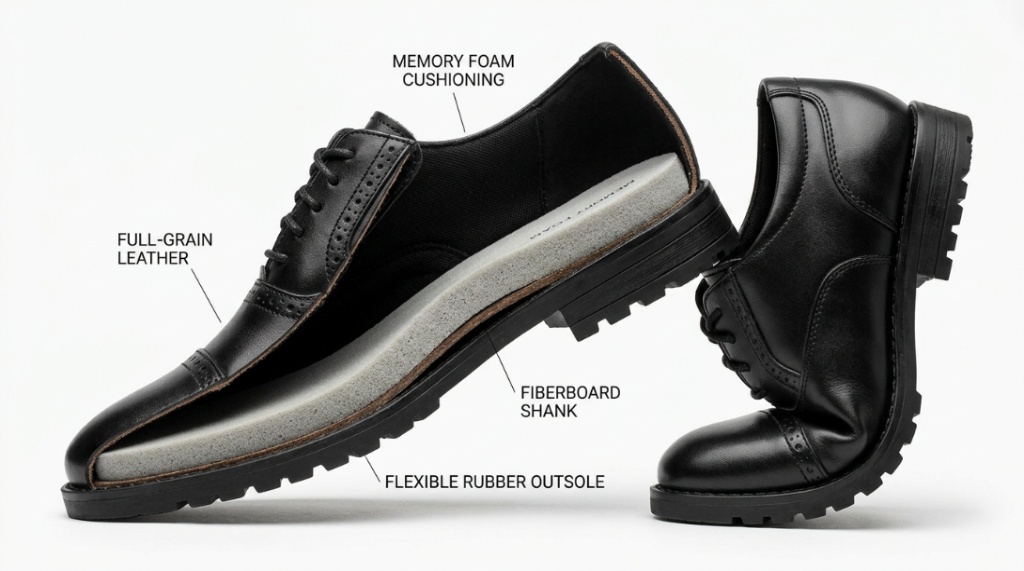
Prioritize three non-negotiable comfort features: a flexible sole that bends at the ball of the foot, a cushioned removable insole with arch support, and a padded heel collar that prevents Achilles rubbing. Everything else is secondary.
Complete comfort checklist:
| Feature | Why It Matters | How to Test |
|---|---|---|
| Flexible Sole | Allows natural foot movement during walking and running | Bend the shoe — it should flex easily at the ball, not the middle |
| Cushioned Insole | Absorbs impact from standing, walking, and jumping on hard floors | Press thumb into insole — should compress 3–4mm and bounce back |
| Padded Heel Collar | Prevents rubbing against the Achilles tendon | Run finger inside the heel area — should feel soft padding, not hard material |
| Wide Toe Box | Allows natural toe splay during movement | Remove insole, place child’s foot on it — toes shouldn’t extend past insole edges |
| Lightweight (under 200g/shoe) | Reduces leg fatigue during extended wear | Hold one shoe — it should feel barely heavier than a sneaker |
| Breathable Lining | Prevents sweat buildup that causes blisters | Check interior material — leather or textile lining, not plastic |
These features exist in formal-looking shoes — you just need to look beyond traditional shoe stores that prioritize appearance over child-appropriate construction.
Which Brands Make Genuinely Comfortable Boys Wedding Shoes?
Brands that combine formal appearance with child-engineered comfort include Stride Rite (best overall comfort technology), Florsheim Kids (traditional styling with modern insoles), and Geox (patented breathability system). Each approaches the comfort-formality balance differently.
Brand-by-brand breakdown:
- Stride Rite: Memory foam insoles, flexible rubber outsoles, wide width options standard. Least formal-looking but most comfortable. Best for boys who hate dress shoes. Price: $40–$65.
- Florsheim Kids: Classic adult silhouettes built on cushioned platforms. Looks like traditional dress shoes but wears like comfort footwear. Best for photo-focused events. Price: $50–$80.
- Geox: Patented breathable sole technology that vents moisture while blocking water. Excellent for summer events and active boys. European styling. Price: $55–$85.
- Clarks Kids: Decades of children’s foot research built into formal designs. Generous fit with proper arch support. Excellent leather quality. Price: $45–$75.
- Kenneth Cole Reaction Kids: Stylish urban-formal designs with memory foam insoles. Runs slightly narrow. Price: $35–$55.
For specific model recommendations with comfort ratings from real parents, this kids wedding shoes boys guide reviews current options with wear-test feedback across different ages and event durations.
How Do You Test Shoe Comfort Before the Wedding Day?
Test comfort with a structured home trial: have your son wear the shoes for increasing durations (30 minutes, then 1 hour, then 2 hours) on hard floors while standing and walking. Check for red marks, rubbing spots, or complaints after each session. If problems appear at 30 minutes, they’ll be severe at 4 hours.
Home comfort testing protocol:
- Day 1 (30 minutes): Walk on hard floors only. Check heels and pinky toes for redness immediately after removal.
- Day 3 (1 hour): Include standing still for 5–10 minutes (simulating ceremony). Check for arch discomfort or sole-of-foot soreness.
- Day 5 (2 hours): Include light running and stair climbing. Note any heel slippage during movement.
- Day 7 (2+ hours): Full wedding simulation — standing, sitting, walking on different surfaces, light dancing.
If any issue appears during testing, you have time to add insoles, apply moleskin patches, or exchange the shoes entirely. Discovering comfort problems on the wedding day means a miserable child and a stressed parent.
Can You Add Comfort Insoles to Formal Boys Shoes?
Yes — aftermarket children’s insoles dramatically improve comfort in formal shoes with inadequate cushioning. Look for thin-profile memory foam or gel insoles specifically made for children that don’t change the fit or raise the heel above the shoe collar.
Insole options that work with dress shoes:
- Thin memory foam insoles ($8–$15): Add cushioning without significantly changing fit. Trim-to-size options fit most shoe shapes. Best general solution.
- Gel heel cups ($5–$10): Target heel impact specifically. Useful when the shoe fits well overall but the heel area lacks cushioning.
- Arch support inserts ($10–$20): For children with flat feet or who complain about arch pain during extended standing. Half-length designs don’t crowd the toe box.
Important: remove the existing insole before adding an aftermarket one (if the existing insole is removable). Stacking two insoles raises the foot too high in the shoe and creates heel slippage problems.
What’s the Maximum Time Boys Should Wear Formal Shoes at Events?
With properly fitted comfortable shoes, boys can wear formal footwear for 4–5 hours before discomfort becomes likely. Plan for shoe changes or breaks during events exceeding 4 hours — bring backup comfortable shoes for the reception after formal photos are completed.
Duration management strategies:
- Under 3 hours: No special preparation needed beyond proper fit and light break-in
- 3–4 hours: One 10-minute shoes-off break midway (during seated dinner) extends comfortable wear significantly
- 4–6 hours: Plan a shoe change after formal photos conclude. Switch to clean sneakers or comfortable slip-ons for dinner and dancing portion
- 6+ hours: Bring backup shoes as mandatory. No child should be expected to endure formal footwear for an entire reception and after-party
Communicate with the photographer about timing — get all shoe-visible formal photos completed in the first 2–3 hours while shoes are still pristine and the child is still comfortable and cooperative.
How Do Different Age Groups Need Different Comfort Approaches?
Toddlers (2–4) need soft soles and velcro closures. Young boys (5–8) need cushioning and flexibility with secure fit. Pre-teens (9–12) can handle more structured shoes but still need proper arch support and breathability that adult-style shoes often lack.
Age-specific comfort needs:
- Toddlers (2–4 years): Prioritize soft, flexible soles (almost moccasin-like). Velcro closures are essential — laces come untied constantly and buckles can pinch. Expect maximum 2-hour comfortable wear.
- Young boys (5–8 years): Need real cushioning and arch support as feet develop. Rubber soles with flex grooves. Can handle loafers or elastic-sided slip-ons. Comfortable for 3–4 hours.
- Pre-teens (9–12 years): Can wear more structured formal shoes but still need cushioned insoles and reasonable weight. Can manage lace-ups and monk straps. Comfortable for 4–5 hours with quality shoes.
The mistake parents make across all ages: assuming a child can tolerate the same shoe rigidity and weight as an adult simply because the shoe fits their foot. Children’s comfort thresholds are significantly lower due to developing musculature and bone structure.
What Are the Warning Signs of Uncomfortable Wedding Shoes?
Early warning signs include toe curling while walking, frequent weight shifting while standing, pulling at the heel collar, and asking to sit down repeatedly. By the time a child complains verbally about shoe pain, they’ve typically been uncomfortable for 30+ minutes already.
Watch for these behavioral cues:
- Toe curling or gripping: Visible through the shoe upper — indicates shoes are too big and feet are gripping to keep them on
- Walking on the outside edges of feet: Indicates internal pressure points causing avoidance gait
- Refusing to stand still: Constant weight shifting means the insole provides inadequate cushioning for static standing
- Dragging feet instead of lifting: Shoes are too heavy or soles are too rigid for natural gait
- Red marks on heels or toes after 15 minutes: Immediate friction that will become blisters within an hour
Address these signs immediately during the break-in period at home. At the wedding itself, have moleskin patches, thin cotton socks as backup, and those emergency backup shoes ready.
Conclusion
Comfortable kids wedding shoes exist — they just require looking beyond traditional dress shoe selections toward brands that engineer child-specific comfort into formal designs. Test with flexible soles (bend at the ball), cushioned insoles (press-test them), and padded heel collars. Break shoes in over 7–10 days before the event. Plan duration limits based on age. The payoff: a child who walks the aisle confidently, cooperates for photos willingly, and actually enjoys celebrating — all while looking appropriately polished.
Explore the best kids wedding shoes for boys with detailed comfort ratings and parent reviews that focus on real-event wear testing across different ages.
Share your biggest boys shoe frustration in the comments — comfort, style, sizing, or something else? Other parents benefit from hearing what worked and what failed at your last family wedding.
Frequently Asked Questions
Are sneaker-sole dress shoes appropriate for weddings?
Yes — hybrid dress shoes with hidden sneaker-style cushioning and rubber outsoles are increasingly common and appropriate for most weddings. They look formal from the outside while providing comfort technology inside. Only ultra-formal black-tie events might require traditional construction.
Can boys wear dress shoes without socks for comfort?
No — sockless wear increases blister risk dramatically, especially in leather shoes. Moisture from bare feet against leather creates friction that causes blisters within 30 minutes. Use thin no-show socks or moisture-wicking dress socks for maximum comfort and hygiene.
How do I know if boys wedding shoes have enough arch support?
Remove the insole and check for a visible arch contour (raised section in the middle). Press on it — quality arch support feels firm, not flat. Children with flat feet or who complain about bottom-of-foot soreness need shoes with defined arch support or aftermarket insole additions.
Are expensive boys dress shoes more comfortable than budget options?
Not always. Price correlates with material quality and aesthetics more than comfort engineering. A $45 Stride Rite with memory foam outsole is more comfortable than a $90 designer shoe with thin leather insoles. Check specific comfort features rather than relying on price as a comfort indicator.
What should I do if my son gets a blister during the wedding?
Apply a blister bandage or moleskin patch immediately over the affected area — don’t pop the blister. Switch to backup shoes if available. If no backup exists, add the padding and have him sit during non-essential moments. Preventing blisters through break-in and proper socks is far easier than managing them at the event.
Can orthotic insoles fit inside boys wedding shoes?
Custom orthotics can fit inside dress shoes if the shoe has a removable existing insole and sufficient depth. Choose shoes with removable insoles specifically if your child wears orthotics. The shoe may need to be a half-size larger to accommodate the orthotic thickness without compromising toe room.
How do I find wide-width formal shoes for boys?
Stride Rite and Clarks offer dedicated wide-width options in their formal lines. For other brands, look for styles described as “generous fit” or try sizing up half a size. Avoid pointed toe boxes entirely for wide feet — rounded or square-toe designs accommodate width better without requiring oversizing.