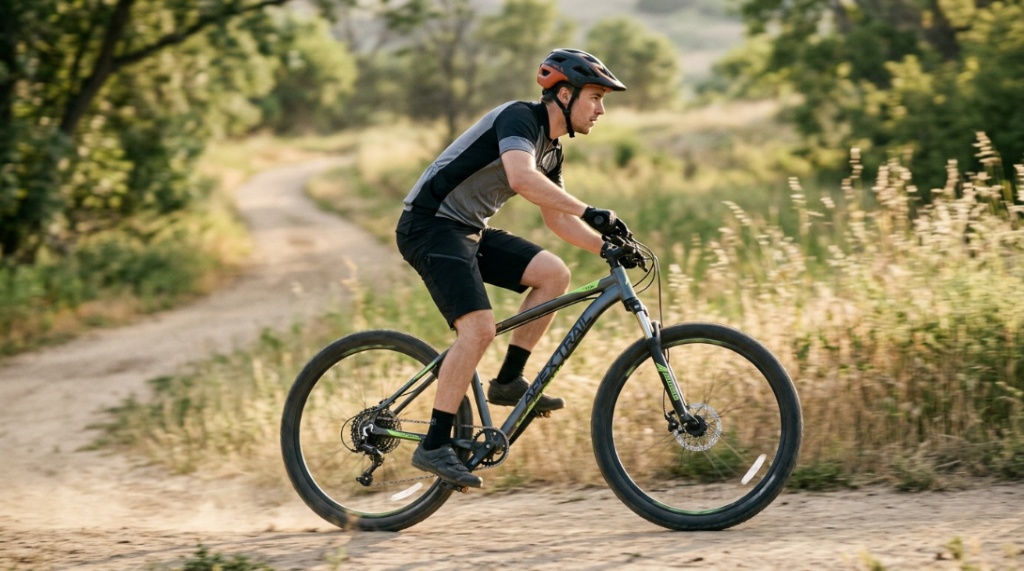
Two bikes sit side by side at $499—both claim “21-speed Shimano drivetrain” and “front suspension” and “disc brakes.” They look nearly identical in photos. But one uses Shimano Tourney (bottom tier) while the other uses Shimano Altus (two tiers higher). One has mechanical disc brakes with 160 mm rotors; the other has hydraulic with 180mm rotors. These differences determine whether you enjoy trail riding or fight your equipment for every mile. Comparing entry-level MTB options requires looking past marketing headlines into specific component model numbers — because at budget prices, brands make dramatically different allocation decisions about where to spend their limited component budget. This mountain bike comparison guide teaches you to read between the spec sheet lines and identify which $500 bike actually delivers $500 of trail-ready performance versus which one delivers $300 of capability in a $500 package.
What Are the Five Specifications That Matter Most at Entry Level?
At entry-level pricing, five specifications determine 90% of your riding experience: brake type and size, fork brand and features, drivetrain groupset tier, wheel hub quality, and frame geometry modernity—everything else (color, brand name, accessories) is secondary to these performance-defining components.
- #1 Brakes: Hydraulic disc (self-adjusting, powerful, consistent) vs mechanical disc (requires manual adjustment, weaker, inconsistent in wet). This single specification difference affects every ride’s safety and confidence. Hydraulics always win if available at your price.
- #2 Fork: Brand (SR Suntour XCR+ = capable; XCT = basic; RockShox = premium), travel (100 mm minimum for trails), and features (lockout for climbing, air spring vs. coil). The fork determines ride comfort on every bump.
- #3 Drivetrain tier: Shimano Tourney (7-speed, bottom) → Altus (8-speed) → Acera (9-speed) → Deore (10-12 speed, reliable). Higher tier = smoother shifting, better durability, wider gear range.
- #4 Hub quality: Sealed cartridge bearings (spin freely, resist contamination, last 2000+ miles) vs loose ball bearings (require adjustment, contaminate easily, fail in 200–500 trail miles). Not listed on most spec sheets — research or ask.
- #5 Frame geometry: Modern (66–68° head angle, short stem, long reach) vs outdated (70°+ head angle, long stem, short reach). Modern geometry handles trails confidently; outdated geometry feels unstable descending. Check the geometry chart — not just the frame material.
How Do You Read an Entry-Level Spec Sheet Like a Pro?
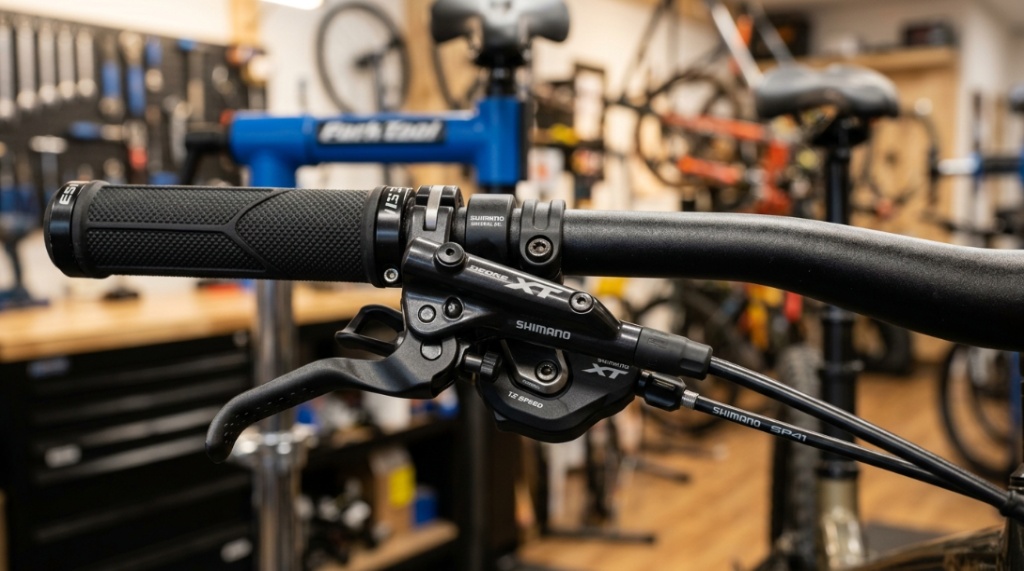
Focus on component MODEL NUMBERS rather than brand names—”Shimano” appears on both $30 Tourney and $150 Deore groupsets. The model name after the brand reveals the actual quality tier. Apply this same principle to forks, brakes, and wheels for accurate comparison.
| Component | Budget Spec (Avoid if possible) | Entry Trail (Minimum acceptable) | Solid Trail (Worth paying for) |
|---|---|---|---|
| Rear Derailleur | Shimano Tourney TX (7sp) | Shimano Altus M2000 (8-9sp) | Shimano Deore M4100+ (10-12sp) |
| Shifters | Shimano SL-TX30 (grip shift) | Shimano SL-M315 (trigger) | Shimano Deore (trigger, indicator) |
| Brakes | Mechanical disc (Tektro Aries) | Hydraulic (Tektro HD-M275) | Hydraulic (Shimano MT200/MT400) |
| Fork | SR Suntour XCT (coil, no lockout) | SR Suntour XCR (coil, lockout) | SR Suntour Raidon/RockShox Judy (air) |
| Crankset | 3x steel chainrings | 2x aluminum chainrings | 1x narrow-wide chainring |
| Wheels/Hubs | Loose ball bearings, single-wall rim | Sealed bearings, double-wall rim | Sealed bearings, tubeless-ready rim |
The translation: when comparing two $500 bikes, the one with a Shimano Deore rear derailleur, hydraulic brakes, and SR Suntour XCR fork delivers dramatically better trail performance than one with Shimano Tourney, mechanical brakes, and an XCT fork—even if both cost the same and look similar in photos.
Where Do Entry-Level Brands Allocate Budget Differently?
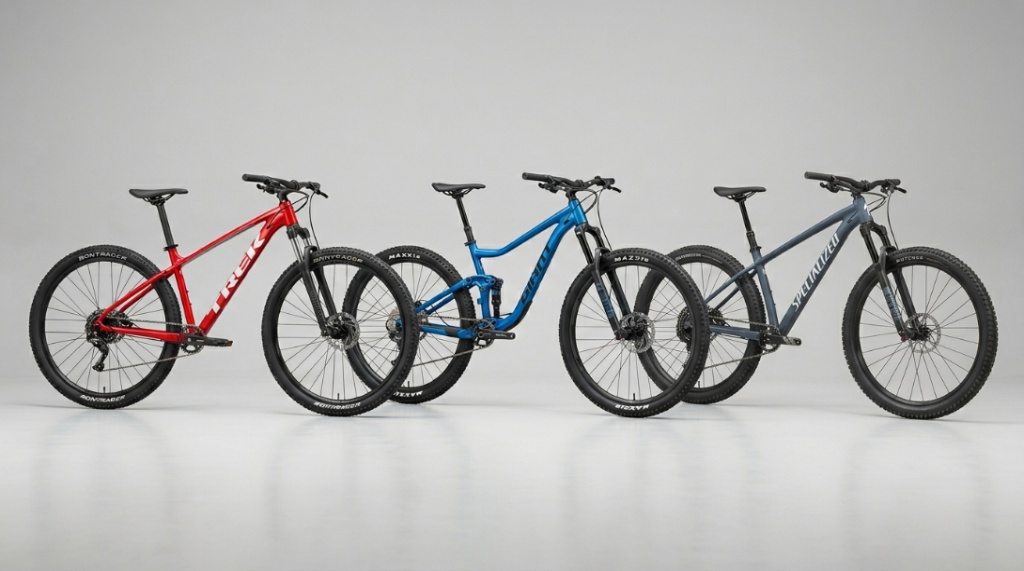
Each brand makes different trade-off decisions about where to spend their limited component budget—some prioritize brakes, others prioritize fork quality, and others prioritize drivetrain. Understanding these allocation patterns helps you choose the brand that prioritizes what matters most to YOUR riding.
- Big-box brands (Schwinn, Mongoose, Huffy): Prioritize low retail price and broad appeal. Often sacrifice brake quality and fork performance for flashier-looking frames and higher gear counts (which actually indicates lower-tier components). Best value found when hydraulic brakes appear at their price points.
- Bike-shop brands (Giant, Trek, Specialized, Cannondale): Prioritize frame quality and component balance. Better overall engineering and assembly. A higher price reflects shop assembly, warranty support, and brand reputation. Geometry is typically more modern.
- Direct-to-consumer (Vitus, Polygon, YT, Canyon): Prioritize component specification by eliminating dealer margin. Often deliver 1–2 tiers higher components at the same price as bike shop brands. Require self-assembly confidence and forfeit local shop support.
- Value leaders (Co-op/REI, Marin, Diamondback): Balance between specs and service. Often include features (tubeless-ready wheels, dropper posts) at lower prices than big-name brands do. Strong return policies reduce purchase risk.
The BrightPeak entry-level mountain bike represents the accessible-price category where understanding component allocation becomes critical—at this price point, knowing which specifications deliver genuine trail capability versus which are marketing helps you maximize every dollar invested.
What Is the Best Way to Test-Compare Entry-Level Bikes?
Compare entry-level bikes through three tests: a static component inspection (verify actual spec matches listing), a parking lot brake and shift test (confirm function before trail commitment), and, if possible, a short trail ride that tests climbing, braking, and rough-terrain handling under real conditions.
Comparison protocol:
Test 1: Static inspection (5 minutes per bike)
- Verify component model numbers match listed specs (mis-specs happen frequently at entry level)
- Check weld quality at all joints (consistent, no voids)
- Squeeze brake levers—hydraulic should engage smoothly; mechanical should pull without excessive travel
- Shift through all gears—each should engage cleanly without hesitation or noise
- Bounce the fork—it should compress and return smoothly without sticking
Test 2: Parking lot function (10 minutes per bike)
- Ride in circles both directions—steering should feel neutral, not pulling
- Brake from moderate speed—the bike should stop straight without pulling to one side
- Shift under light pedal load—all gears should engage without chain skip or noise
- Stand on pedals over a curb—the fork should absorb without harsh bottom-out
Test 3: Trail test if possible (20 minutes per bike)
- Climb a moderate hill — does the gearing allow spinning without straining?
- Descend a moderate slope—do brakes inspire confidence?
- Ride over roots or rough ground—does the fork handle bumps without jarring?
- Corner at moderate speed — does the bike feel balanced and predictable?
What Common Entry-Level Traps Should You Avoid?
Five traps catch entry-level buyers consistently: “full suspension” under $800 (inadequate rear shock), high gear counts as a quality indicator (the opposite is true), brand names over specifications, buying online without size verification, and choosing based on looks rather than component quality.
- Cheap full suspension: Below $800, rear suspension uses the cheapest available shock that adds 3–5 lbs of weight while providing negligible actual performance benefit. A $500 hardtail outperforms a $500 full-suspension on every trail because the budget goes to functional components rather than a decorative rear shock.
- “21-speed” marketing: More gears sounds better but indicates a 3×7 Shimano Tourney—the absolute lowest tier. A “10-speed” 1x Deore bike has fewer total gears but vastly superior shifting quality, reliability, and gear range. Fewer speeds at a higher tier always beat more speeds at a lower tier.
- Brand premium over specs: A $600 Trek with mechanical brakes and basic fork is objectively worse for trail riding than a $500 Vitus with hydraulic brakes and a better fork. The Trek name provides shop support — valuable, but not worth $100 in downgraded safety components.
- Online sizing gambles: “I think I’m a medium” leads to wrong-sized bikes that cannot be returned after assembly. Measure yourself, compare to the brand’s geometry chart, and verify standover/reach before committing. A perfect-spec bike in the wrong size is worthless.
- Color over capability: Choosing the cool-looking model over the better-spec’d model because it matches your aesthetic preference. Your trail does not care what color your bike is. Your brakes and fork determine whether you enjoy the trail or fear it.
How Do You Make the Final Decision Between Two Similar Bikes?
When two entry-level bikes match on the five priority specifications, choose based on warranty length (longer = more confident manufacturer), local service availability, upgrade path compatibility (modern standards like boost spacing and tapered headtube), and return policy generosity. These tiebreakers determine long-term ownership satisfaction.
- Warranty: Lifetime frame > 5-year > 2-year > unspecified. Frame failures are rare but catastrophic and expensive. A longer warranty provides peace of mind on your largest single-purchase component.
- Service access: Can your local shop service this brand? Proprietary parts from obscure brands create maintenance nightmares when something breaks. Mainstream brands ensure parts availability.
- Upgrade path: Does the frame accept modern component standards? A tapered headtube (modern forks), boost hub spacing (wider wheel options), internal routing (clean cable upgrades), and a threaded bottom bracket (universal crank compatibility) future-proof the frame for years of component improvement.
- Return policy: A 30+ day return with trail-use allowance lets you verify the bike works for your riding before commitment. Restrictive policies (7-day, unused only) force blind decisions that may not work for your body or trails.
Conclusion
Comparing entry-level mountain bikes effectively means reading past marketing headlines into five specific component tiers: brake type (hydraulic wins), fork brand/model (reputable with lockout), drivetrain groupset (Altus minimum, Deore ideal), hub bearing quality (sealed cartridge), and frame geometry modernity (66–68° head angle). At any price point, these five specifications predict riding satisfaction more accurately than brand name, color, gear count, or marketing language.
Stop comparing brands — start comparing component model numbers. A $500 bike with Shimano Deore and hydraulic brakes from an unknown brand objectively outperforms a $500 bike with Shimano Tourney and mechanical brakes from a famous brand. Your trails respond to component capability, not brand prestige. Choose the bike that puts the most budget into the five specifications that determine your daily riding experience — and enjoy trails rather than fighting your equipment.
What specification surprised you most when comparing entry-level bikes, and which upgrade made the biggest difference? Share below.
Preparation is everything when transitioning from dirt trails to other outdoor adventures. Just like picking the right tires for your bike prevents wipeouts on loose gravel, choosing the proper gear for a day on the water ensures your comfort and safety. To keep your feet protected and dry when transitioning from the trails to the riverbanks, make sure to avoid common fishing footwear mistakes before your next trip.
Frequently Asked Questions
Is a $500 mountain bike good enough for real trails?
Yes—$500 buys a capable hardtail that handles moderate singletrack, fire roads, and most recreational trails. It will not match $2,000 bike performance on highly technical terrain, but it provides genuine enjoyment on the trails most recreational riders access. Budget brands at $500 vary significantly—use this guide’s comparison method to find the best-spec’d option at that price.
Should I buy the cheapest bike and upgrade later?
Only if the frame has modern standards (tapered head tube and boost spacing). Very cheap frames use outdated standards that limit upgrade options — you end up replacing the frame (buying a new bike) rather than improving it. Better strategy: buy the best complete bike your budget allows, ride one season, then upgrade only the single component that limits you most.
How important is bike weight at the entry level?
Less important than component quality. A 32-lb bike with hydraulic brakes and a good fork outperforms a 28-lb bike with mechanical brakes and a cheap fork on every trail. Weight matters for racing and extended climbing — for recreational riding, functional components outweigh (literally) weight savings at every entry-level price point.
Are online-only bike brands trustworthy?
Many direct-to-consumer brands (Vitus, Polygon, Canyon, and YT) deliver excellent value because eliminating dealer margins allows better specs at lower prices. Research the specific brand’s reputation, warranty process, and customer service before buying. The risk: no local support if something goes wrong. The reward: often 1–2 component tiers higher than equivalent shop brands.
What is the single most important upgrade for an entry-level MTB?
Tires. Factory tires on entry-level bikes are the weakest link — chosen for warehouse durability rather than trail performance. Spending $60–$80 on proper trail tires (2.25″ or greater width, aggressive tread, quality rubber compound) transforms grip, braking, cornering confidence, and overall capability more than any other single upgrade at this level.
How do I know when I have outgrown my entry-level bike?
You have outgrown it when specific, repeated trail limitations prevent enjoyment despite proper technique: consistent brake fade despite fresh pads, fork bottoming on moderate terrain, drivetrain unable to hold gear under your power, or geometry that feels unstable at speeds within your comfort zone. General desire for “something better” without specific functional limitations is upgradeitis—not genuine need.