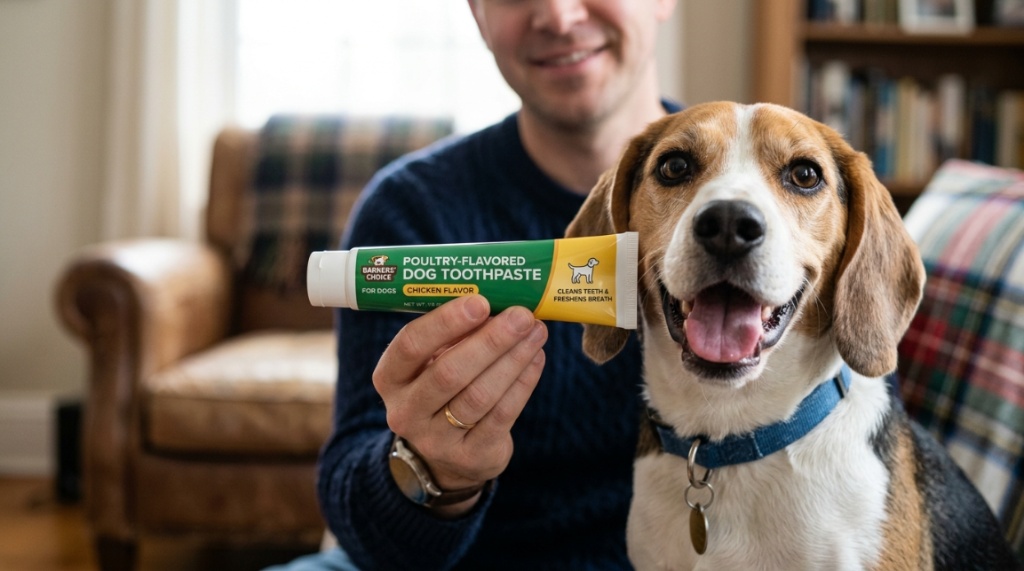
Living in Florida means dealing with heat, humidity, and the occasional hurricane — but what it also means for your dog is an environment where dental health can slip down the priority list. You may have noticed your pup’s breath getting stronger, or your vet flagging tartar buildup at their last checkup. The truth is, dental disease affects more than your dog’s mouth; it can impact their heart, kidneys, and overall longevity. But with so many formulations, flavors, and claims on the shelf, how do you actually pick the right one? This article breaks down what makes a toothpaste genuinely safe and effective, what Florida-specific factors matter (like water quality and warmer-climate oral health), and how to match a product to your dog’s specific needs without getting lost in marketing hype. By the end, you’ll know exactly what to look for and what to avoid.
Key Takeaways
- Enzymatic toothpaste with Veterinary Oral Health Council (VOHC) acceptance is the most reliable choice for everyday plaque control, as the enzymes actively break down bacteria and debris.
- Fluoride-free, xylitol-free, and foaming-agent-free formulas are non-negotiable safety requirements for canine toothpaste, as these common human toothpaste ingredients can be toxic or harmful to dogs.
- Flavor matters more than you think — dogs don’t tolerate mint or cinnamon well, and a flavor like poultry or peanut butter will make the brushing process dramatically easier and more consistent.
- Florida’s warm, humid climate can accelerate bacterial growth in dental products and affect water quality, so checking expiration dates and using fresh, clean water during brushing is a practical step many owners overlook.
- Toothpaste alone isn’t enough; pairing it with regular brushing (ideally daily or at least three times per week) and appropriate chew toys provides the best protection against periodontal disease.
Why Can’t I Just Use My Own Toothpaste?
This is the most common question vets hear, and the answer is simple: human toothpaste is dangerous for dogs. The two biggest culprits are fluoride and xylitol. Fluoride, while great for human teeth, is toxic to dogs in larger amounts — and since dogs don’t know how to spit and rinse, they swallow most of the paste. Xylitol, a common artificial sweetener, is even worse; even a tiny amount can cause a rapid, life-threatening drop in a dog’s blood sugar, leading to seizures, liver failure, or worse. Beyond those, human toothpaste foams up because of sodium lauryl sulfate, and the minty or cinnamon flavors are overwhelming and unpleasant for a dog’s sensitive nose.
So, yes, the formulation absolutely matters. The good news is that there are plenty of canine-specific toothpastes designed to be swallowed safely, offer flavors dogs actually enjoy (poultry, beef, vanilla mint, or peanut butter), and contain enzymes that break down plaque even if you don’t brush perfectly. That said, the ingredient list still needs scrutiny — being made “for dogs” doesn’t automatically make a product safe or effective. To get a practical handle on which products truly perform in the Florida market, the best dog toothpaste in florida guide offers a comparative look at formulations, pricing, and owner feedback, though the core principles below will help you regardless of which product you ultimately select.
The Chemistry of Dog Toothpaste: What Actually Works
Not all dog toothpaste is created equal. Understanding the active ingredients is the difference between buying a product that merely masks breath and one that actually prevents dental disease.
Enzymatic Formulas Are the Gold Standard
Enzymatic toothpastes contain enzymes like glucose oxidase and lactoperoxidase. These create an antibacterial environment in the mouth, breaking down the extracellular matrix that allows plaque and bacteria to stick to teeth. What does this mean in real life? It means the toothpaste keeps working — kind of a time-released effect — even after you finish brushing. This is especially helpful if your dog wriggles and you only manage a 30-second scrub. VOHC-approved enzymatic formulas have undergone independent trials proving they reduce plaque and tartar when used as directed. If you want a measurable, research-backed result, this is the category to prioritize.
Ingredients That Do Nothing (or Worse)
Some toothpastes rely on abrasives like silica or baking soda to scrub the teeth mechanically. While these aren’t harmful, they’re less effective against the bacteria that live under the gumline. Others emphasize “whitening” or “freshening” ingredients — these are cosmetic claims that pad the label but don’t address the root problem. On the harmful side, always check for propylene glycol (a thickening agent that can be irritating with prolonged exposure) and sodium polyphosphate (which is safe but often paired with added flavorings that dogs dislike). If you see xylitol or fluoride on the ingredient list, put the tube down immediately.
What’s the Best Flavor for a Picky Dog?
You can spend $15 on a high-quality toothpaste and have your dog refuse it entirely because the flavor is wrong. Acceptance is the #1 factor in whether you’ll actually brush daily. Dogs have taste preferences just like humans, and they’re hardwired to prefer savory, meaty flavors over sweet or minty ones.
Here’s what typically works and what doesn’t:
- Poultry, beef, and liver flavors: These are statistical winners among dog owners. They mask the toothpaste taste and make brushing feel more like a treat.
- Peanut butter flavor: Works well for many dogs, though you’ll want to wash the brush after — peanut flavoring can be persistent.
- Vanilla mint: A compromise. Some dogs tolerate it, but it’s not a sure bet. The “mint” is usually a bland version of spearmint that doesn’t feel as overwhelming to dogs as full-strength menthol.
- Baking soda or fragrance-free: Usually a last resort, and be warned: the texture and taste are unpleasant for many dogs, making brushing a power struggle.
The practical tip here is to purchase a small tube first and test it with your dog before committing to a larger, cost-per-ounce-friendlier size. Your dog’s reaction in the first 30 seconds is usually a reliable indicator of long-term success.
Florida-Specific Factors You Might Be Overlooking
Living in the Sunshine State comes with underappreciated dental-health nuances that most online advice completely ignores.
The Humidity Problem
Florida’s year-round humidity is a breeding ground for bacteria — not just on surfaces, but inside your dog’s mouth and inside the toothpaste tube itself. Warm, damp environments accelerate bacterial growth. What does this mean for you? First, check the expiration date on any paste you buy, and don’t stock up on 6 months’ worth of tubes at once. An opened tube should be used within 3–4 months; after that, the enzymes and preservatives degrade, and the paste becomes less effective. Keep the cap tight and store it in a cool, dry place — not in the bathroom medicine cabinet where the shower’s moisture and heat can reach it.
To protect your pet from pests during outdoor adventures in the Sunshine State, check our guide on Vet Recommended Flea Collars for Small Dogs in 2026 for complete parasite prevention tips.
Water Quality and Calculus
Depending on your city in Florida, your tap water may be hard, meaning it has high levels of calcium and magnesium. Hard water is known to contribute to mineral deposition on teeth, which turns soft plaque into hard, stubborn calculus (tartar) faster. If you’re on well water or your area has high mineral content, your dog’s teeth are more prone to discoloration and roughness. In this case, brushing frequency matters even more — ideally daily — and you may want to use filtered or bottled water when brushing, to reduce the mineral load deposited on the tooth surface during the brushing process itself.
How to Brush Properly (Since Toothpaste is Only Half the Battle)
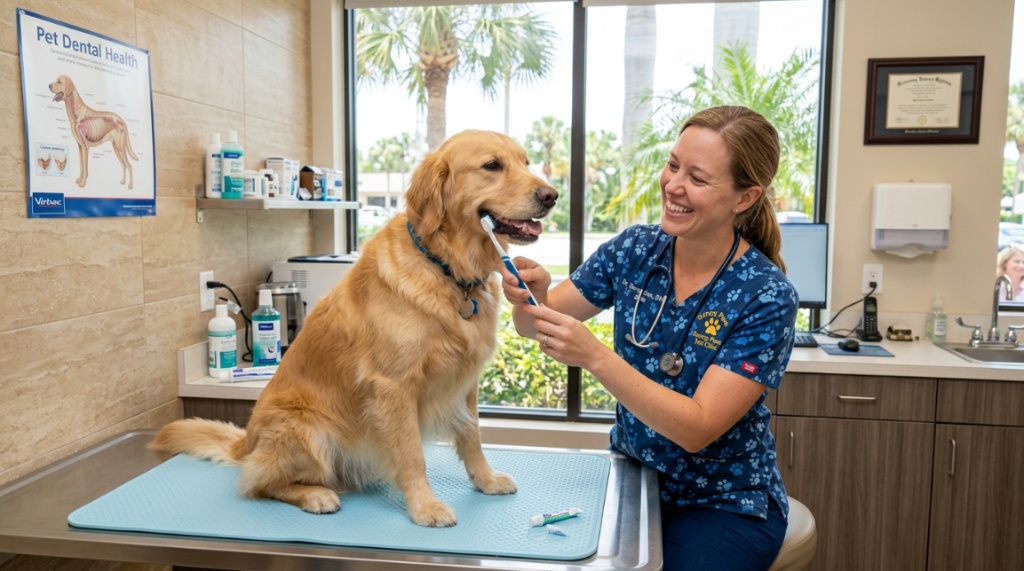
Even the best dog toothpaste won’t help if it’s applied incorrectly. Brushing technique directly impacts how much plaque you remove from the tooth surface, especially at the gumline, where periodontal disease begins.
The 45-Degree Angle Rule
The goal is to brush at a 45-degree angle where the tooth meets the gum, in small circular motions. This allows the bristles to reach just below the gumline, breaking up plaque that forms there. If you brush only the visible surface of the tooth, you’re leaving about 60% of the problem — the plaque under and around the gum edge — untouched.
Don’t Miss the Back Teeth
The upper premolars and molars have deep grooves (fissures) and are the most common sites for disease. A small, finger-mounted toothbrush or a dental gauze pad can sometimes reach these areas better than a large dog brush will. Most owners unintentionally neglect the back teeth because the dog’s lips and cheeks make access difficult. Give those molars at least 10 seconds each.
How Much to Use
A pea-sized amount is sufficient for most dogs. Anything more just gets swallowed and wasted. For toy breeds (like Chihuahuas or Yorkies), use a half-pea-size amount. For large breeds (like Labs or Golden Retrievers), you can use roughly a lima-bean-size amount.
If your dog resists brushing initially, introduce the taste first by letting them lick a tiny amount off your finger for several days before you ever bring the brush near their mouth. Then, let them lick toothpaste off the brush. Only then attempt to brush the front teeth, working gradually toward the back. Rushing this process is the #1 reason owners give up after a week.
Which Formulation Fits Your Dog’s Needs?
Your dog’s age, breed, and existing dental health should guide your choice. This isn’t a one-size-fits-all market, and buying a high-end paste for a dog with no plaque is wasted money — just as buying a basic paste for a dog with heavy tartar will set you up for disappointment.
| Scenario | Recommended Formula Type | Key Reasoning |
|---|---|---|
| Puppy (under 1 year) | Mild, non-abrasive, palatable flavor | Puppies are just learning to tolerate brushing. A soft, tasty paste without strong enzymatic action is gentle on developing enamel. |
| Adult dog with no visible tartar | Enzymatic, VOHC-accepted | Prevention is the goal. Enzymes keep plaque from mineralizing, which is the most effective long-term approach. |
| Adult dog with moderate tartar | Enzymatic formula with mild abrasives | Combines bacterial enzyme action with a gentle physical scrubbing agent that helps in wearing down existing calculus. |
| Senior dog with gum recession | Gel-based, gentle, often fragrance-free | Older dogs have more sensitive gums. Avoid excessive abrasives and strong flavors that can cause irritation. |
| Small breed (toy, miniature) | High-concentration enzymatic (often gel) | Small breeds have crowded teeth that trap plaque. A highly potent enzyme paste is necessary because brushing is physically more difficult with small mouths. |
One final but important product consideration: Be wary of homemade “natural” toothpaste recipes that circulate online. Some people recommend baking soda mixed with water, but baking soda is highly alkaline and can disrupt the pH balance of your dog’s mouth, potentially encouraging bacterial overgrowth rather than preventing it. Coconut-oil-and-turmeric pastes offer anecdotal “anti-inflammatory” benefits but have no proven mechanical or antibacterial efficacy. Stick to commercially manufactured products, which have undergone safety and stability testing.
Are Dental Chews and Water Additives Enough Instead?
It would be lovely if a chew or a few drops of water additive could replace brushing, but the evidence is clear that they cannot.
Dental chews, especially those carrying the VOHC seal, work by mechanical abrasion — the chewing action scrapes plaque off the tooth surfaces, and some chews contain compounds that inhibit plaque. But they only touch the occlusal surfaces (the tops of the teeth) and the sides your dog chews with. They miss the entire inner (lingual) side of the teeth and the gumline where disease begins. They’re a fantastic complement, but not a substitute.
Water additives that contain chlorhexidine or zinc chloride can temporarily reduce oral bacteria, but their effect is short-lived — measured in minutes, not hours. They’re useful for dogs who completely refuse any object near their mouth, but they’re the last resort. If you can brush only once a week but use a chew daily and a water additive, you’re ahead of 80% of owners. But if you want measurable plaque reduction, brush daily with a quality enzymatic paste, and let chews and additives play a supporting role.
When to Let the Vet Handle It
If you look at your dog’s teeth and see thick, dark brown or yellow deposits standing off the tooth surface, or if the gums bleed easily when you touch them, or your dog has persistent mouth odor despite brushing — you’re past the point where toothpaste can fix the problem. This requires a professional dental cleaning under anesthesia. That’s not an overstatement; it’s biology. Once plaque calcifies into calculus, toothpaste simply cannot dissolve it. Brushing at this stage would just polish the surface of the calculus, potentially doing nothing for the gums underneath.
Schedule the vet visit. Post-cleaning, their beautifully smooth teeth will be a fresh canvas. That’s the perfect time to establish your brushing routine, because a smooth tooth surface is significantly harder for bacteria to adhere to than a rough, etched one. You’ll be amazed at how well a good enzymatic toothpaste holds the line after a professional cleaning.
Frequently Asked Questions
How often should I brush my dog’s teeth?
Ideally, every day. The most significant benefits from enzymatic toothpaste are seen with daily use. However, brushing at least three times per week is a realistic minimum that still reduces plaque accumulation meaningfully compared to no brushing at all. Consistency greatly outweighs intensity.
Can I use an electric toothbrush with dog toothpaste?
Yes, but only with a soft-bristled head and only if your dog is comfortable with the vibration. The mechanical oscillating action of an electric brush is actually more effective at removing plaque than manual brushing. Just introduce it slowly — let your dog sniff it while off, then touch it to their lip, then brush a single tooth before you attempt a full session.
Is toothpaste necessary if my dog gets regular dental treats?
Treats and chews don’t work on the inner surfaces of your dog’s teeth or below the gumline, which are the critical areas for periodontal disease. Treats are a helpful supplement, but they don’t deliver the enzymes or the direct mechanical cleaning that a brush provides. Think of them as helping for plaque on the tops of the teeth, not as a primary prevention tool.
Should I brush my dog’s teeth before or after meals?
After meals is the ideal time, as brushing clears away fresh food particles and bacteria that have just colonized the tooth surface. If your dog is not a fan, brushing before a meal can be used as a positive association — they learn that brushing means dinner is coming right after.
Can dog toothpaste expire?
Yes. The enzymes in dog toothpaste have a finite shelf life. Most products have a shelf life of 12–18 months unopened and 3–4 months after opening. Over time, the enzymes lose efficacy, meaning the toothpaste may still taste fine but won’t provide the same antibacterial benefit. Check the expiration date on the crimped end of the tube.
Conclusion
The best dog toothpaste in Florida is one that combines safety, efficacy, and palatability in a formula you will actually use. Prioritize enzymatic, VOHC-accepted pastes with flavors your dog eagerly accepts, and steer clear of fluoride, xylitol, and harsh foaming agents. Remember that your Florida environment plays a role — humidity degrades your paste faster, and mineral-rich water accelerates tartar, so embrace daily brushing and store your products properly. Pair your paste with regular professional checkups and be honest about when your dog needs a vet’s skilled hands rather than your toothbrush. Your dog’s smile — and their heart, kidneys, and overall health — will thank you for the effort. Start brushing tonight; it’s the small, consistent actions that yield real, lasting results.