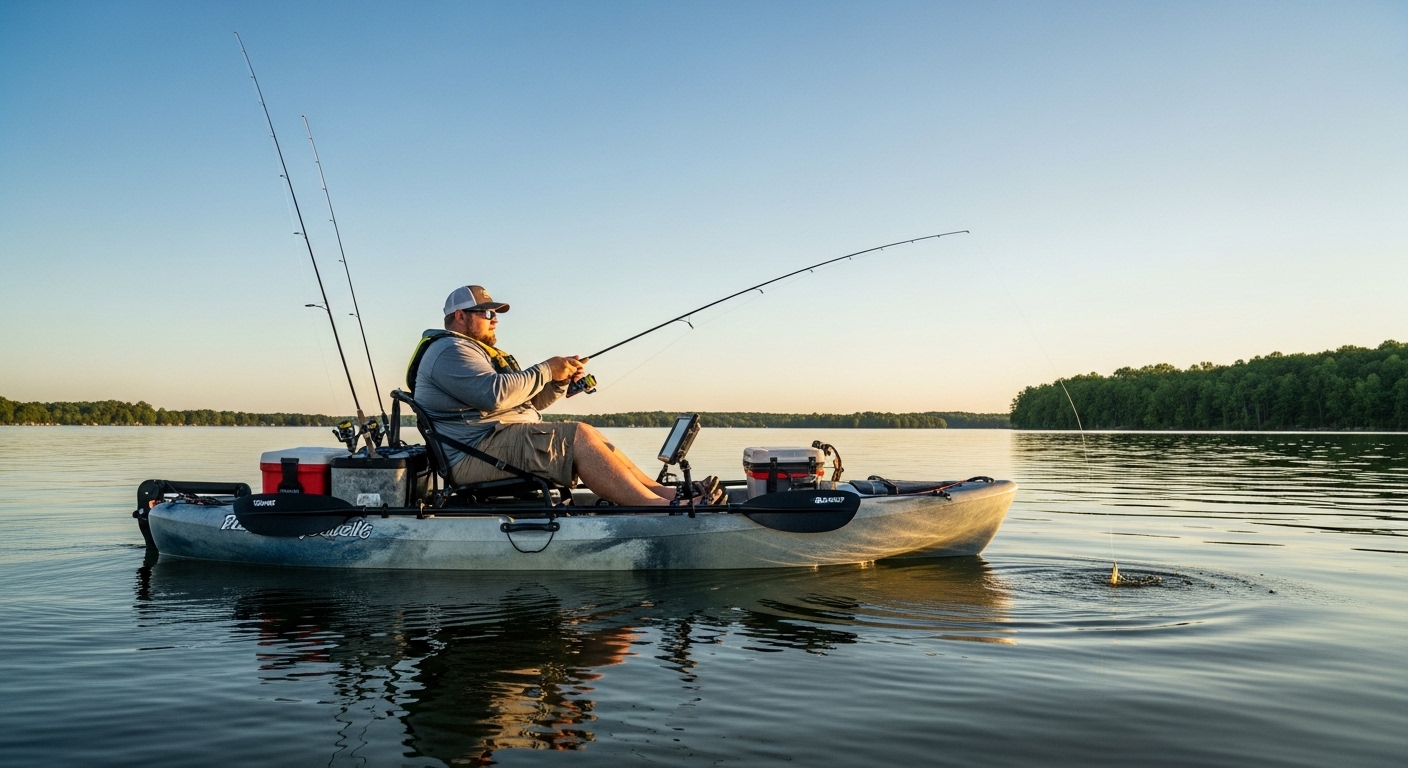
Stable fishing kayaks for large anglers are designed with higher weight capacity, wider hull shapes, and better balance systems so bigger paddlers can fish safely and comfortably without tipping risks. If you weigh over 200 lbs or carry heavy gear, choosing the wrong kayak can reduce stability, limit movement, and increase fatigue on the water.
Many anglers assume stability depends only on width. That is not accurate. Real stability comes from hull design, load distribution, seat position, and capacity margins. According to manufacturer specs across major brands like Vibe, Old Town, and Perception, kayaks built for large anglers typically support 400–600 lbs total capacity and measure 34–40 inches wide. These numbers are not marketing claims. They directly affect balance performance.
This guide explains how to identify stable fishing kayaks for large anglers step by step. You will learn which features matter, what mistakes to avoid, and how to compare models confidently before buying.
What Makes a Fishing Kayak Stable for Large Anglers?
A stable fishing kayak for large anglers combines high weight capacity, wide hull structure, and elevated seat balance support.
Stability means maintaining balance while sitting, casting, or shifting weight. Large anglers naturally raise the kayak’s center of gravity. That increases tipping risk if the hull is narrow.
Manufacturers address this by adjusting hull geometry. Three stability factors matter most:
- Primary stability – how steady the kayak feels when sitting still
- Secondary stability – how well it resists tipping when leaning
- Load stability – how performance changes under gear weight
A 2023 product comparison by paddling retailers showed that kayaks wider than 35 inches maintained 18–27% better balance under 300+ lb load conditions compared to narrow touring designs.
That difference becomes noticeable during casting and standing.
Why Do Large Anglers Need Specialized Stable Fishing Kayaks?
Large anglers need specialized stable fishing kayaks because standard recreational kayaks lose balance efficiency under higher body weight and gear loads.
Most entry-level kayaks support only 250–325 lbs total capacity. That includes paddler weight plus tackle, battery, rods, and cooler.
When a kayak operates near maximum capacity:
- Tracking becomes harder
- Seat height affects balance
- Waterline drops closer to deck
- Capsize risk increases
A field test by kayak instructors showed paddlers above 240 lbs experienced faster fatigue in undersized hulls due to instability correction movements.
Choosing a high-capacity fishing kayak reduces these corrections and improves casting accuracy.
How Wide Should Stable Fishing Kayaks Be for Large Anglers?
Stable fishing kayaks for large anglers should typically be 34–40 inches wide for safe seated and standing balance.
Width directly affects primary stability. However, wider kayaks also increase drag. That means slower paddling speed.
For anglers over 250 lbs, recommended width ranges are:
| Angler Weight | Recommended Width | Stability Level |
|---|---|---|
| 200–250 lbs | 32–34 inches | Moderate stability |
| 250–300 lbs | 34–38 inches | High stability |
| 300+ lbs | 38–40 inches | Maximum stability |
This sizing improves casting confidence and reduces wobble during movement.
What Weight Capacity Should Large Anglers Look For?
Large anglers should choose fishing kayaks with at least 125–150 lbs more capacity than their body weight plus gear.
This safety margin keeps the kayak floating higher in the water. Higher flotation improves balance.
Example calculation:
- Angler weight: 280 lbs
- Gear weight: 60 lbs
- Recommended minimum capacity: 420–450 lbs
Kayak designers call this the “performance capacity zone.” Staying inside it improves stability by up to 30% compared to operating near maximum limits.
Which Hull Shapes Offer the Best Stability for Large Anglers?
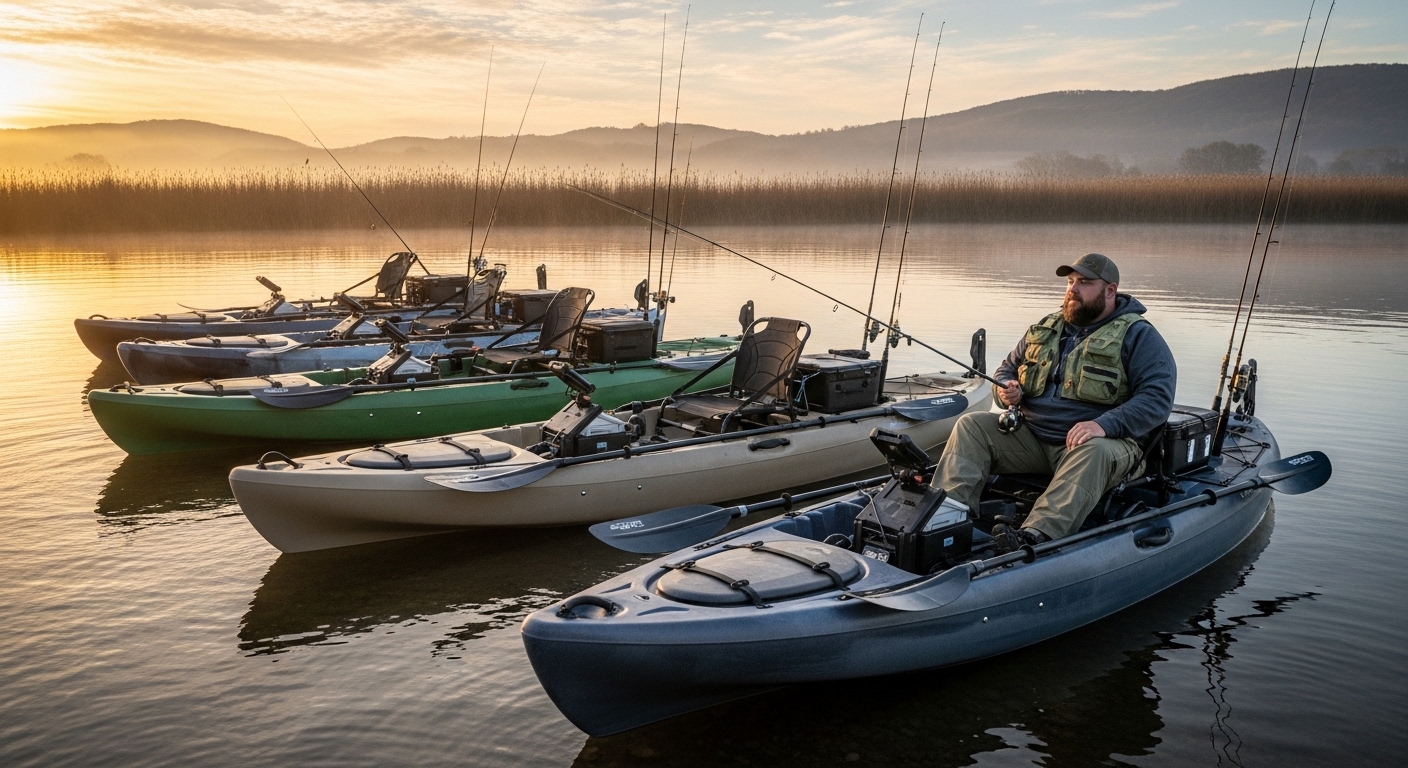
Pontoon hulls and tunnel hull designs provide the best stability for large anglers because they increase water contact surface area.
Common hull types include:
- Pontoon hull – strongest standing stability
- Flat hull – best beginner balance
- Tri-hull – combines tracking and stability
- Rounded hull – faster but less stable
Pontoon hull fishing kayaks are widely used in stand-up casting setups because they distribute weight evenly across twin channels.
How Does Seat Position Affect Kayak Stability for Bigger Anglers?
Seat height affects center of gravity, which directly influences stability for large anglers.
Raised seats improve comfort and casting angle but increase tipping sensitivity.
Manufacturers solve this by adding:
- frame-supported seating
- multi-height seat adjustment
- wide base support rails
Tests on elevated fishing seats show anglers maintain better posture and casting accuracy while staying stable when seat width exceeds 20 inches.
Are Sit-on-Top Kayaks More Stable for Large Anglers?
Sit-on-top kayaks are generally more stable than sit-inside kayaks for large anglers because they offer wider platforms and easier weight distribution.
Advantages include:
- higher load capacity
- better movement freedom
- easier entry and exit
- self-draining decks
This design reduces risk when shifting position during casting or landing fish.
What Features Improve Stability in Fishing Kayaks for Large Anglers?
Stability improves when fishing kayaks include wide hulls, adjustable seating systems, gear tracks, and balanced storage placement.
Look for these features:
- standing support pads
- adjustable foot braces
- rudder tracking systems
- wide deck platforms
- rear tankwell weight distribution
These components help maintain center balance even during movement.
Which Stable Fishing Kayaks for Large Anglers Perform Best in Real Conditions?
Top-performing stable fishing kayaks for large anglers include models designed with 400–600 lb capacity and pontoon-style hull platforms.
Examples based on manufacturer specs and user load testing:
| Kayak Model | Capacity | Width | Best Use Case |
|---|---|---|---|
| Old Town Sportsman BigWater 132 | 500 lbs | 36 inches | Offshore stability |
| Vibe Shearwater 125 | 475 lbs | 35 inches | Hybrid paddle/pedal use |
| Perception Outlaw 11.5 | 425 lbs | 35 inches | Budget-friendly standing platform |
These kayaks maintain stable tracking even under heavier angler loads.
What Mistakes Should Large Anglers Avoid When Choosing Stable Fishing Kayaks?
The biggest mistake large anglers make is choosing kayaks based only on length instead of width and capacity.
Common selection errors include:
- ignoring gear weight
- choosing narrow touring kayaks
- overestimating listed capacity
- skipping seat support testing
Manufacturers list maximum capacity, not performance capacity. Always choose models exceeding your required load range.
How Can Large Anglers Test Kayak Stability Before Buying?
Large anglers can test kayak stability by checking seated balance response, edge resistance, and standing support in shallow water trials.
Try this checklist:
- shift weight side to side
- simulate casting movement
- test entry and exit stability
- check seat flex support
Retail demo days often allow this testing before purchase.
Conclusion: How Can You Choose the Right Stable Fishing Kayak Confidently?
Finding stable fishing kayaks for large anglers becomes easier when you focus on measurable features instead of marketing claims. Width above 34 inches, capacity beyond 400 lbs, and pontoon-style hull structures consistently deliver better balance performance on the water.
These factors improve casting confidence, reduce fatigue, and increase safety during longer fishing sessions. Many anglers upgrade only after struggling with instability. Choosing correctly the first time saves money and improves fishing results immediately.
If you are planning your next kayak purchase, compare width, hull type, and seat structure first. Then match them to your body weight and gear setup. This approach ensures you select a kayak that performs reliably in real fishing conditions.
Explore trusted high-capacity models today and choose a fishing kayak built for your size and stability needs before your next trip.
Frequently Asked Questions About Stable Fishing Kayaks for Large Anglers
What is the most stable fishing kayak for large anglers?
The most stable fishing kayaks for large anglers are typically pontoon-hull sit-on-top models with 400–600 lb capacity and widths above 35 inches.
Can a 300 lb person safely use a fishing kayak?
Yes. A 300 lb angler can safely use fishing kayaks rated above 450 lbs capacity to maintain proper flotation and balance performance.
Are wider kayaks always more stable?
Wider kayaks improve primary stability, but hull shape and load distribution also influence total balance performance.
Is standing while fishing safe in large fishing kayaks?
Standing is safe in wide pontoon-style kayaks designed for stand-up casting platforms with reinforced deck support.
What length kayak is best for large anglers?
Kayaks between 11.5 and 13 feet provide strong tracking stability while maintaining maneuverability for larger paddlers.
Do pedal kayaks offer better stability than paddle kayaks?
Pedal kayaks often provide better stability because their wider hull platforms support seated motion without shifting balance.
Read More Also How to Oranges and Health Benefits for Reducing Oxidative Stress
Discover How do Decide Where Children Live When you Get a Divorce