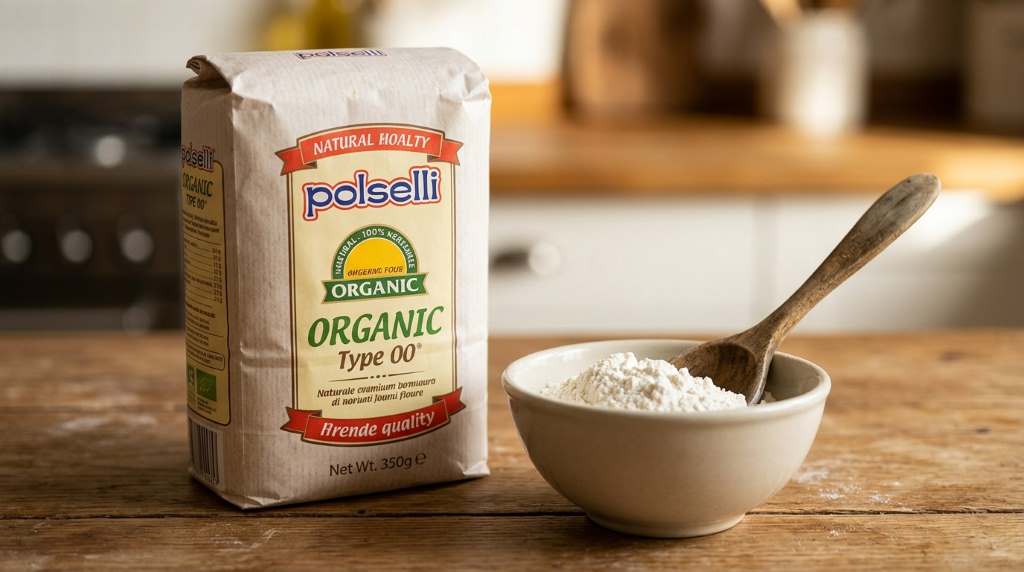
Yes, POLSELLI Organic Type 00 Flour is a strong choice for home pizza and fresh pasta. Its W 220 strength suits moderate fermentation, while its fine milling supports smooth dough handling. For anyone comparing Italian pizza flour, this option deserves serious attention. The flour comes in 1 kg and 5 kg formats, giving home cooks practical buying flexibility.
Key Takeaways
- Best use: Pizza, fresh pasta, pastries, and other soft-wheat doughs.
- Flour type: Tipo 00, meaning an exceptionally fine Italian milling grade.
- Strength: W 220 supports moderate fermentation and everyday dough preparation.
- Organic focus: POLSELLI makes this flour from Italian organic wheat blends.
- Pizza result: Expect a tender, extensible dough with a pleasantly light crust.
- Pasta result: It works especially well for soft, delicate fresh pasta.
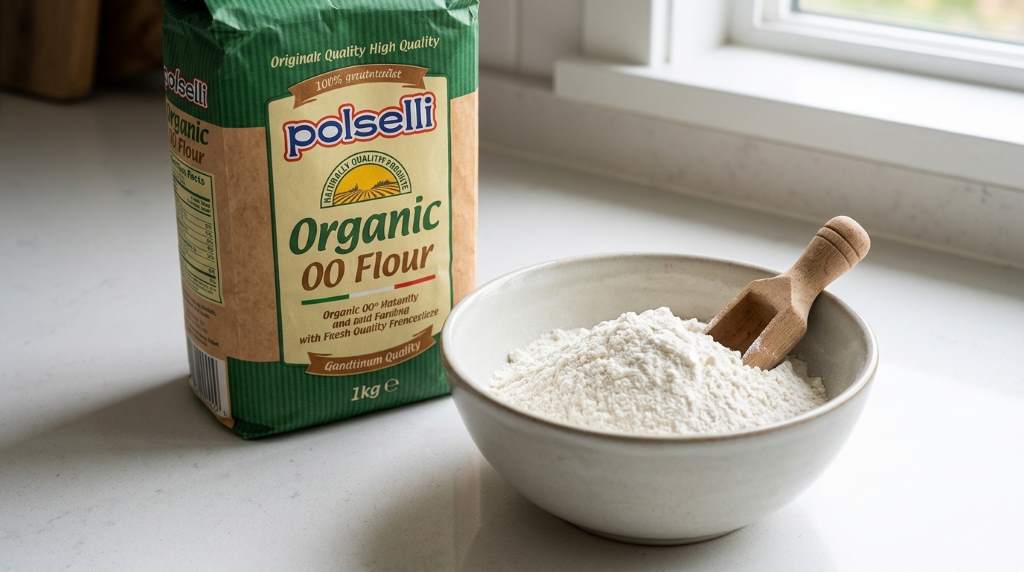
What Makes POLSELLI Organic Type 00 Different?
POLSELLI Organic Type 00 is a finely milled soft-wheat flour designed for versatile kitchen use. Unlike many American flours, Italian Tipo 00 classification focuses primarily on milling refinement. Therefore, the number 00 does not automatically indicate protein level or dough strength. POLSELLI lists its organic flour at W 220, placing it in a moderate strength range.
That W value matters because dough strength influences fermentation tolerance and handling. A W 220 flour generally suits shorter or moderate fermentation schedules better than very long ones. Consequently, this flour fits home cooks who want reliable dough without complicated fermentation planning.
The organic line also emphasizes Italian-grown organic wheat, giving the flour a distinct sourcing advantage. However, organic certification does not automatically make one flour perform better than another. Instead, the advantage comes from combining certified sourcing with appropriate milling and dough performance.
For kitchen versatility, POLSELLI has another advantage worth considering. You can use one bag across pizza, fresh pasta, pastries, and several everyday baking projects. That flexibility can make the flour more practical than buying several specialized flours.
When choosing equipment alongside specialized ingredients, kitchen gadgets cooks recommend can also improve preparation efficiency. Good tools matter because mixing, rolling, and shaping affect final dough quality.
How Does POLSELLI Organic Flour Perform in Pizza Dough?
Pizza represents one of the most natural applications for this flour. Its moderate strength gives dough enough structure while keeping handling relatively approachable. As a result, beginners can stretch the dough without fighting excessive elasticity.
The fine grind also creates a smooth dough texture after proper hydration and mixing. With adequate fermentation, the dough develops better extensibility and more complex flavor. However, your yeast quantity and fermentation temperature still matter more than flour alone.
For a home pizza, start with moderate hydration rather than immediately chasing extremely wet dough. Around 60% to 65% hydration provides a useful starting point for many cooks. Then adjust gradually according to your mixer, flour storage, room temperature, and desired crust.
For example, use 500 grams of POLSELLI flour with approximately 300 to 325 grams of water. Add around 12 to 15 grams of salt, then adjust yeast according to your fermentation schedule. This formula creates a practical baseline rather than an inflexible recipe.
Mix until the dough becomes cohesive, then allow it to rest before intensive kneading. That rest gives the flour time to absorb water and helps gluten development. Afterward, knead until the dough feels smoother and more elastic.
Next, ferment the dough according to your room temperature and yeast quantity. A moderate fermentation works particularly well with a W 220 flour. Avoid assuming that longer fermentation automatically produces better pizza.
For baking, a very hot pizza oven can produce the strongest visual results. Still, a conventional household oven can deliver excellent pizza with proper preheating. Use a pizza steel or stone when available, and preheat it thoroughly before baking.
The finished crust should feel light rather than dense when you manage fermentation correctly. The edge can develop attractive expansion while the center remains flexible. Therefore, POLSELLI Organic Type 00 suits cooks seeking balanced, approachable pizza dough.
Is POLSELLI Organic Type 00 Good for Pasta?
Yes, POLSELLI Organic Type 00 works well for many fresh pasta styles. Its fine texture produces smooth dough that rolls easily through a pasta machine. This characteristic makes it especially useful for tagliatelle, fettuccine, ravioli, and lasagna sheets.
For fresh egg pasta, combine flour with eggs and knead until the dough becomes firm but supple. Then wrap it and let it rest before rolling. That resting period relaxes gluten and makes the dough easier to laminate.
Fresh pasta benefits from a dough that rolls evenly without excessive tearing. POLSELLI’s fine milling helps create that smooth working surface. Consequently, beginners may find it easier to achieve consistent pasta sheets.
However, Tipo 00 should not automatically replace durum semolina for every pasta application. Traditional dried pasta relies heavily on durum wheat because its gluten characteristics support extrusion and firmness. For delicate fresh pasta, though, soft-wheat Tipo 00 can be an excellent choice.
For ravioli, the flour performs particularly well because smooth sheets help create clean edges. Thin sheets also allow the filling to remain the star of the finished dish. Keep the dough covered during preparation to prevent surface drying.
When you want a compact kitchen setup, equipment choices become equally important. A small cooker can complement pasta preparation, especially when countertop space matters, as discussed in Toshiba mini rice cooker guidance.
POLSELLI Organic Flour Versus Typical 00 Alternatives
Not every Tipo 00 flour behaves the same way, even when the packaging looks similar. Strength, protein content, wheat selection, milling, and intended fermentation can differ considerably. Therefore, comparing only the words “00 flour” can lead to disappointing results.
POLSELLI Organic Type 00 sits in a useful middle ground for everyday dough preparation. Its W 220 classification favors moderate fermentation rather than extreme long-fermentation formulas. This makes it less specialized than very strong pizza flours.
A stronger flour can handle higher hydration and longer fermentation more comfortably. However, stronger does not necessarily mean better for every recipe. Excessive strength can make dough feel resistant when you want delicate stretching.
On the other hand, weaker flour may feel wonderfully soft but struggle during extended fermentation. POLSELLI’s moderate strength offers a practical compromise. That balance explains why the flour can move between pizza and fresh pasta reasonably well.
Home cooks should therefore match flour strength to their schedule instead of chasing impressive specifications. If you usually make dough the same day, W 220 can make practical sense. If you routinely ferment dough for several days, consider a stronger flour designed for that workload.
Best Recipes to Make With POLSELLI Organic Type 00
The flour’s versatility becomes clearer when you look beyond standard pizza. Its fine texture supports several recipes where smooth dough handling matters. Still, each application benefits from slightly different hydration and fermentation choices.
- Neapolitan-style pizza: Use moderate hydration and a controlled fermentation schedule.
- Fresh fettuccine: Build a firm egg dough and roll it gradually.
- Ravioli: Make smooth sheets thin enough to highlight the filling.
- Lasagna: Roll consistent sheets that cook evenly without excessive thickness.
- Focaccia: Increase hydration carefully if your mixing technique supports it.
- Soft bread: Use a suitable formula rather than treating the flour like bread flour.
- Pastry: Handle the dough gently to preserve tenderness.
For pizza, fermentation should remain your primary focus. For pasta, hydration and rolling technique become more important. Meanwhile, pastry requires gentle handling because excessive gluten development can reduce tenderness.
What I Like About POLSELLI Organic Type 00
The strongest advantage is versatility without sacrificing the refined texture associated with Tipo 00 flour. You can use it for pizza and fresh pasta without keeping completely separate flour systems. That practicality matters in smaller home kitchens.
I also like the moderate W 220 strength because it avoids positioning the flour as an overly specialized ingredient. Many home cooks do not need extreme fermentation tolerance. Instead, they need flour that responds predictably during ordinary cooking schedules.
The fine milling provides another meaningful advantage during pasta preparation. Smooth dough sheets feel easier to roll and cut when the dough receives enough resting time. This can reduce frustration during delicate recipes such as ravioli.
Finally, the organic positioning gives shoppers another reason to choose this flour. Still, I would judge the purchase primarily through recipe requirements and dough performance. Organic status should complement good flour selection rather than replace it.
Potential Drawbacks to Consider
No flour works perfectly for every recipe, and POLSELLI Organic Type 00 has limitations. Its W 220 strength may not suit very long fermentation schedules as comfortably as stronger flours. Therefore, advanced pizza makers may prefer a higher-strength option for multi-day dough.
It can also create confusion because many shoppers equate Tipo 00 with universal pizza superiority. The label describes milling refinement, not a guarantee of superior fermentation performance. Always consider strength, recipe, hydration, and fermentation together.
Another consideration involves pasta expectations. This flour works beautifully for many fresh pasta recipes, but it does not replace durum semolina in every traditional preparation. If you want firm, resilient dried pasta, choose flour specifically formulated for that purpose.
Price can also influence whether the flour makes sense for routine baking. Imported specialty flour may cost more than ordinary domestic flour. However, cooks who value Italian milling characteristics may consider the premium worthwhile.
How to Get Better Results From POLSELLI Organic Flour
Start by weighing flour and water instead of relying on measuring cups. Small hydration differences can noticeably change dough texture. A digital scale therefore offers more consistency than volume measurements.
Next, pay attention to flour storage after opening the package. Keep it sealed in a cool, dry location away from moisture and strong odors. Proper storage helps preserve freshness and prevents unwanted contamination.
Also, avoid adding large amounts of flour during kneading. Extra flour can make pizza dough unnecessarily dense and pasta sheets harder to roll. Instead, give the dough time to absorb moisture before deciding whether adjustments remain necessary.
Room temperature deserves equal attention because fermentation accelerates as temperature rises. A dough recipe that works perfectly in a cool kitchen may ferment too quickly elsewhere. Therefore, adjust yeast and timing rather than following clock times blindly.
For pizza, let dough relax before stretching it. If the dough repeatedly shrinks, stop stretching and give it another short rest. That simple adjustment often solves handling problems without adding extra flour.
For pasta, allow the dough to rest before the first rolling pass. Then roll progressively thinner instead of forcing the final thickness immediately. This approach produces smoother sheets and reduces unnecessary tearing.
If you install a kitchen ventilation system above an island cooking area, placement also affects workflow. A practical 30 inch island range hood can help manage cooking odors during larger meal preparation.
Who Should Buy POLSELLI Organic Type 00?
Buy it if you want one refined flour for pizza and fresh pasta. It particularly suits home cooks who value smooth handling and moderate fermentation schedules. The flour also makes sense for cooks exploring Italian-style dough techniques.
Beginners can benefit because the flour offers a forgiving starting point without requiring advanced fermentation equipment. Experienced cooks may appreciate its versatility for everyday pizza and pasta. However, specialists should select flour strength according to their exact fermentation targets.
Skip it if you mainly make long-fermented pizza requiring unusually strong dough structure. Also reconsider it if your main goal involves traditional dried pasta production. In those cases, specialized stronger pizza flour or durum-based pasta flour may serve you better.
My Overall POLSELLI Organic Type 00 Flour Verdict
POLSELLI Organic Type 00 earns a strong recommendation for versatile home cooking. Its W 220 strength, fine milling, and organic Italian wheat positioning create a useful everyday combination. Most importantly, it performs well across pizza and fresh pasta without demanding an overly complicated workflow.
For pizza, expect smooth handling, good extensibility, and balanced fermentation potential. For fresh pasta, expect refined sheets that roll and cut cleanly with proper resting. Those qualities make the flour especially attractive to cooks who prefer multipurpose ingredients.
My verdict is simple: choose POLSELLI Organic Type 00 when versatility matters more than extreme specialization. Match the flour to your fermentation schedule, hydration, and recipe instead of relying solely on the Tipo 00 label.
Frequently Asked Questions
Is POLSELLI Organic Type 00 good for pizza?
Yes, its W 220 strength makes it suitable for pizza dough using moderate fermentation schedules.
Can I use POLSELLI Organic Type 00 for pasta?
Yes, it works particularly well for fresh pasta such as ravioli, fettuccine, and lasagna sheets.
What does Tipo 00 mean?
Tipo 00 primarily describes a very fine Italian milling grade rather than a specific protein level.
Is POLSELLI Organic Type 00 suitable for long fermentation?
It can handle moderate fermentation, but stronger flours generally suit extended fermentation better.
Should I use POLSELLI Type 00 instead of semolina?
Use Tipo 00 for delicate fresh pasta, while durum semolina remains preferable for many traditional dried pastas.
Final Verdict
POLSELLI Organic Type 00 stands out as a practical flour for cooks who want flexibility. It brings fine Italian milling to pizza and fresh pasta while maintaining approachable dough behavior. The W 220 strength also gives home bakers a useful middle ground between weak and highly specialized flours.
If your kitchen regularly produces pizza, ravioli, pasta sheets, or similar doughs, this flour deserves consideration. Start with moderate hydration, control fermentation, and weigh your ingredients carefully. Then experiment gradually until you find the texture and fermentation schedule that best match your kitchen.
Ready to upgrade your homemade dough? Try POLSELLI Organic Type 00 with a controlled recipe, accurate measurements, and enough resting time. Those three habits will reveal far more of the flour’s potential than complicated techniques alone.